
Behind the Magic: How Autodesk and Warner Bros. Reimagined ‘The Cat in the Hat’
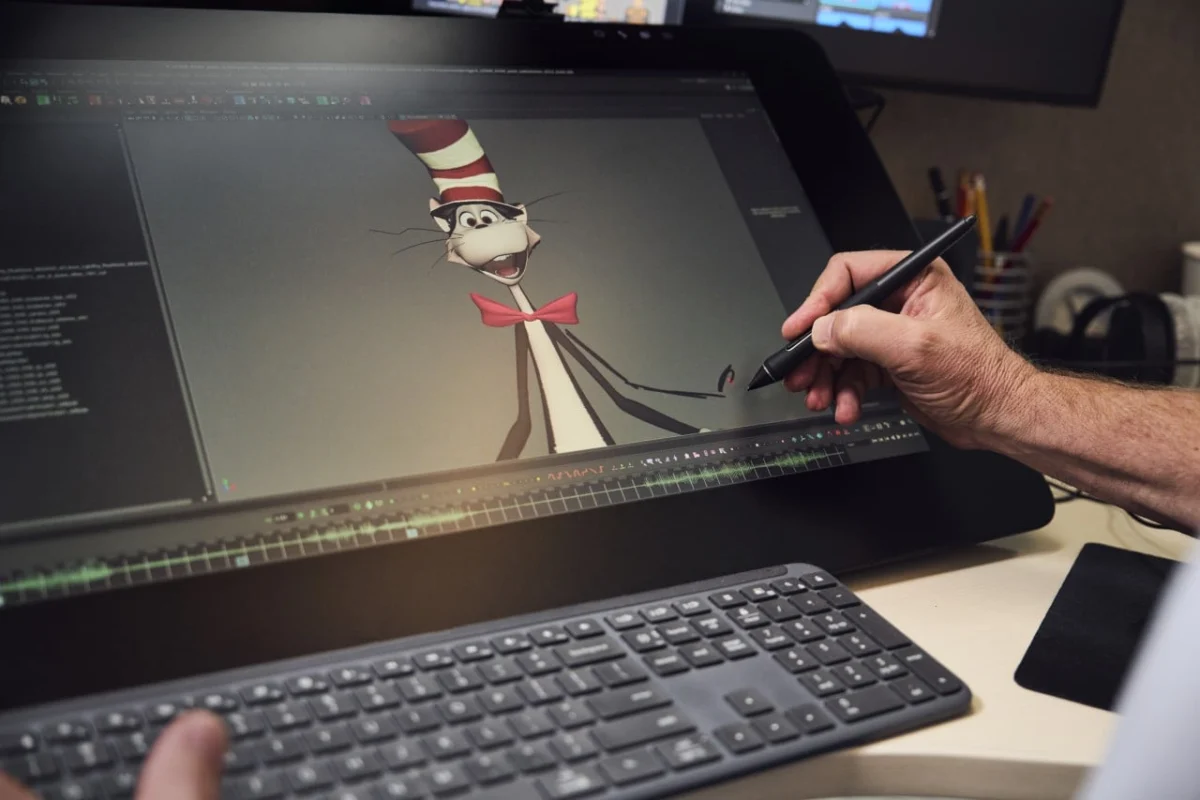
The world of Dr. Seuss is one defined by impossible geometry, whimsical physics, and a sense of wonder that has captivated generations of readers. Translating that distinct visual vocabulary into a full-length feature film is a monumental task—one that requires not just artistic vision, but a robust technological backbone. With the upcoming November 6 release of Warner Bros. Pictures Animation’s The Cat in the Hat, audiences will finally see the result of a two-year intensive production cycle that spanned continents and pushed the limits of modern digital artistry.
To provide a window into this complex process, Autodesk has launched Made to Make, a new YouTube documentary series. Hosted by renowned chef and animation enthusiast José Andrés—who brings his own unique creative perspective to the project—the series debuts with an in-depth look at the collaborative process that brought the iconic Cat to the big screen.
The Core Narrative: A New Chapter for a Classic Icon
While Dr. Seuss’s original book serves as the foundation for the film, the screenwriters have taken the story well beyond the final page. In this reimagining, the Cat (voiced by Bill Hader) is tasked with a mission from the I.I.I.I. (Institute for the Institution of Imagination and Inspiration, LLC). His objective? To cheer up two siblings, Gabby and Sebastian, who are struggling to adapt to life in a new town.
The film explores the consequences of the Cat’s propensity for "overdoing it." His magical antics threaten the very stability of his magical hat, raising the stakes beyond a simple house-cleaning mishap. Joining Hader in the ensemble cast are Matt Berry, Quinta Brunson, Xochitl Gomez, Giancarlo Esposito, and America Ferrera, with additional performances by Tituss Burgess, Bowen Yang, Paula Pell, and Tiago Martinez. Directed by Alessandro Carloni and Erica Rivinoja, the film promises a blend of heartfelt storytelling and high-octane visual spectacle.

Chronology of Production: A Global Collaborative Effort
The production of The Cat in the Hat was a marvel of logistical coordination. Over a two-year timeframe, the studio managed a distributed workflow involving teams in Los Angeles, Montreal, London, and several major creative hubs across India.
Phase 1: Conceptualization and World-Building
The directors set an ambitious goal: to create five distinct environments, each with its own visual language. These included the "real world," the classic Seussian world, and three additional realms crafted specifically to reflect the psychological and thematic journeys of the characters. This phase required massive amounts of R&D to ensure that the "Seussian" look—characterized by its loose, elastic, and hand-drawn quality—could be maintained within a 3D space without losing its charm.
Phase 2: Pipeline Integration
The production team relied heavily on a unified software ecosystem to keep these global teams synchronized. Maya acted as the central creative hub, serving as the primary environment for modeling, character animation, and layout.
Phase 3: The Iterative Review Process
With teams working across multiple time zones, the review process was the most critical aspect of the production timeline. Utilizing Flow Production Tracking (formerly ShotGrid), the team was able to maintain a single source of truth for assets, props, and character models. The integration of RV and Flow Capture allowed for near-instantaneous feedback loops, ensuring that directors in Los Angeles could review and annotate shots created in India or Montreal, keeping the film on schedule despite the geographic dispersion.

Supporting Data: The Technological Engine
The technical requirements for The Cat in the Hat went beyond standard character animation. The film required a pipeline that could handle both the grounded reality of the human characters and the high-energy, elastic nature of the Cat.
- Maya as the Foundation: Animator Marek Kochout described the software as his "porthole into the marionette." By using Maya, artists were able to deform characters in ways that felt like traditional animation while maintaining the depth and lighting of modern CGI.
- Flow Production Tracking: This system acted as the brain of the production. It managed the metadata for thousands of assets. According to central supervisor Jessica Killiam, the platform was essential for tracking the complexity of the film’s five distinct worlds, ensuring that every prop and environmental detail was consistent across the entire production cycle.
- Asset Management: PIX, now integrated into Flow Capture, served as the connective tissue for external reviews. By allowing secure, high-fidelity playback for stakeholders outside the immediate animation team, the production was able to maintain quality control without sacrificing security or efficiency.
Official Responses and Creative Vision
The creative team behind The Cat in the Hat emphasized that technology serves the story, not the other way around. Alessandro Carloni, co-director, noted the inherent challenge of the film’s premise: "In a way, our job is to come up with something absurd, entertaining, and crazy, and then discover: can we make it happen with technology?"
This sentiment was echoed by Erica Rivinoja, who highlighted the unique advantages of the medium: "The exciting thing about animation is that it can do so much more than other types of filmmaking. We wanted to push those boundaries—to take the spirit of Seuss and give it a scale that hadn’t been seen before."
José Andrés, who serves as the host for Made to Make, bridges the gap between culinary art and digital art. Given his own history as a voice actor for projects like Firebuds and Green Eggs & Ham, Andrés brings an authentic appreciation for the collaborative nature of animation. His interviews with the filmmakers offer rare insight into the moments of friction and breakthrough that occur during a project of this scale.

Implications for the Future of Animation
The production of The Cat in the Hat highlights a shift in the animation industry: the move toward fully cloud-integrated, globalized workflows. By leveraging Autodesk’s suite of tools, Warner Bros. Pictures Animation has demonstrated that a film of this visual complexity no longer needs to be produced in a single physical location.
The Rise of Distributed Production
The success of this film could set a new standard for mid-to-large-scale animation projects. By utilizing a common language of tools—specifically Maya and Flow Production Tracking—studios can tap into global talent pools without the overhead costs of massive central facilities. This has significant implications for both budget management and the ability to scale up production during peak periods.
Aesthetic Innovation
Perhaps the most significant implication is the evolution of the "Seussian" aesthetic. For years, the challenge of adapting Dr. Seuss has been the transition from 2D illustrations to 3D models. By successfully utilizing modern rigging and simulation tools, the team has paved the way for future adaptations that require a "painterly" or "hand-crafted" look in a 3D environment.
Expanding the Legacy
Finally, the decision to extend the story beyond the book’s original scope suggests a new approach to intellectual property. Rather than simply retelling a classic, the studio is treating the Seuss library as a living universe. By creating specific environments and "world-building" the setting, they have created a template for how legacy characters can be evolved for modern audiences without betraying their source material.

Conclusion
As November 6 approaches, the anticipation for The Cat in the Hat is reaching a fever pitch. Between the star-studded cast, the ambitious narrative, and the sophisticated technological pipeline that made it possible, the film represents a pinnacle of contemporary animation.
For those interested in the "how" behind the magic, the Made to Make series offers an essential companion to the cinematic experience. It serves as a reminder that behind every frame of animation, there is a complex network of artists, engineers, and storytellers working in concert—using the most advanced tools available to bring the most whimsical dreams to life. Whether it is the subtle movement of the Cat’s hat or the expansive detail of his five distinct worlds, the film stands as a testament to what happens when creative vision meets technical mastery.
