
The Sinking Ship and the Rising Star: How John C. Reilly Tried to Steer Leonardo DiCaprio Away from ‘Titanic’
Decades after the landmark cinematic year of 1997, Hollywood history remains rich with tantalizing "what-if" scenarios. Among the most enduring of these alternative timelines is the casting of Paul Thomas Anderson’s magnum opus, Boogie Nights. While Mark Wahlberg ultimately delivered a career-defining performance as the fictional adult film sensation Dirk Diggler, the role was famously coveted by and offered to a young Leonardo DiCaprio.
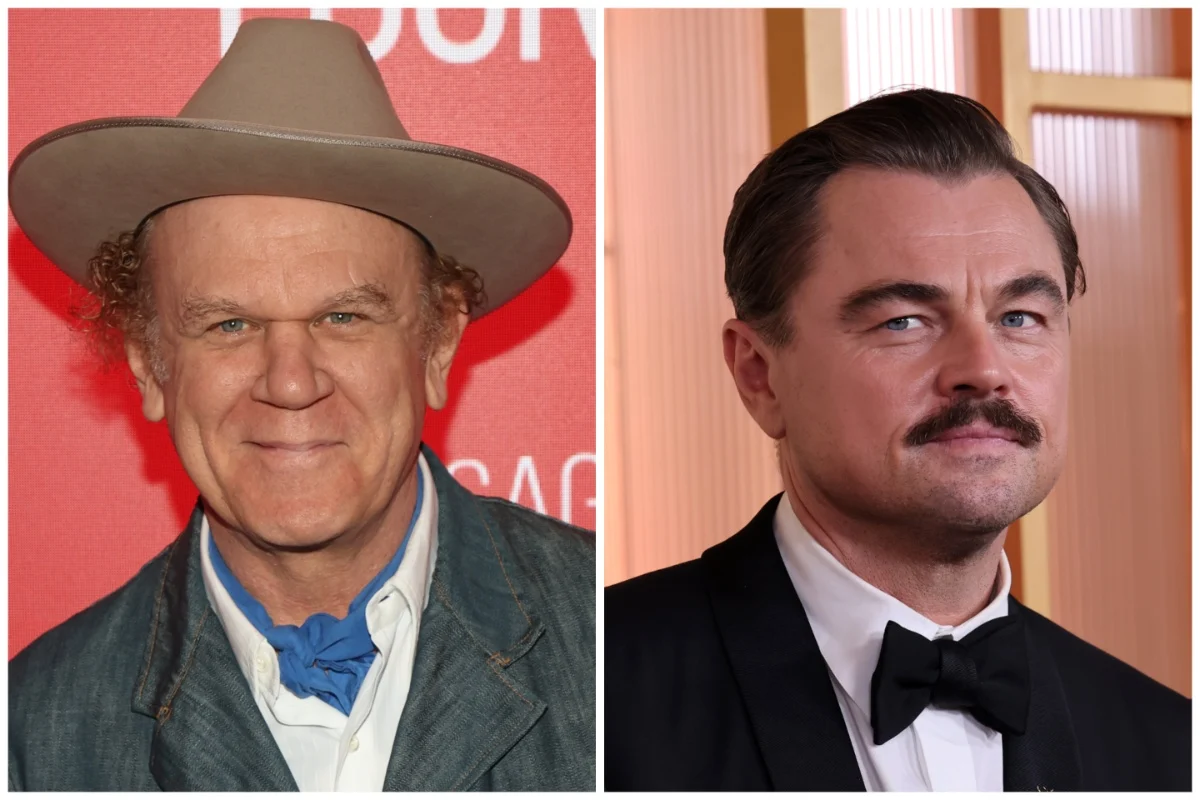
Recently, acclaimed character actor John C. Reilly shed new light on this pivotal moment in modern film history. Speaking on the podcast Where Everybody Knows Your Name, hosted by Ted Danson, Reilly revealed that he actively lobbied DiCaprio to reject James Cameron’s disaster epic Titanic in favor of Anderson’s gritty, multi-generational portrait of the San Fernando Valley pornography industry.
Reilly’s recollections offer a fascinating glimpse into the behind-the-scenes machinations of 1990s Hollywood, illustrating the high-stakes gamble of star-making, the clash between independent auteurism and studio blockbuster filmmaking, and the unpredictable nature of cinematic destiny.
Main Facts: The Podcast Revelation
During his appearance on Where Everybody Knows Your Name, John C. Reilly recounted his efforts to recruit Leonardo DiCaprio for Boogie Nights. At the time, Reilly was a trusted collaborator and close friend of writer-director Paul Thomas Anderson. The two had forged a tight bond during the production of Anderson’s 1996 feature directorial debut, Hard Eight (originally titled Sydney).
"I met him when he was 17. And I was like, 'Give me the assignment, Paul. I’ll get this guy to do your movie. I’ve known him since [he was] a kid.'"
— John C. Reilly
Reilly had previously shared the screen with a teenage DiCaprio in Lasse Hallström’s critically acclaimed 1993 drama What’s Eating Gilbert Grape. Confident in his rapport with the young actor, Reilly volunteered to act as an intermediary for Anderson, promising the director that he could convince DiCaprio to sign on to play Eddie Adams, the dishwasher who transforms into the adult film star Dirk Diggler.
Reilly’s pitch to DiCaprio, however, was predicated on a fundamental miscalculation regarding the commercial prospects of James Cameron’s concurrent project, Titanic. As Reilly recalled on the podcast:
"Listen, Leo, let me tell you something. That movie Titanic is about a boat that sinks. Everyone knows the boat sinks. No one’s going to give a shit about who’s on the boat."
At the same time, Reilly championed Anderson’s artistic vision, telling DiCaprio:
"This guy, this director, is going to be one of the most talented film directors going forward, and you should not miss this opportunity."
Despite Reilly’s persistent lobbying, DiCaprio ultimately followed the advice of his agency representatives, who recognized that Titanic possessed the markings of an unprecedented global event. DiCaprio declined Boogie Nights, paving the way for Mark Wahlberg’s casting, while Reilly joined the ensemble as Reed Rothchild, Dirk Diggler’s loyal screen partner and friend.
Chronology: The Confluence of 1990s Cinematic Forces
To fully understand the gravity of Reilly’s intervention, it is necessary to trace the chronological intersection of the careers of DiCaprio, Anderson, and Reilly between 1993 and 1997.
CHRONOLOGY OF EVENTS (1993–1997)

1993 ──────────────── What's Eating Gilbert Grape releases; Reilly and DiCaprio work together.
                      DiCaprio earns his first Academy Award nomination at age 19.

1996 ──────────────── Paul Thomas Anderson releases his debut feature, Hard Eight.
                      Reilly and Anderson establish a close creative partnership.
                      DiCaprio is cast in Baz Luhrmann's Romeo + Juliet, elevating his profile.

Early 1997 ────────── Anderson finishes the screenplay for Boogie Nights.
                      DiCaprio is courted for the lead role of Dirk Diggler.
                      Reilly lobbies DiCaprio to reject Titanic; DiCaprio ultimately chooses Titanic.
                      Mark Wahlberg is cast as Dirk Diggler.

Late 1997 ────────── Oct: Boogie Nights releases to immense critical acclaim.
                      Dec: Titanic releases, becoming the highest-grossing film of all time.
1993: The Genesis of a Partnership
In 1993, John C. Reilly and Leonardo DiCaprio co-starred in What’s Eating Gilbert Grape. DiCaprio, then only 17 during filming, delivered a tour-de-force performance as Arnie Grape, a developmentally disabled teenager. The role earned him his first Academy Award nomination for Best Supporting Actor, instantly establishing him as one of the most talented young actors of his generation. Reilly, playing the supporting role of Tucker Van Dyke, observed DiCaprio’s raw talent firsthand, forming a mutual respect that would last for years.
1996: The Rise of Paul Thomas Anderson
By 1996, Paul Thomas Anderson was emerging as a formidable new voice in American independent cinema. His debut feature, Hard Eight, starred Philip Baker Hall, John C. Reilly, and Gwyneth Paltrow. Despite creative battles with the film’s distributors, the movie established Anderson’s signature style: long takes, complex character studies, and a deep affection for marginalized figures. Reilly and Anderson became "thick as thieves," with Reilly eager to help shepherd Anderson’s next, highly ambitious project: a sprawling epic set in the golden age of the porn industry.
1997: The Casting Dilemma and Production
By early 1997, the script for Boogie Nights was circulating through Hollywood. The role of Dirk Diggler required an actor who could project both naive innocence and self-destructive charisma. Anderson’s first choice was DiCaprio.
Concurrently, James Cameron was assembling the cast for Titanic, a massive, budget-straining production backed by both Paramount Pictures and 20th Century Fox. DiCaprio found himself at a career crossroads: lead an avant-garde, R-rated ensemble piece about the adult film industry, or star in a historic, big-budget studio romance.
Despite Reilly’s warnings about the predictability of a ship-sinking narrative, DiCaprio’s representation urged him toward the studio blockbuster. When DiCaprio officially demurred, Anderson turned to Mark Wahlberg, who at the time was primarily known for his work as a musician ("Marky Mark") and underwear model, with only a few film credits to his name.
Supporting Data: Two Masterpieces, Two Different Destinies
The divergent paths of Titanic and Boogie Nights in late 1997 represent one of the most extraordinary dual releases in cinema history. Both films achieved legendary status, but through vastly different financial and cultural metrics.
The Financial and Award Metrics of 1997
| Metric | Titanic (Dir. James Cameron) | Boogie Nights (Dir. Paul Thomas Anderson) |
|---|---|---|
| Production Budget | $200 million | $15 million |
| Global Box Office | $1.84 billion (original run) / $2.26 billion (lifetime) | $43.1 million |
| Academy Award Nominations | 14 nominations | 3 nominations |
| Academy Award Wins | 11 wins (including Best Picture & Best Director) | 0 wins |
| Rotten Tomatoes Score | 88% | 94% |
The Commercial Reality of ‘Titanic’
While Reilly joked that "no one’s going to give a shit about who’s on the boat," Titanic proved to be an unprecedented global phenomenon. It held the number-one spot at the domestic box office for 15 consecutive weeks and became the first film to gross over $1 billion worldwide. It transformed DiCaprio from a respected indie darling into one of the most recognizable and bankable superstars on the planet, generating a level of fan hysteria dubbed "Leo-mania."
The Artistic Triumph of ‘Boogie Nights’
Though it operated on a fraction of Titanic’s budget, Boogie Nights was an unqualified critical triumph. It launched Paul Thomas Anderson into the upper echelon of American filmmakers, earning Academy Award nominations for Best Original Screenplay, Best Supporting Actor (Burt Reynolds), and Best Supporting Actress (Julianne Moore). The film grossed a respectable $43 million worldwide, but its true value lay in its cultural legacy, frequently cited as one of the best films of the 1990s.
Industry Perspectives and Alternate Casting Realities
The revelations from Reilly’s podcast appearance add another layer of context to comments made by both DiCaprio and Wahlberg over the years regarding the casting of Boogie Nights.
DiCaprio’s Retrospective Reflections
In subsequent years, Leonardo DiCaprio has openly discussed his decision to turn down Boogie Nights. In a 2010 interview with GQ, DiCaprio admitted to loving the script and expressing regret that he could not find a way to do both films:
"Boogie Nights is a stunning movie, and I would have loved to do it."
However, DiCaprio also acknowledged that passing on Titanic would have fundamentally altered his ability to navigate his career. The massive leverage he gained from Titanic‘s historic success allowed him to handpick his future projects, leading to his celebrated collaborations with legendary directors like Martin Scorsese, Christopher Nolan, and Quentin Tarantino.
"If I hadn't done Titanic, I wouldn't have been able to have the career I have now, or the level of control over the projects I choose to make."
— Leonardo DiCaprio (GQ, 2010)
Mark Wahlberg’s Defining Breakout
For Mark Wahlberg, the role of Dirk Diggler was a high-risk gamble that ultimately validated his transition from pop star to serious actor. Wahlberg has noted in interviews that he was initially hesitant to accept the role due to its explicit subject matter, but he was won over by Anderson’s brilliant screenplay.
Wahlberg’s performance received widespread critical acclaim, proving he possessed the dramatic range and vulnerability necessary to anchor a complex ensemble cast. Had DiCaprio accepted the role, Wahlberg’s career might have taken a radically different, potentially less prestigious path.
Cultural and Industry Implications
The casting intersection of Titanic and Boogie Nights highlights the structural dynamics of Hollywood during the late 1990s—a period characterized by a distinct division between major studio blockbusters and the burgeoning independent film movement.
The Indie vs. Blockbuster Divide
In 1997, the film industry was undergoing a significant transition. The success of Miramax and New Line Cinema (which produced Boogie Nights) demonstrated that character-driven, auteur-led films could find substantial commercial success and dominate awards conversations. Concurrently, major studios were beginning to invest in high-risk, high-reward mega-blockbusters like Titanic.
Reilly’s advice to DiCaprio reflects the prevailing skepticism among purist character actors of the era, who often viewed massive studio productions as creative compromises. The common consensus among indie-adjacent actors was that special-effects-driven blockbusters would overshadow the actors themselves.
Titanic, however, defied this convention. While the film’s scale and visual effects were historic, the emotional core of the movie—driven by the chemistry between DiCaprio and Kate Winslet—is what sustained its record-breaking box office run.
The Construction of Star Power
The decisions made by DiCaprio and Wahlberg in 1997 illustrate two different models of star construction:
- The Global Icon Pathway (DiCaprio): By choosing Titanic, DiCaprio secured a global audience and financial autonomy. He used this capital not to make more blockbusters, but to fund and star in challenging, prestigious films, effectively merging the worlds of high-art cinema and mass appeal.
- The Career Redefinition Pathway (Wahlberg): By choosing Boogie Nights, Wahlberg transformed his public persona overnight. He transitioned from a novelty figure into a respected dramatic actor, establishing a foundation that allowed him to eventually produce and star in major studio films of his own.
Conclusion
John C. Reilly’s humorous, self-deprecating anecdote on Where Everybody Knows Your Name serves as a reminder of the fragility of Hollywood success. While Reilly’s assessment of Titanic’s appeal was famously incorrect, his artistic instincts regarding Paul Thomas Anderson were entirely accurate.
Ultimately, the casting shuffle of 1997 benefited all parties involved. James Cameron found his perfect tragic romantic lead, Paul Thomas Anderson discovered an actor capable of embodying the naive ambition of Dirk Diggler, and Leonardo DiCaprio secured the artistic freedom that has defined his career for the last quarter-century.
