
The Crucible of Perfection: Why Damien Chazelle’s Whiplash Remains an Unmatched Cinematic Masterclass
Over a decade after its Sundance premiere, the blistering psychological drama about an ambitious jazz drummer and his tyrannical mentor continues to redefine our understanding of obsession, the cost of greatness, and the evolution of toxic mentorship.
Main Facts: The Anatomy of a Modern Masterpiece
While cinematic history is rich with films exploring the trials and tribulations of the creative life—ranging from the bohemian struggles of Once to the melancholic folk-circuit wanderings of Inside Llewyn Davis—no motion picture has ever laid bare the brutal, agonizing price of elite musicianship quite like Whiplash.
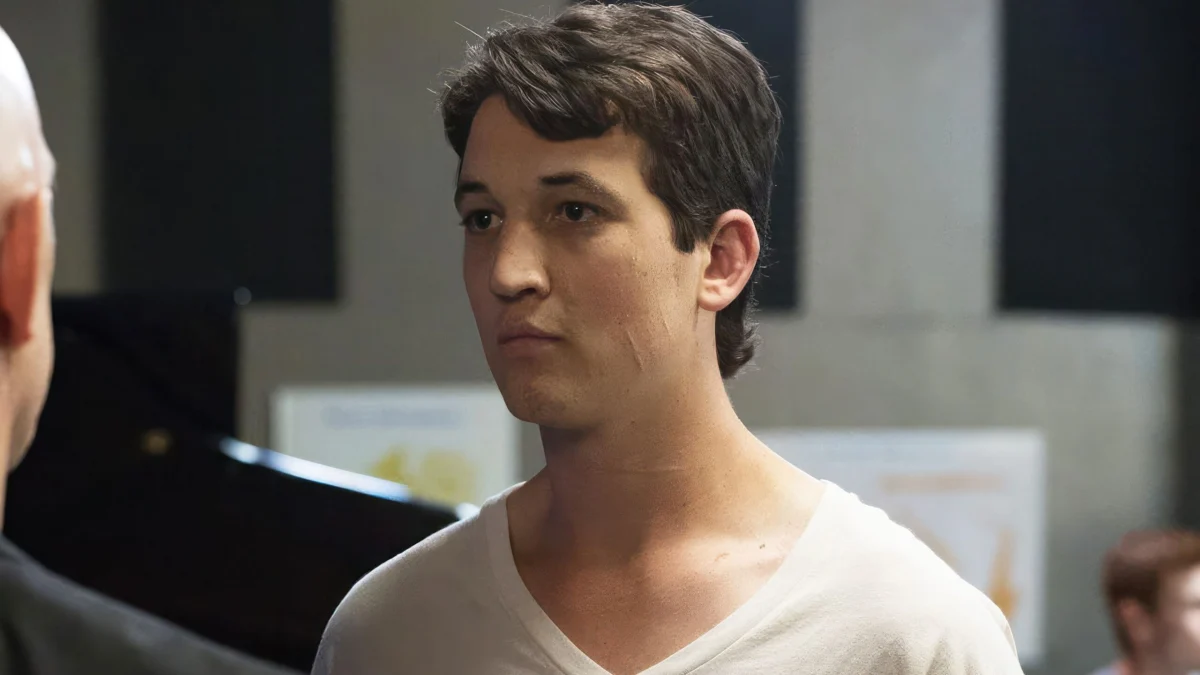
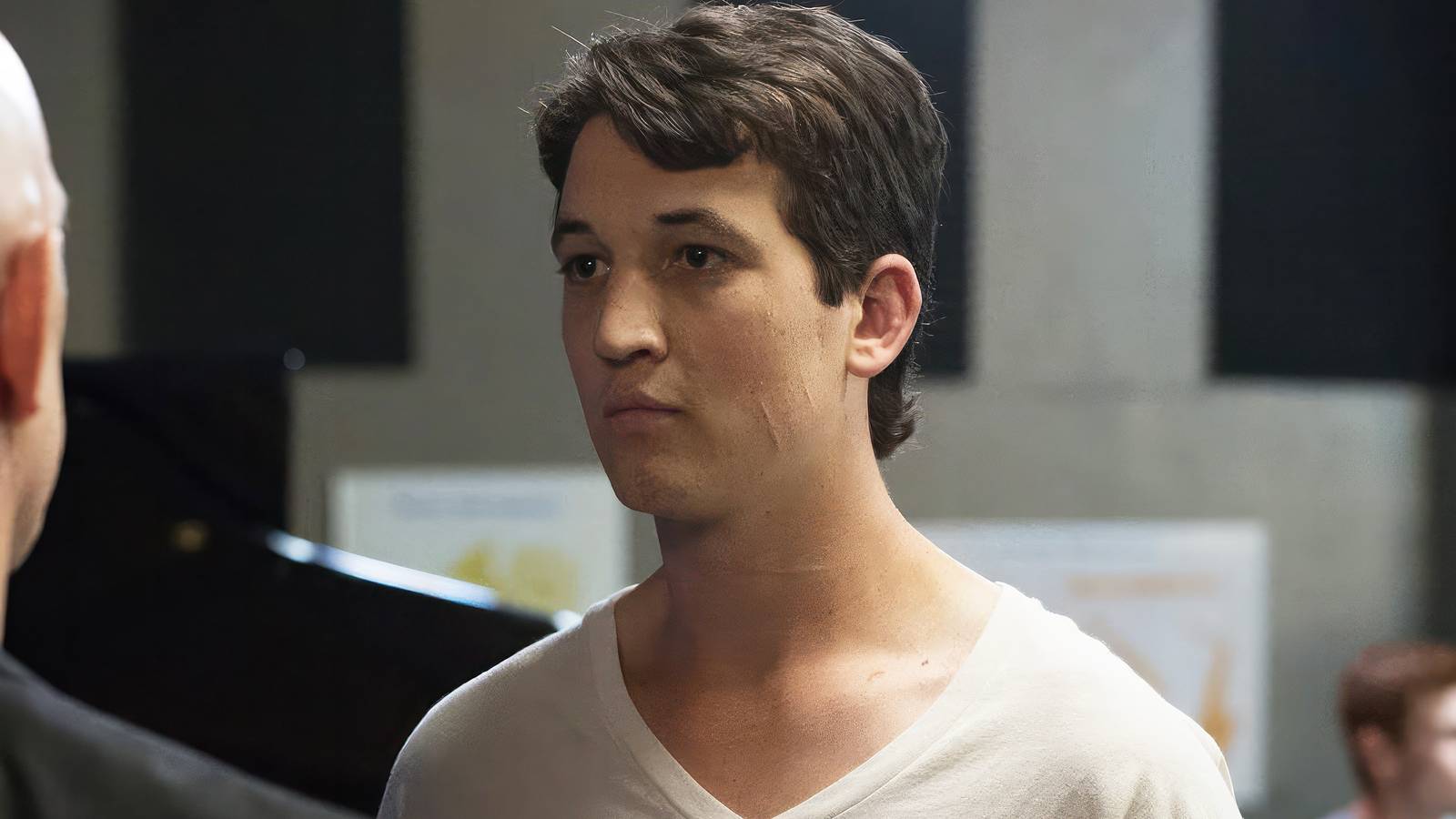
Released globally following its explosive premiere at the Sundance Film Festival on January 16, 2014, writer-director Damien Chazelle’s sophomore feature stands as a monument to intensity. The film chronicles the harrowing journey of Andrew Neiman (Miles Teller), an intensely driven, ambitious young jazz drummer enrolled at Shaffer Conservatory, a fictional New York institution modeled after elite music schools. There, Andrew catches the eye of Terence Fletcher (J.K. Simmons), a notoriously exacting instructor whose pedagogical methods rely on psychological terror, verbal abuse, and physical intimidation.
Whiplash was a critical darling from its inception, sweeping the major prizes at Sundance—including both the Audience Award and the Grand Jury Prize for dramatic film. Its momentum carried it through an illustrious awards season, culminating in three Academy Awards: Best Sound Mixing, Best Film Editing, and a universally lauded Best Supporting Actor win for J.K. Simmons. Furthermore, the film earned nominations for Best Picture and Best Adapted Screenplay for Chazelle.
Holding an impressive 94% approval rating on Rotten Tomatoes and a runtime of 107 minutes, Whiplash is frequently cited not just as one of the definitive music-related dramas of all time, but as one of the greatest character-driven psychological thrillers of the 21st century.
Chronology: From Rapid 20-Day Shoot to Global Phenomenon
The birth of Whiplash is a Hollywood legend in its own right, characterized by speed, desperation, and a high-stakes race against time. Before it became a feature film, Chazelle struggled to secure financing for the script, which languished on the Black List—Hollywood’s registry of best unproduced screenplays. To prove the commercial and artistic viability of the concept, Chazelle took an eighteen-page segment of the script and adapted it into a short film starring Johnny Simmons and J.K. Simmons.
The short film triumphed at the 2013 Sundance Film Festival, winning the Short Film Jury Prize. This victory finally unlocked the funding needed to produce the full-length feature, backed by Blumhouse Productions and Bold Films. However, the production schedule for the feature film was extraordinarily tight.
- Principal Photography (October 2013): Whiplash was shot over an intensely compressed timeframe of just 20 days in Los Angeles. The rapid-fire schedule demanded absolute focus from the cast and crew.
- Sundance Film Festival Premiere (January 16, 2014): The completed feature film debuted to stunned audiences in Park City, Utah, immediately triggering a bidding war and securing distribution through Sony Pictures Classics.
- Theatrical Release (October 10, 2014): The film rolled out to commercial theaters, gradually building a massive word-of-mouth following.
- Academy Awards (February 2015): J.K. Simmons completed a historic awards-season sweep by capturing the Oscar for Best Supporting Actor, cementing the film’s legacy in cinematic history.
Supporting Data & Production Insights: The Pressure-Cooker Atmosphere
The sheer visceral impact of Whiplash is inextricably linked to the frantic, high-adrenaline conditions of its creation. In a retrospective interview with Collider, director Damien Chazelle and star J.K. Simmons reflected on how the production’s breakneck speed directly shaped the film’s frantic, breathless energy.
"That state of adrenaline certainly, looking back, was helpful in its own indirect way," Chazelle noted. "The movie is about that kind of state in a way. So, not that it had to be made in that compressed timeframe, but there was something about the running gun, not overthinking it, not second-guessing."
Chazelle admitted that working within a 20-day window forced him to abandon his instincts to over-direct or second-guess creative choices—a trap he believes filmmakers easily fall into when given bloated budgets and extended schedules.
"I know in myself, I’ve learned for myself, that I can fall victim very easily to the overthinking, second-guessing end of the spectrum, where you sort of hem and haw almost to infinity," Chazelle explained. "There was something about the pressure cooker atmosphere of how Whiplash was made and edited and cut and mixed, every aspect of it, that I think maybe helped preserve it from some of that. It’s not an overthought movie."
For J.K. Simmons, the film’s enduring magic was born from a rare synthesis of meticulous preparation and raw, unscripted improvisation between actors. Simmons praised the production team, noting that while the crew was "immaculately prepared," they maintained an open-door policy for whatever Miles Teller and the rest of the ensemble brought to the floor on any given day.
Official Responses and Changing Cultural Perspectives: How Whiplash Aged
When Whiplash first debuted in theaters, audience reactions were polarized around a central moral question: Who is the villain of this story?
Initial viewings framed the film as a harrowing tale of abuse. Viewers watched in horror as Andrew’s dedication escalated into literal self-destruction—shedding blood, sweat, and literal tears over his drum kit, practicing until his hands blistered and ruptured, and alienating his family and romantic partners. Audiences left theaters with racing hearts, convinced that Terence Fletcher was a sociopathic abuser and that Andrew Neiman was an innocent, dedicated victim caught in the crosshairs of a sadistic educator.

However, as cultural conversations surrounding workplace toxicity, institutional abuse, psychological safety, and mentorship have evolved over the past decade, public perception of Whiplash has undergone a fascinating transformation.
In the modern sociopolitical landscape—marked by the reckoning of corporate hustle culture, intense career optimization, and a granular examination of how ambition is weaponized—Whiplash resonates differently. Fletcher no longer feels like an exaggerated cinematic outlier; instead, he mirrors a recognizable archetypal figure found across elite sports, corporate boardrooms, and academic institutions.
Simultaneously, viewers have re-evaluated Andrew’s agency. Andrew is not merely a passive casualty of Fletcher’s abuse; he is a willing participant. He actively chooses to endure humiliation, isolation, and physical degradation because he believes the ends justify the means. In an era defined by the glorification of the "grind," Andrew’s relentless obsession with greatness strikes a chord of uncomfortable recognition. The movie no longer asks us simply to pity Andrew, but forces us to confront a far more troubling inquiry: At what point does the pursuit of greatness become inherently destructive, and does willing participation absolve the abuser?
Implications: The Legacy of a Cinematic Masterpiece
Fourteen years after its initial conception and conceptualization, Whiplash holds a secure, permanent place in the pantheon of cinematic masterworks. Its implications extend far beyond the parameters of jazz education or film critique.
The film serves as a cautionary tale and a dark mirror for modern ambition. It exposes the romanticized myth of the tortured artist, stripping away the glamorous varnish to reveal the ugly, mechanical gears of obsession underneath. By fusing uncompromising editing, a relentless jazz score, Tom Cross’s razor-sharp cutting, and career-defining performances from Miles Teller and J.K. Simmons, Chazelle created a film that refuses to offer easy moral resolutions.
As long as human beings strive for excellence—and grapple with the destructive personal costs required to achieve it—Whiplash will remain vital, provocative, and terrifyingly relevant. It is a cinematic drum solo that refuses to stop beating, echoing long after the final cut to black.
