
When Influence Meets Agoraphobic Terror: Inside the Real-World Origins and Genre-Heavy Machinery of Mitch McLeod’s Marrow
In an era defined by the commodification of daily life, the boundary between the private sanctuary and the public broadcast has effectively evaporated. Millions of creators stream their routines, vulnerabilities, and domestic spaces to a faceless audience, trading digital intimacy for algorithmic favor. But what happens when that transactional gaze curdles into something predatory? What occurs when the parasocial relationship leaps out of the comments section and onto the physical doorstep?
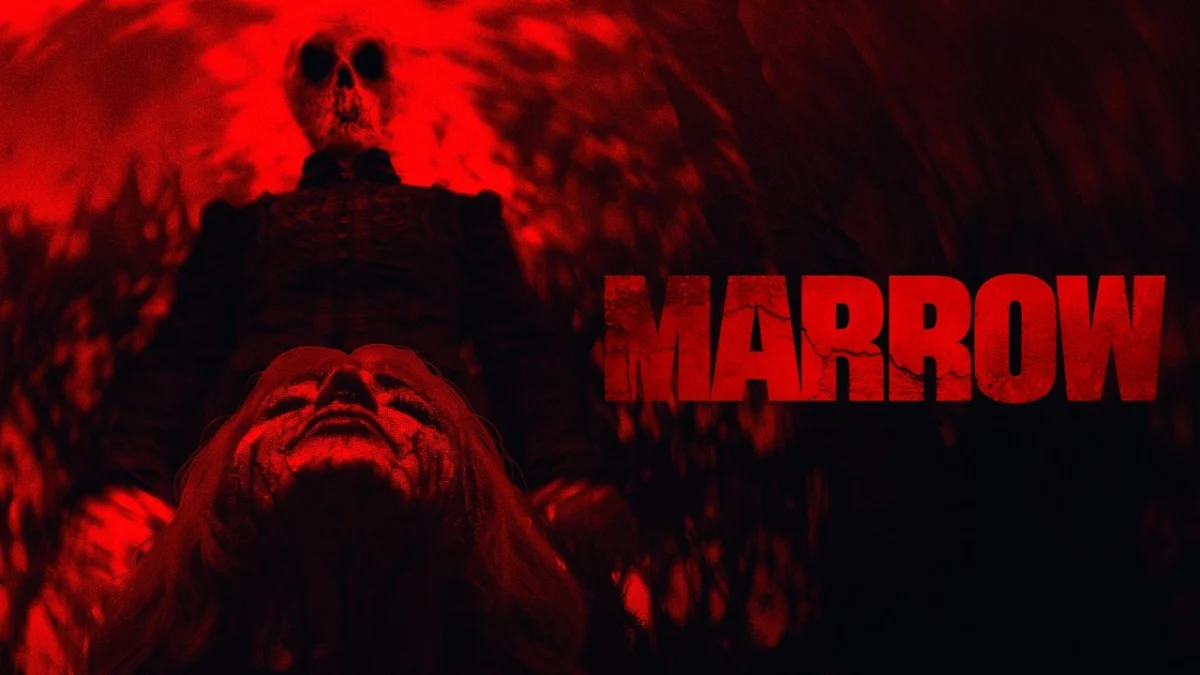
These are the harrowing questions at the heart of Marrow, a chilling new psychological thriller directed and co-written by Mitch McLeod. Blending the hyper-modern anxiety of internet culture with the tactile, localized dread of early-2000s true crime, the film arrives on VOD and digital platforms in North America on November 3. Starring Jessica Dawn Willis alongside an enviable roster of genre royalty—including horror icon Danielle Harris and veteran heavy Michael Ironside—Marrow promises to deconstruct the toxic mechanics of online clout through a lens of lethal suspense.
Main Facts: The Premise, The Cast, and The Creative Force
At its core, Marrow explores a dangerously misguided gambit. Desperate to rescue her plummeting view counts and revitalize a flagging career, a once-prominent vlogger named Jamie Foster makes a fateful, hubristic decision. Suspecting that her obsessive stalker might actually be a ruthless serial killer actively targeting internet influencers, Jamie does the unthinkable: she invites him onto her show.
What begins as a desperate bid for algorithmic resurrection quickly spirals into a fight for survival. According to the film’s official synopsis, the stakes of Jamie’s gambit transcend her career, plunging her into a nightmare where every click, view, and subscriber count measures out her remaining time on earth.
The film stars Jessica Dawn Willis (Absentia Pictures) as the embattled Jamie Foster. Willis is joined by a powerhouse supporting cast that anchors the film’s pervasive atmosphere of paranoia. Horror mainstay Danielle Harris—whose cinematic lineage stretches from her childhood trauma in Halloween 4 and Halloween 5 to Rob Zombie’s reboots and the Hatchet franchise—lends the project instant credibility. She is complemented by Michael Ironside, an actor whose face has defined cinematic menace since David Cronenberg’s Scanners, through Visiting Hours, and into Paul Verhoeven’s Starship Troopers.
The ensemble is rounded out by Matthew Tompkins, who also served as a producer, and Ashley Spicer. Behind the camera, the production brings together Absentia Pictures (run by McLeod and Willis), Highland Myst Entertainment, and Little Spark Films, with distribution handled by Scatena & Rosner Films and production orchestration by Jon Keeyes and Tompkins.
Chronology: From Small-Town Texas Realities to Digital-Age Nightmares
To understand the texture of Marrow, one must look backward before looking forward. While the film is dressed in the sleek, blue-light aesthetics of contemporary streaming culture, its narrative DNA is anchored in a much older, darker reality.

Director Mitch McLeod has revealed that the foundational narrative of Marrow is rooted in chilling true accounts of stalking that occurred in a small Texas town during the early 2000s. Crucially, this was not a distant historical curiosity for the filmmaker; it was an ordeal experienced firsthand by someone close to him.
- The Early 2000s Foundation: Long before algorithmic feeds dictated social hierarchies, analog stalking relied on physical surveillance, intercepted mail, and local whispers. The psychological toll of these real-world events—marked by isolation, law enforcement inertia, and the erosion of a victim’s sense of safety—formed the initial spark for McLeod’s storytelling.
- The Modern Adaptation Phase: Recognizing that the mechanics of isolation had fundamentally changed with the advent of Web 2.0 and streaming platforms, McLeod set out to translate those early-2000s accounts through a modern lens. The analog predator was updated to the digital voyeur, merging the rural dread of the original Texas accounts with the omnipresent connectedness of the influencer economy.
- The Scriptwriting Collaboration: McLeod partnered with actress Jessica Dawn Willis and celebrated author Preston Fassel to crystallize the screenplay. This collaborative writing process ensured that the film balanced the visceral terror of physical pursuit with the acutely modern psychological pathology of digital exhibitionism.
- The November 3 Release: Following its production cycle—shepherded by Absentia Pictures, Highland Myst Entertainment, and Little Spark Films—Scatena & Rosner Films slated Marrow for a North American digital and VOD release on November 3, positioning it as a premier psychological thriller for the late-autumn viewing window.
Supporting Data: The Genre-Literate Blueprint and Literary Pedigree
What elevates Marrow above standard direct-to-digital thriller fare is its meticulous attention to genre mechanics, evidenced both by its casting choices and its writing room credentials.
The Deliberate Pairing of Harris and Ironside
Casting directors often rely on recognizable faces for quick genre shorthand, but the pairing of Danielle Harris and Michael Ironside in Marrow represents a masterclass in audience manipulation. A stalker narrative fundamentally requires an atmosphere of total distrust; the viewer must suspect every smile, every lingering glance, and every shadowed doorway.
- Danielle Harris: Harris carries the historical weight of horror survival. From her heartbreaking turn as young Jamie Lloyd hunted by Michael Myers to her adult resilience in Adam Green’s Hatchet series, Harris signifies the archetype of the hunted individual who refuses to remain a victim. Her presence in Marrow immediately triggers audience sympathy and genre expectations.
- Michael Ironside: Conversely, Ironside has spent decades perfecting the art of clinical, unblinking menace. Whether playing the telekinetic antagonist Darryl Revok in Scanners or the authoritarian brass in Starship Troopers, Ironside radiates an intimidating, calculating aura.
By placing Harris (the eternal survivor) and Ironside (the embodiment of clinical threat) in the same frame, McLeod constructs a linguistic tug-of-war for the audience’s trust. In a film about deception, where the monster may be sitting right across a streaming desk, these two performers create an unpredictable dynamic where no character’s motives are ever truly secure.
The Preston Fassel Factor
Adding further weight to the production is co-writer Preston Fassel. Fassel is a respected voice within modern horror fiction and criticism, best known for penning the novel Our Lady of the Inferno. Published by the legendary horror magazine Fangoria, Fassel’s work was so fiercely regarded that it was optioned for a feature film adaptation, with Laura Moss and Brendan J. O’Brien brought on to translate his visceral prose to the screen.
Fassel’s involvement in Marrow ensures that the dialogue and narrative structure are steeped in genre literacy. Rather than relying on superficial jump scares or dated depictions of internet culture, the screenplay benefits from an author who understands the dark underbelly of obsession, subculture psychology, and transgressive storytelling.
Official Responses and Director’s Vision
In statements surrounding the release of Marrow, director Mitch McLeod has been vocal about the film’s thematic intentions. Rather than treating social media culture as a mere punchline or a superficial backdrop, McLeod views the influencer ecosystem as an environment ripe for psychological exploitation.

“Marrow takes the true accounts of a stalking in small town Texas in the early 2000s and places it within a modern lens,” McLeod explained. By bridging the gap between the tactile, analog terrors of the past and the disembodied notoriety of the present, McLeod aims to show how human vulnerabilities remain fundamentally unchanged, even as the delivery systems for our attention evolve.
Co-producer Matthew Tompkins and co-writer/star Jessica Dawn Willis have similarly emphasized the claustrophobic nature of the project. The official synopsis notes that the stakes rapidly outgrow Jamie Foster’s subscriber metrics—a thematic warning about the dangers of commodifying personal safety for public consumption. When the camera is always rolling, the film suggests, you eventually invite the darkness right into the lens.
Implications: What Marrow Says About Our Digital Obsession
As horror cinema continues to grapple with the anxieties of the digital age—following in the footsteps of films like Spree, The Den, and Dashcam—Marrow carves out a distinct niche by rooting its hyper-modern premise in historical, human reality.
The implications of the film stretch beyond mere entertainment. By framing cyberstalking and influencer desperation through the lens of a Texas true-crime narrative, McLeod and his team highlight the perilous nature of the attention economy. In the real world, digital creators routinely blur the lines between their authentic lives and their public personas to satisfy algorithms that demand continuous emotional exposure.
Marrow poses an uncomfortable question to both creators and consumers: When we turn our lives into content, do we inadvertently become complicit in our own victimization? By inviting the monster onto the show for the sake of engagement, Jamie Foster mirrors a broader cultural phenomenon where safety and privacy are casually bartered away for likes, shares, and fleeting relevance.
As North American audiences press play on November 3, they will not merely be watching a standard cat-and-mouse thriller. They will be stepping into a mirror-world designed by veterans of horror, anchored by real-world trauma, and executed with the chilling realization that the monsters haunting our screens are often the ones we invited inside ourselves.
