
The Heartbreak of Time and Space: Exploring the Emotional Stakes of ‘Outlander: Blood of My Blood’ Season Two
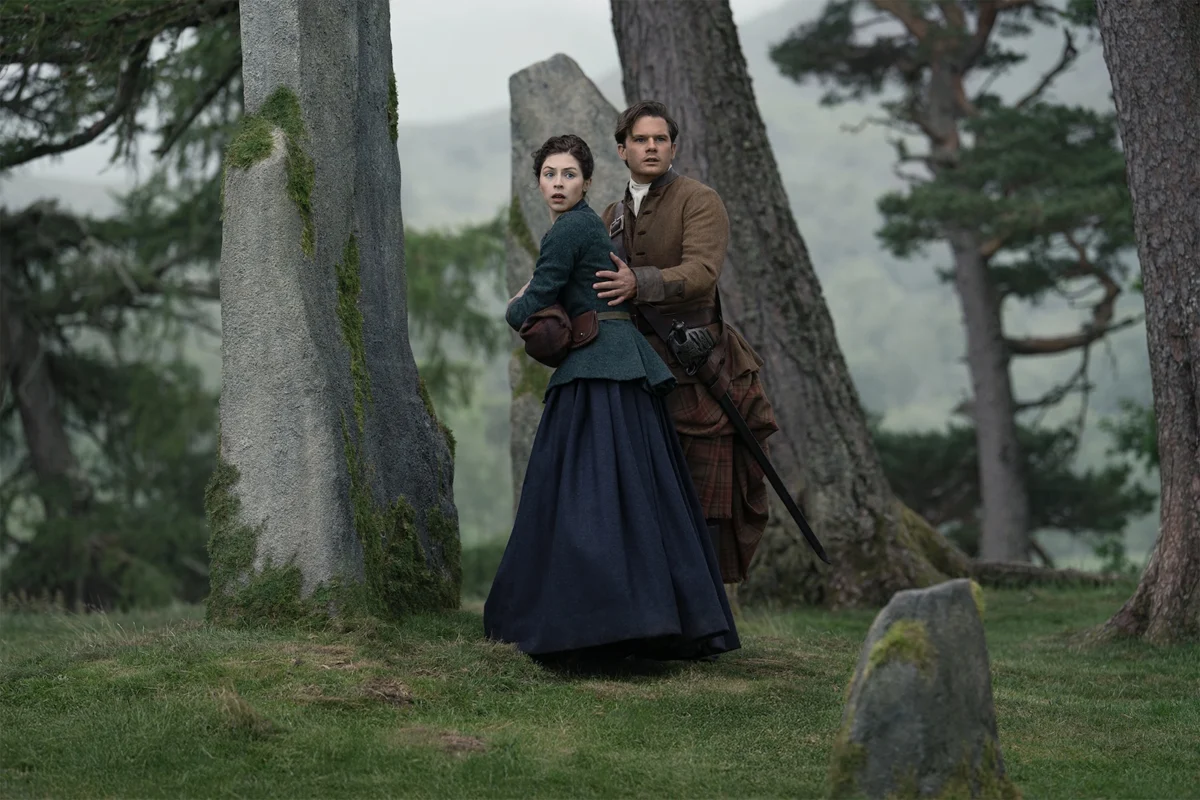
As the anticipation for the second season of Outlander: Blood of My Blood reaches a fever pitch, fans of the sprawling historical fantasy franchise are preparing for a return to the dual timelines that define the series. With the premiere date set for September 18, 2026, on Starz, the narrative focus has shifted toward the profound emotional tolls exacted upon its central characters. While the series continues to explore the origins of the Fraser and MacKenzie lineages, the upcoming season promises to be defined by a singular, crushing theme: the agony of involuntary separation.
The latest promotional trailers have teased a narrative path that pulls the show’s core couples—Ellen Mackenzie (Harriet Slater) and Brian Fraser (Jamie Roy), alongside the twentieth-century pair Julia Beauchamp (Hermione Corfield) and Henry Beauchamp (Jeremy Irvine)—into divergent trajectories. For the audience, this is not merely a challenge of geography, but a complex exploration of how love survives when time and space act as insurmountable barriers.
Main Facts: A New Chapter of Conflict
The upcoming season picks up the threads left hanging at the conclusion of the freshman outing. As established in the Outlander lore, Blood of My Blood functions as a prequel, providing the backstory for the parents of the legendary Jamie Fraser and the origin story of Claire Fraser’s own parents.
The central conflict involves two distinct, yet thematically linked, stories of separation:
- The 18th-Century Dynamic: Ellen Mackenzie and Brian Fraser face the traditional obstacles of their era, exacerbated by the political and social instability of the Jacobite period.
- The 20th-Century Dynamic: Julia and Henry Beauchamp find themselves grappling with the consequences of their displacement, a struggle that is inextricably linked to their inability to reach their young daughter, Claire.
This season, the showrunners have committed to exploring the psychological aftermath of being ripped away from one’s child, a narrative choice that adds a gritty, grounded realism to the series’ high-fantasy elements.
Chronology: The Evolution of Despair
To understand the stakes of Season Two, one must look back at the trajectory of the Beauchamps. In the first season, Julia and Henry were defined by a sense of urgency—a belief that their displacement was a temporary glitch in the cosmic order. They operated under the assumption that a return to the "stones" was imminent and that their family life would be restored to its rightful state.
However, the season finale effectively dismantled that hope. The "closing of the door" on their easy path back to their daughter, Claire, has shifted the tone of the show from a high-stakes adventure to a desperate struggle for survival.
"I think in season one, she’s got real hope that they’re going to be able to work it out and get back to the stones, and it will be simple," Hermione Corfield explained during a recent roundtable discussion. "I think once those hopes are dashed, the reality that she may never see her daughter again kicks in. That breaks her heart."
This transition from hope to the "long haul" of survival is the primary driver of the Season Two narrative arc. The characters are no longer looking for an exit strategy; they are looking for a way to endure the grief while protecting what remains of their family unit.
Supporting Data: The Burden of Parenthood
A critical aspect of this season’s narrative is the dual responsibility weighing on Julia and Henry. While they mourn the loss of five-year-old Claire, they are simultaneously charged with the safety of their infant son, William.
This creates a harrowing internal conflict. As Corfield noted, Julia must navigate the paralyzing grief of losing her daughter while summoning the strength to ensure her son’s survival in an environment that is, at best, unfamiliar and, at worst, hostile. The "fight" mentioned by Corfield is not just against external antagonists, but against the despair that threatens to consume them.
The production team has leaned heavily into this aspect of the story, ensuring that the audience understands that for the Beauchamps, the separation from Claire is not a "plot point" that can be resolved; it is a permanent scar on their characters.
"Julia and Henry will always carry that [loss] with them; that will always be part of who they are," noted showrunner Matthew B. Roberts. By acknowledging that this trauma is foundational, the show signals that it is moving toward a more character-driven, emotionally heavy exploration of what it means to be a displaced parent.
Official Responses and Creative Direction
The production team behind Outlander: Blood of My Blood has been vocal about the importance of these emotional stakes. Executive Producer Maril Davis, speaking alongside Roberts, emphasized that the separation from Claire is "integral to the story."
In the world of Outlander, where characters frequently face physical danger, the danger of emotional erasure is arguably more potent. Roberts and Davis have confirmed that they intend to maintain this thread of loss throughout the series. They are not interested in a quick, "tidy" resolution that would undermine the gravity of the characters’ circumstances. Instead, they are leaning into the "continuous" nature of this loss, ensuring that every action taken by the Beauchamps is colored by the memory of the child they left behind.
This creative decision serves to humanize the high-concept premise of time travel. By centering the story on the universal agony of parental separation, the show anchors its more fantastical elements in a reality that resonates deeply with the audience.
Implications: The Long-Term Impact
The decision to prioritize the emotional fallout of these separations has several implications for the future of the series:
1. The Deepening of Character Complexity
By forcing characters to live with a permanent, unhealed wound, the writers are setting the stage for more complex moral dilemmas. When a character is fighting for survival, the lines between right and wrong often blur. Julia’s need to protect William while longing for Claire will likely force her into situations where she must make agonizing trade-offs.
2. The Bridge Between Prequel and Original Series
Fans of the original Outlander series know that Claire’s parents are historically documented as having died when she was young. Blood of My Blood is tasked with reconciling the mystery of those early years with the new, complex narrative they are constructing. This adds a layer of tragic irony; the audience knows the likely outcome, making the characters’ struggle for hope all the more poignant.
3. A Focus on Resilience over Resolution
The shift in tone suggests that Season Two will focus on the "how" of living, rather than the "if" of returning. This is a mature narrative choice that differentiates Blood of My Blood from its predecessor. While the original series often focuses on the pursuit of a stable future, this prequel is forced to confront the reality of a fractured past.
Final Thoughts: A Season of High Stakes
As the September 18, 2026, premiere date approaches, the excitement for Outlander: Blood of My Blood is tempered by a sobering recognition of the emotional intensity to come. The trailers provide only a glimpse of the visual spectacle, but the words of the cast and producers confirm that the true conflict will take place in the hearts of the characters.
Whether or not Julia and Henry ever find their way back to their daughter, the journey they take in Season Two promises to be a masterclass in emotional endurance. The show is not just telling a story about the past; it is exploring the timeless, universal experience of what we are willing to lose, and what we are willing to fight for, in the name of the people we love.
As fans prepare for the return to the world of the Frasers and the Beauchamps, they should expect to be challenged. This is not a story of easy reunions or convenient escapes. It is a story of ghosts, of memories, and of the quiet, agonizing resilience of the human spirit when faced with the cruelty of time.
