
Midway City Rising: How a Deep-Cut Comic Book Location in HBO’s Lanterns Shapes the Future of James Gunn’s DCU
Main Facts: The Lanterns Episode Six Reveal
As the sprawling narrative of the DC Universe’s (DCU) television and cinematic slate continues to unfold, world-building details are beginning to paint a much clearer picture of James Gunn and Peter Safran’s shared media landscape. In episode six of the critically discussed HBO series Lanterns, viewers were treated to a subtle yet significant geographical reveal: John Stewart calls Midway City, Michigan, his home.
This seemingly casual piece of character background carries profound implications for the broader architecture of the new DCU. Under James Gunn’s creative vision, the geographic landscape of the United States undergoes a fundamental shift compared to our real-world map. In the cinematic and televisual DCU, iconic real-world metropolises like New York and Los Angeles are swapped out entirely in favor of their fictional comic book counterparts, such as Metropolis and Coast City.
Consequently, the introduction of Midway City strongly suggests that within the canon of the DCU, the city serves as a direct geographical stand-in for Detroit, Michigan. While this creative decision aligns with the heightened reality of a universe where costumed vigilantes and cosmic entities operate openly, it also bridges decades of comic book history, potentially laying the groundwork for other legendary DC heroes and teams to enter the fray.
Chronology: The Evolution of Midway City from Silver Age Staples to Modern Continuity
To understand why Midway City’s inclusion in Lanterns is causing a stir among comic book enthusiasts, it helps to trace the fictional municipality’s long and winding history within DC Comics.
The Silver Age Origins (1961)
Midway City first appeared on printed pages in The Brave and the Bold #34, published in 1961. Crafted by the legendary creative team of writer Gardner Fox and artist Joe Kubert, the city was conceptually modeled after Chicago and situated near the southern tip of Ontario, deriving its name from its quintessential Midwestern positioning.

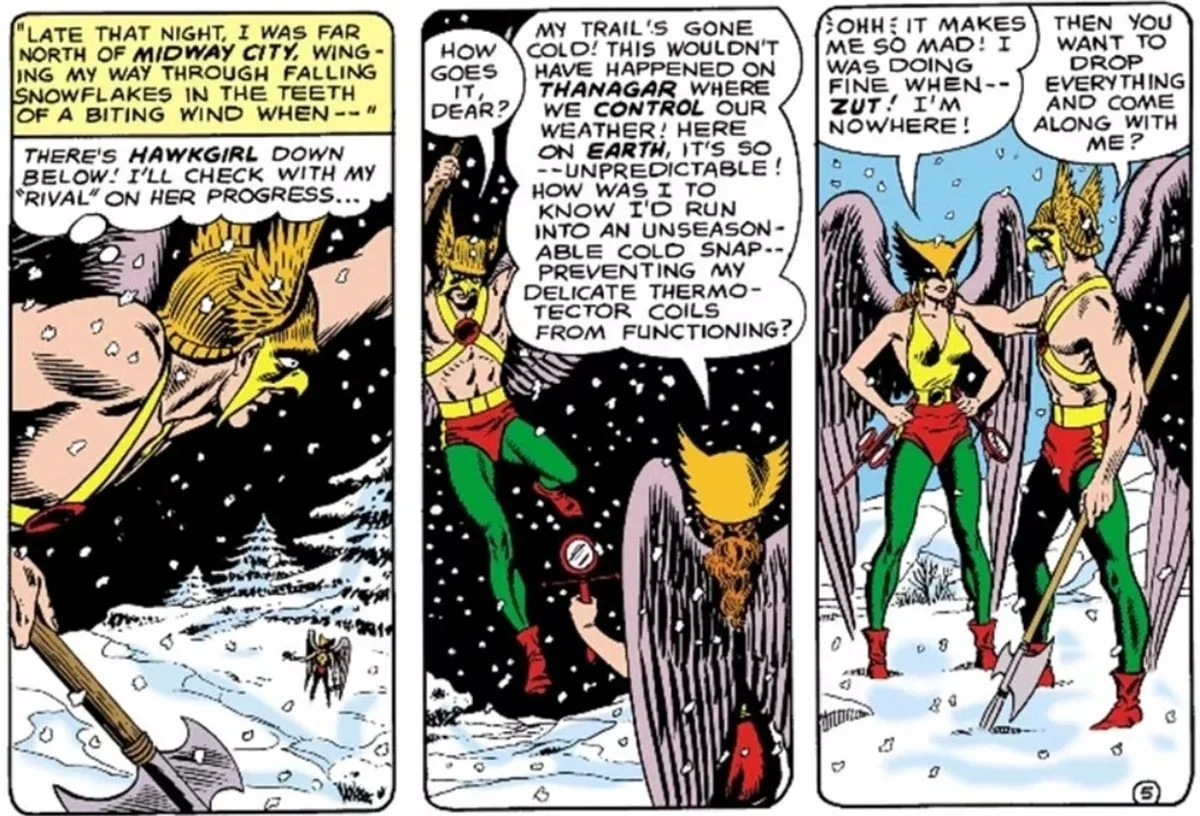
Almost immediately, Midway City found its identity tethered to royalty of the skies. It was established as the primary base of operations for Hawkman and Hawkgirl. During this era, Katar Hol and Shayera Hol—operating under their human aliases as police officers from the planet Thanagar—made the city their earthly home. Carter Hall, the human alias typically associated with the earthly reincarnations of the winged heroes, notably worked as the curator at the Midway City Museum.
The Doom Patrol Era (Mid-1960s)
During the mid-1960s, Midway City achieved a rare distinction within DC lore. Traditionally, DC Comics adhered to an unspoken rule: one major fictional city per prominent hero (with occasional exceptions made for Gotham and Metropolis, which absorbed surrounding regions). However, Midway City shattered this convention when it became the home base for the Doom Patrol. Led by the eccentric, wheelchair-bound scientist Niles Caulder, this strange band of outcast heroes operated out of a sprawling mansion within city limits.
Eras of Destruction and Obscurity
As decades passed, the city weathered various cosmic and terrestrial conflicts. Following the tragic demises and subsequent revivals of both the Doom Patrol and the Hawks, Midway City experienced periods of vulnerability. During major crossover events like Final Crisis, the city suffered catastrophic damage. Over time, as modern comic book writers shifted their focus to other hubs, Midway City largely faded into the background, becoming a nostalgic relic of Silver Age storytelling rather than a bustling hub of active heroics, though it occasionally resurfaced in pages of The Flash and World’s Finest.
Supporting Data: The Geography of the DC Universe vs. The Real World
The logistical layout of the DCU has long fascinated geography nerds and comic book scholars alike. A fascinating piece of supporting data regarding the scale of the DC Universe stems from the classic intercompany crossover event Justice League/Avengers. Within the narrative boundaries of that crossover, it was canonically established that the Earth of the DC Universe is physically larger than the Earth of the Marvel Universe.
This cosmic-scale trivia offers an in-universe explanation for a logistical marvel: how an entire nation can house so many densely populated, distinct fictional cities without completely erasing standard American geography.

- Metropolis generally occupies a Delaware/New York-adjacent coastal region.
- Gotham City is traditionally pinned to southern New Jersey.
- Coast City anchors the California coastline in place of Los Angeles.
- Central City and Keystone City sit adjacent to one another across a river, typically mapped in the Midwest (often equated to areas of Kansas or Missouri).
By placing Midway City firmly in Michigan—effectively replacing Detroit—Lanterns adheres to this tradition while streamlining the map for general audiences who might find a landscape cluttered with both real and fictional major cities overwhelming. In the DCU version of America, Detroit simply does not exist; Midway City occupies its space, its culture, and its history.
Official Responses and Creative Intent
While James Gunn and the executive producers of Lanterns have kept tight-lipped about the granular details of every future DCU cameo or crossover, Gunn’s public statements regarding world-building offer clear insight into his methodology.
Gunn has repeatedly emphasized that the new DCU will feel lived-in, cohesive, and deeply rooted in comic book lore rather than striving for artificial, hyper-realistic grounding. The choice to place John Stewart in Midway City—rather than keeping his traditional comic book origin of Detroit—is a deliberate creative choice. In the comics, Stewart’s gritty, urban upbringing in Detroit helped shape his grounded, architectural mindset and pragmatic personality. By translating that narrative weight into Midway City, the production team retains the thematic grit of Stewart’s origins while plugging him directly into DC’s established fictional geography.
Industry insiders note that every town name, background prop, and localized reference in Phase One of the DCU is vetted to ensure it leaves doors open for future storytelling. Midway City is no exception. By utilizing a city with deep ties to the Hawks and the Doom Patrol, the creative team has consciously chosen a location rich with narrative potential.
Implications: What Midway City Means for the Future of the DCU
The introduction of Midway City in Lanterns is far more than a throwaway Easter egg for hardcore comic book fans; it carries massive implications for the future direction of the DCU’s interconnected storytelling.

1. The Teasing of Hawkman, Hawkgirl, and a Potential Power Couple
Fans of DC animation will fondly remember the electric romantic and professional chemistry between John Stewart and Shayera Hol (Hawkgirl) in the beloved Justice League and Justice League Unlimited animated series. With John Stewart operating out of Midway City in the live-action DCU, and with Midway City historically serving as the home turf of the Hawks, the stage is brilliantly set for a live-action convergence. If the DCU’s iteration of Hawkgirl also hails from or operates out of Midway City, it adds tremendous fuel to fan theories that these two iconic characters will cross paths and form a powerhouse romantic and heroic dynamic mirroring their animated legacy.
2. Expanding the Supernatural and Bizarre: The Doom Patrol
Beyond the winged warriors of Thanagar, Midway City’s history is inextricably linked to the Doom Patrol. While James Gunn has already proven his affinity for strange, misfit characters—most notably through The Suicide Squad and Peacemaker—introducing a city that once sheltered DC’s strangest heroes opens up avenues for psychological horror, surrealism, and cosmic weirdness in the DCU. Could Chief Niles Caulder and his band of tragic anomalies be lurking in the shadows of the DCU’s Michigan? It remains a distinct possibility.
3. A Broader, More Populated Universe
Ultimately, the use of Midway City signals to audiences that the DCU is a place where super-powered history predates the current narrative arc. Heroes have lived, fought, and built lives in these cities for years. As Lanterns continues to peel back the layers of its cosmic mystery, the terrestrial anchor of Midway City proves that in James Gunn’s DCU, every corner of the map holds a story waiting to be told.
