
Three Decades of Terror and Tenderness: How Scream’s Billy and Stu Became Unlikely Queer Icons
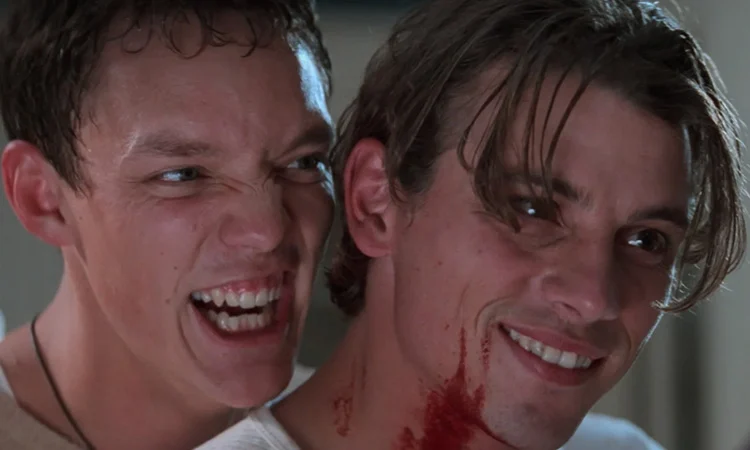
NEW YORK — Thirty years after the sleepy, fictional town of Woodsboro was rocked by a wave of suburban carnage, the masterminds behind the iconic Ghostface mask have acquired a reputation that Wes Craven likely never envisioned in his wildest cinematic dreams.
At a packed, nostalgic 30th-anniversary Scream panel during New York Comic Con, original cast members Matthew Lillard, Skeet Ulrich, Jamie Kennedy, and legendary original Ghostface stunt performer Lee Waddell reflected on the cultural legacy of the 1996 slasher classic. Amid discussions about fake blood, cinematic history, and studio skepticism, the conversation naturally turned toward the deep, enduring cultural resonance of the film’s central killers, Billy Loomis (Ulrich) and Stu Macher (Lillard).
Far from being remembered solely as unhinged, homicidal teenagers, the dynamic between Billy and Stu has spent the last three decades transforming into something far more profound. Today, Lillard and Ulrich embrace a tongue-in-cheek moniker bestowed upon them by passionate fans at convention circuits across the globe: the "First Husbands of Horror."
However, beneath the playful convention banter lies a genuine cultural touchstone. For a generation of LGBTQ+ fans, the volatile, intensely co-dependent relationship between the two cinematic murderers served as an unintended, yet deeply powerful, queer awakening.
Main Facts: The Legacy of Woodsboro’s Infamous Killers
The revelations at New York Comic Con highlighted the unexpected ways art transcends its original intentions. When asked by a moderator if any specific fan interaction had ever demonstrated just how powerful his work had become, Lillard offered an answer that resonated deeply with the audience.
"Recently, we’ve adopted this moniker," Lillard told the convention crowd, referencing the "First Husbands of Horror" title. "And who knew that we were the coming out for so many people? If you’re not aware, people approach us all the time like, ‘You are my queer awakening.’"
Rather than dodging or minimizing the interpretation, Lillard leaned into it with grace and empathy, emphasizing the importance of validation for marginalized fans.
"I just want to say that for us, I think that it’s super powerful that our relationship to these characters has nothing to do with them being gay," Lillard explained. "But if it means something to a kid out there somewhere who’s like, ‘Oh, I feel seen in this relationship,’ then it’s important for us to hold that space for this idea that there were these queer icons. We were not doing queer on the day, but we’re here for it 30 years later."
This organic evolution underscores how audiences project their own lived experiences onto complex cinematic relationships, transforming subtext into explicit cultural ownership decades after the fact.
Chronology: From Accidental Subtext to 30 Years of Fandom
To understand how Billy and Stu became accidental queer icons, one must trace the historical and creative timeline of the Scream franchise, mapping its journey from a troubled indie production to a multi-generational pop-culture phenomenon.
1996: The Blood, the Sweat, and the Skepticism
The journey began under decidedly ungllamorous conditions. Reflecting on the grueling early-morning shoots of late 1995, Lillard recalled lying in the back of a production van at six in the morning, caked in fake stage blood, listening to his castmates discuss what jobs they might have to take next to pay the rent. At the time, Lillard’s verdict on the project was grim: "This movie’s lame, nobody’s ever gonna see it."
Even screenwriter Kevin Williamson faced his own internal hurdles during the writing process. Drawing inspiration from the notorious real-life 1924 Leopold and Loeb murder case—a historical crime widely noted by historians and literary analysts for its intense, obsessive psychological and homoerotic dynamics—Williamson channeled those themes into Billy and Stu.
However, looking back on the era, Williamson has openly admitted that he was "very hesitant to present the gay side of me in my work" during the mid-1990s socio-political climate. Consequently, the homoerotic tension between the two teenage serial killers was left "a little coded and maybe accidental."
The Turning Point: Wes Craven’s Vision
Fortunately, legendary director Wes Craven possessed a much clearer foresight than his young actors. Lillard recalled a pivotal moment when the production wrapped its initial phases:
"At some point, Wes was throwing a celebration dinner. We all got invited over to his house to celebrate," Lillard remembered. "I remember seeing Wes and going, ‘Why are we doing a celebration dinner?’ He said, ‘Because the exit polls are beyond anything that Miramax or Dimension has ever seen.’ The studio had tripled its marketing spend and screen count, and it’s gonna be a monster hit."
The Theatrical Explosion and Modern Resurgence
Released nationwide in the United States on December 20, 1996, Scream defied all expectations. It relied heavily on grassroots word-of-mouth marketing to rake in approximately $173 million at the worldwide box office, completely revitalizing the dormant slasher genre.
Over the subsequent decades, the franchise expanded into a massive cinematic universe. Skeet Ulrich eventually returned to the franchise as Billy Loomis in 2022’s legacy sequel Scream and Scream VI, utilizing digital de-aging technology to haunt his on-screen daughter, Sam Carpenter. Meanwhile, Matthew Lillard’s legendary fan-favorite status culminated in his much-discussed reprisal of Stu Macher in Scream 7.
Supporting Data and Creative Insights
The cultural longevity of Scream is backed by tangible data regarding its box office success, critical re-evaluations, and the sheer volume of demographic engagement seen at modern fan conventions.
| Milestone / Metric | Detail / Figure |
|---|---|
| Release Date | December 20, 1996 (US Theatrical Release) |
| Global Box Office | Approx. $173 million worldwide against a modest $14M budget |
| Primary Inspiration | The Leopold and Loeb murder case (noted for homoerotic subtext) |
| Modern Reprisals | Ulrich returned in Scream (2022) & Scream VI; Lillard returned in Scream 7 |
| Fan Demographics | Significant multi-generational LGBTQ+ representation and engagement |
Beyond the box office figures, the psychological impact of the film on its viewers remains a frequent topic of convention humor. During the New York Comic Con panel, Jamie Kennedy addressed the fans who look to his character, film geek Randy Meeks, as a source of solace.
"A lot of people come up to me and say that Scream is their comfort movie," Kennedy remarked to roaring laughter from the audience. "And I say to them, ‘Who hurt you?’"
It is a fair, self-aware question. Yet, the ability of a brutal horror movie about masked murderers to function as a "comfort watch" speaks volumes about the deep emotional connections forged between the audience and the ensemble cast.
Official Responses and Emotional Impact
For Lillard, the recurring interactions with fans who experienced a "queer awakening" through his chaotic chemistry with Ulrich transcend standard celebrity vanity. They represent the ultimate validation for an artist.
Reflecting further during an audience Q&A session, Lillard returned to the subject with visible emotion, focusing on the metaphorical "little queer kid somewhere" who might feel profoundly isolated in their daily life.
"You can make an impact on that kid’s life. That’s the f***ing best," Lillard stated passionately. "That transaction to me makes this whole thing worth it."
This sentiment captures the unique intersection of horror fandom and identity politics. While horror has historically functioned as an allegorical sandbox for marginalized communities—providing monsters and outsiders with whom queer audiences can readily identify—the adoption of Billy and Stu as romanticized anti-heroes and queer icons represents a unique reclamation of narrative space.
As Lillard noted, the actors did not consciously set out to play queer characters in 1995. Yet, by portraying characters whose intense, suffocating loyalty to one another eclipsed their relationships with anyone else, they inadvertently created a blueprint of obsession that resonated powerfully with viewers searching for reflections of their own hidden identities.
Implications: The Enduring Power of Woodsboro
The conversation at New York Comic Con 2026 serves as a microcosm of how cinema evolves long after the cameras stop rolling. A film that began as a cynical, self-aware deconstruction of 1980s horror tropes has matured into a rich cultural tapestry where fans can find community, validation, and representation in the most unexpected of places—even among cinematic serial killers.
As the Scream franchise continues to expand into its fourth decade, pushing boundaries with new entries like Scream 7, the foundational pillars established by Craven, Williamson, Ulrich, and Lillard remain unshakable.
Whether fans view Woodsboro through the lens of meta-horror critique, nostalgic comfort, or as the unexpected birthplace of their authentic identities, the town created in 1996 continues to offer a space worth holding onto. For Lillard and Ulrich, donning the mantle of the "First Husbands of Horror" is not merely a clever convention gimmick—it is a heartfelt acknowledgment of the deep, unbreakable bond between art and the audiences it touches.
New York Comic Con 2026 runs at the Javits Center in New York City from October 8 to October 11, continuing to celebrate milestone anniversaries of pop-culture touchstones.
