
The Weight of Legacy: Ethan Hawke and Padraic McKinley Bring Grit and Grace to the 2026 Sundance Film Festival
By [Your Name/Editorial Desk]
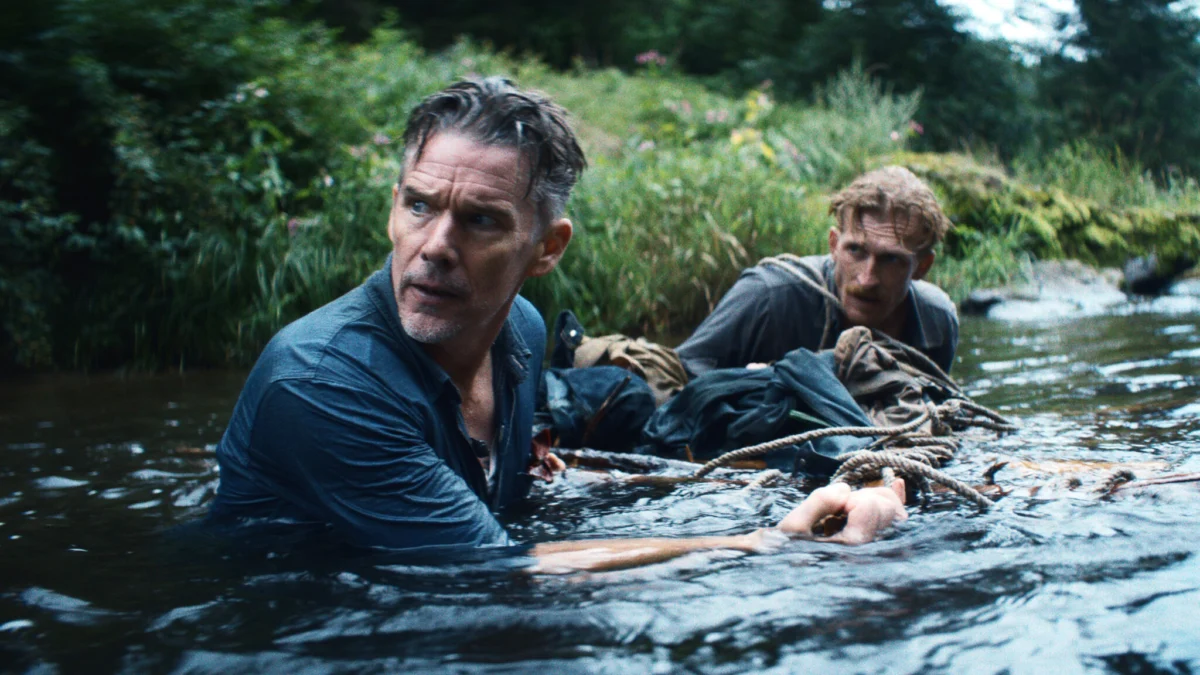
The air in Park City, Utah, is always thin in late January, but during the 2026 Sundance Film Festival, the atmosphere felt particularly charged. Amidst the flurry of independent premieres and industry speculation, one film stood out for its visceral, back-to-basics approach to storytelling: The Weight. Directed by Padraic McKinley and headlined by a powerhouse cast including Ethan Hawke, Russell Crowe, and Julia Jones, the film serves as a love letter to a bygone era of cinema—a time when "badass" meant earthy, dangerous, and deeply human.
The premiere at The Ray Theatre on January 26, 2026, drew a crowd eager for a return to the tactile, sweat-soaked adventure films of the 1970s. As the lights dimmed, the audience was transported back to the harrowing, dust-choked reality of the Great Depression, witnessing a cinematic journey that prioritizes the endurance of the human spirit over the artifice of modern blockbusters.
A Journey Through the Depression: The Narrative Framework
Set against the unforgiving backdrop of the American wilderness in the 1930s, The Weight introduces audiences to Samuel Murphy, played with a haunting, quiet intensity by Ethan Hawke. The film’s inciting incident is a devastating separation: Murphy is forcibly taken from his young daughter and thrust into a remote, brutal labor camp.
In this landscape of despair, survival is not a guarantee; it is a negotiation. The film’s inciting shift occurs when a ruthless warden, portrayed with calculated menace by Russell Crowe, offers Murphy a Faustian bargain: early release in exchange for smuggling a shipment of gold through the treacherous, untamed backcountry. For Murphy, the gold is secondary. The promise of freedom is his only path toward mending the fractured remains of his family life.
As Murphy assembles a small, desperate crew of convicts to traverse the wilderness, the narrative shifts from a survival drama to an intense psychological study. The journey, fraught with physical peril, acts as a crucible. Under the pressure of the elements and the constant threat of betrayal, the characters are forced to strip away their pretenses. The result is a fragile, unexpected sense of family among those who have nothing left to lose.
The Aesthetic of Earth and Sweat: A Director’s Vision
Following the premiere, director Padraic McKinley sat down with his cast to discuss the film’s unique DNA. "We wanted to make this sort of old-school, adrenalized, adventure film," McKinley remarked. "We wanted to dedicate ourselves to the ethos of those films that defined the medium for us."
The inspiration for The Weight is palpable. McKinley and his creative team looked directly to the lineage of 1970s cinema—specifically the rugged, existential adventure of Sydney Pollack’s Jeremiah Johnson (1972) and the unrelenting, nerve-shredding tension of William Friedkin’s Sorcerer (1977).
For Ethan Hawke, who has become a staple of the independent film circuit, these influences were not just aesthetic—they were spiritual. "There’s a grittiness to them, a sloppiness," Hawke explained. "And by sloppy, I mean earthy, salt, sole, sweat. You feel the movie rather than watch it. They aren’t about superheroes; they’re about real people, and how our lives are action-packed. I was really drawn to try to create a portrait of masculinity that I admired and respected."
Performance and Texture: The Supporting Ensemble
While Hawke anchors the film with a stoic, commanding presence, the supporting performances provide the friction necessary to ignite the screen. Russell Crowe’s Clancy serves as the perfect antagonist—a man of measured intensity whose presence looms over the proceedings even when he is off-screen.
Austin Amelio and Avi Nash bring a raw, kinetic energy to their roles as fellow convicts, adding layers of tension that keep the audience constantly guessing. However, it is Julia Jones’s portrayal of Anna that arguably provides the film’s moral center. As the only woman in this desolate, male-dominated environment, Jones brings a level of grit and grace that defies period-typical tropes.
"One of the things I was the most drawn to," Jones noted during the Q&A, "was that she defied your expectations or anything you’ve ever seen in a female character in this time period."
The film’s aesthetic is elevated by Matteo Cocco’s sweeping, masterful cinematography, which captures both the vast, terrifying beauty of the landscape and the claustrophobic intensity of the characters’ plight. Complemented by an unsettling, atmospheric score composed by brothers Latham and Shelby Gaines, The Weight manages to turn the environment itself into an antagonist, mirroring the internal conflicts of its leads.
The High of the Craft: Behind the Scenes in Germany
The production process for The Weight was, by all accounts, as grueling as the narrative it depicts. Filmed over a five-month span in the forests of Germany, the cast and crew endured conditions that demanded total commitment.
"We spent our summer outdoors running around the forest," Hawke laughed, reflecting on the experience. "There’s ticks, there’s Lyme disease, there’s logs in your face—but everybody was trying to take care of each other. When you’re doing that and you believe in the movie, it’s so much fun. It’s a high that you chase."
This "high" is the hallmark of the independent spirit that Sundance was founded to protect. It is a process that favors collaborative discovery over clinical, big-budget efficiency.
Implications for Independent Cinema: A "North Star"
The conversation during the premiere’s Q&A inevitably turned toward the current state of the industry. When asked about his long history with the Sundance Film Festival—a relationship spanning back to the 1990s—Hawke spoke with a palpable sense of urgency regarding the future of the art form.
He referenced the tribute to Robert Redford held earlier in the week, describing the experience as "sticking your finger in an electric socket." For Hawke, Redford’s vision for Sundance was never about prestige or industry politics; it was about the fundamental human need for diverse, authentic voices.
"It wasn’t a PC thing," Hawke noted. "It was a sincere desire to listen. With no agenda, but to go, ‘I need to hear you.’ [Redford] built this lightning rod, and so many people cared."
Hawke’s words underscored a growing sentiment among the filmmaking community at this year’s festival: that the role of independent film is more critical now than ever. In an era dominated by algorithmic content and corporate-run franchises, films like The Weight serve as a reminder of the "North Star" that actors like Paul Newman and Robert Redford once provided.
"It’s gonna be so important as we all say goodbye to Park City that we carry the fire that was created here," Hawke concluded, his voice steady with emotion. "We carry it forward into all our lives, into all of what we’re doing."
Conclusion: An Enduring Legacy
As the 2026 Sundance Film Festival draws to a close, The Weight remains one of the most talked-about entries in the Premieres section. It is a film that successfully marries the technical demands of an adventure epic with the intimate, messy, and deeply felt character studies that define the best of indie cinema.
For audiences, the film offers more than just a trip to the theater; it offers a visceral connection to the past and a challenge for the future. Whether it is through the lens of a Depression-era struggle or the modern-day battle to keep independent art alive, the message of The Weight is clear: it is not the gold we carry that defines us, but the people we fight for and the integrity we maintain while doing so.
As the credits rolled on that cold January night in Park City, it was evident that the "fire" Hawke spoke of is still burning bright. In a world of fleeting trends, The Weight stands as a testament to the enduring power of grounded, honest, and courageous storytelling.
