
Beyond the Stage: Revisiting Mick Jagger’s Cinematic Journey and Ageless Cultural Footprint
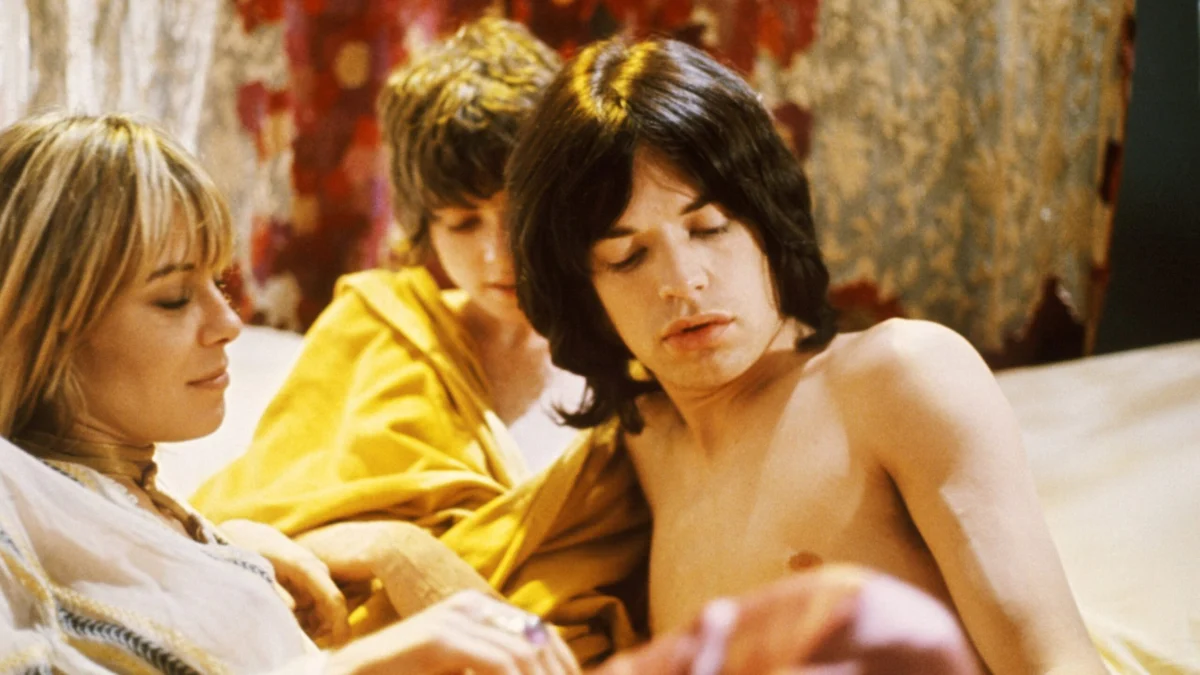
As Mick Jagger crossed the milestone of his 80th birthday, the world celebrated him through the familiar, thunderous lens of rock royalty. For over six decades, the frontman of The Rolling Stones has been lauded for his vocal acrobatics, hypnotic stage choreography, and a catalogue of songwriting that defined generations. Yet, amidst the endless tributes to his musical legacy, a fascinating chapter of his career often remains in the shadows: his work as an actor.
While contemporaries like David Bowie found cinematic immortality in vanguard roles, Jagger’s celluloid journey has been a more elusive affair. It is a mosaic of countercultural risks, shelved projects, near-misses with legendary auteurs, and sporadic, calculated performances that span over half a century.
Main Facts: The Ageless Icon and His Silver Screen Ambitions
Mick Jagger’s cinematic footprint is defined by a paradoxical tension. On stage, he is an incandescent, hyper-kinetic force of nature, commanding stadiums with a theatricality that makes every performance a masterclass in acting. On film, however, he has predominantly chosen roles that are introspective, decadent, or detached, often playing variations of the countercultural antihero.
Despite early industry predictions that he would become a major cinematic force, Jagger never secured the definitive Hollywood breakthrough that transformed peers like David Bowie (The Man Who Fell to Earth), Cher (Moonstruck), or Lady Gaga (A Star Is Born) into undisputed movie stars. Instead, Jagger approached acting with the selective curiosity of a dilettante and the precision of an artist acutely aware of his own public persona.
His filmography is peppered with fascinating anomalies—from playing an Australian bushranger to portraying a jaded pimp and a ruthless art dealer—interspersed with legendary projects that collapsed just before cameras rolled.
Chronology: A Timeline of Cinematic Risks and Near-Misses
Jagger’s cinematic ambitions burst onto the scene in 1970 with a pair of remarkably risky film choices that arrived almost simultaneously, setting the tone for a non-traditional acting career.
1969–1970: The Baptism of Fire
In 1970, two major feature films starring the British rock star premiered: Ned Kelly and Performance.
Ned Kelly, directed by Tony Richardson, cast Jagger as the legendary 1870s Australian outlaw. Though filmed later, it hit theaters two months before Performance. Critics at the time, including reviewers for Variety, acknowledged Jagger’s natural, instinctive charisma on stage but found his screen presence in the biopic "curiously static," largely laying the blame at the feet of the director’s rigid framing.
Meanwhile, Performance—codirected by Donald Cammell and Nicolas Roeg in their feature-directing debuts—was an entirely different beast. Shot in 1968, the film was famously shelved by Warner Bros. executives who deemed it "unintelligible." In October 1969, Variety reported on the studio’s internal panic over the picture. However, under a new regime led by John Calley, the studio’s perspective shifted dramatically, with insiders calling it one of the hottest properties on their slate.
When Performance finally opened in August 1970, Variety’s A.D. Murphy dismissed it as a "substandard crime meller (melodrama)" strictly for "the psychedelic set," panning the performances as flat. Yet, time has proven the critics wrong. Performance has evolved into a celebrated cult classic. Audiences gravitated toward Roeg’s elliptical, visually striking style and Jagger’s magnetic, androgynous performance as a burned-out, reclusive rock star—a meta-commentary on his own fame. The film also featured "Memo From Turner," essentially an early prototype for the modern music video.
1970: The Industry Perspective
In May 1970, just as his narrative film career was taking off, Variety published a comprehensive roundup of rising British acting talent. The list featured a roster of future legends, including Anthony Hopkins (described as a "strong, good-looking actor in his 30s with big potential"), Ian McKellen, Dudley Moore, Helen Mirren, and Charlotte Rampling.
Assessing Jagger’s cinematic prospects, the publication noted: "His film work is not yet seen but may well surprise those who play him down as just a wacky warbler." While few would ever characterize Jagger as "wacky," his private life certainly fueled the British tabloids.
The 1970s and Beyond: The Roads Not Traveled
Following his 1970 introduction, Jagger’s film career slowed down significantly. Instead of chasing Hollywood blockbusters, he occasionally drifted into high-profile artistic endeavors and near-misses.
- The Unmade Dune: Jagger was famously signed to appear in Alejandro Jodorowsky’s legendary, highly ambitious cinematic adaptation of Frank Herbert’s Dune—a project that ultimately collapsed before production began, entering film lore as one of cinema’s greatest lost masterpieces.
- The Fitzcarraldo Departure: Jagger began physical and logistical preparations for Werner Herzog’s grueling jungle epic Fitzcarraldo. However, the production’s infamous, endless delays forced Jagger to drop out due to scheduling conflicts with The Rolling Stones, resulting in his character being entirely written out of the film.
The Later Years: Selective Cameos and Character Roles
Over the last five decades, Jagger has maintained a highly selective approach to acting, stepping in front of the camera only when a unique script or compelling character caught his eye:
- 2001: He played a jaded, cynical business executive running a high-end escort agency in George Hickenlooper’s gritty drama The Man From Elysian Fields.
- 2015: He stepped into a deeply unexpected role, portraying a transgender drag queen in Sean Mathias’ adaptation of Martin Sherman’s Holocaust drama Bent.
- 2019: He appeared as a manipulative, wealthy art dealer in Giuseppe Capotondi’s neo-noir thriller The Burnt Orange Heresy.
Supporting Data: Box Office, Critical Reception, and Industry Context
To fully understand Mick Jagger’s trajectory as an actor, it is helpful to place him within the broader ecosystem of musician-turned-actors.
| Era / Year | Project | Role Type | Critical/Commercial Reception at Release | Modern Legacy |
|---|---|---|---|---|
| 1970 | Ned Kelly | Bushranger (Ned Kelly) | Lukewarm reviews; criticized for static direction. | Forgotten historical curiosity. |
| 1970 | Performance | Decadent Rock Star (Turner) | Initially shelved as "unintelligible"; panned as psychedelic schlock. | Acclaimed cult classic; influential visual styling. |
| 1970 | Gimme Shelter | Documented Subject / Himself | Critical triumph; deeply sobering historical record. | Masterpiece of documentary filmmaking. |
| 2001 | The Man From Elysian Fields | Business Executive (Mr. Luther) | Modest indie release; praise for Jagger’s dry delivery. | Respected niche character performance. |
| 2015 | Bent | Drag Queen (Greta) | Limited release; praised for theatricality. | Memorable dramatic cameo. |
| 2019 | The Burnt Orange Heresy | Art Dealer (Joseph Cassidy) | Mixed-to-positive reviews; praised for fitting casting. | Stylish late-career genre entry. |
Historically, the music industry has produced two distinct types of crossover actors. Artists like Frank Sinatra, Doris Day, and in later decades, Will Smith, transitioned into full-fledged movie stars, headlining blockbusters and earning Academy Awards. Conversely, a vast ecosystem of legendary musicians—ranging from Björk and Joan Jett to Eminem—dabbled in cinema selectively, treating acting as a canvas for experimental self-expression rather than a primary career track. Jagger firmly belongs to the latter camp.
Official Responses and Industry Reception
Industry perspectives on Jagger’s acting have evolved alongside his musical career. In the late 1960s and early 1970s, mainstream Hollywood executives were both terrified of and seduced by the counterculture. Studio bosses at Warner Bros. initially did not know what to make of Performance, viewing its blending of gender fluidity, criminality, and philosophical introspection as toxic box office poison.
Yet, directors who worked with him recognized an innate camera-readiness that bypassed traditional acting school techniques. As contemporary reviews pointed out, Jagger’s mastery of physical expression on stage translated into an instinctive, if occasionally restrained, screen presence.
When reflecting on his film work, critics have generally noted that Jagger does not "act" in the traditional sense; rather, he projects variations of his own mythos. Whether playing a burnt-out musician in Performance, a manipulative art patron in The Burnt Orange Heresy, or a sharp-suited pimp, Jagger uses his formidable pop-culture gravity to anchor the frame.
Implications: What Jagger’s Film Career Tells Us About His Brand
Mick Jagger’s limited cinematic CV offers profound insights into how the ultimate rock icon managed his public image and artistic longevity.
Unlike many musicians who chase silver-screen validation to extend their relevance, Jagger never needed Hollywood. The Rolling Stones provided an infinite stage, immense wealth, and global cultural dominance. Consequently, his film choices were born of pure artistic curiosity, risk-taking, and a desire to subvert the expectations of an adoring public.
When the Beatles debuted in the 1960s, they were marketed as clean-cut, polite British lads, while the Rolling Stones were deliberately cast as rock-and-roll outlaws. Jagger leaned heavily into this scandalous persona, and fans watched his wild personal life—marked by high-profile relationships, eight children with five different women, and rock-and-roll excess—with a mixture of shock and fascination.
By taking on transgressive, decadent, or morally ambiguous film roles, Jagger consistently refused to let the public pigeonhole him as a conventional pop star. He used cinema as a playground to deconstruct his own legend.
As he continues to defy the laws of aging well past his eightieth year, the question of whether he will secure that elusive "breakthrough" acting role becomes increasingly academic. Mick Jagger didn’t need to conquer Hollywood because he had already conquered the world. And as history proves, with an artist as unpredictable as Jagger, there is always time for one more surprise.
