
The Meta-Cinephile: Alex Ross Perry’s Audacious Leap into Non-Fiction
By Adam Nayman
In the landscape of contemporary American independent cinema, few figures are as polarizing or as intellectually restless as Alex Ross Perry. Known for his jagged, psychologically fraught character studies like Listen Up Philip and Her Smell, Perry has long operated within the boundaries of narrative fiction. Yet, as the cultural clock winds down on the analog era—a period defined by the tactile intimacy of video stores and the sprawling, sardonic influence of 90s indie rock—Perry has pivoted toward an unexpected new frontier.
His latest projects, Videoheaven and Pavements, exist in a liminal space. They are ostensibly "essay films," yet they defy the dry, instructional categorization of the genre. As of this writing, these works have not seen a traditional release, nor have they hit the festival circuit with the usual fanfare of posters and trailers. They are, for now, spectral entities—handmade, obsessive, and deeply personal excavations of pop-culture history.
The Genesis of an Obsession: A Chronology of Creation
The genesis of Videoheaven and Pavements spans nearly a decade, rooted in a period of professional frustration and personal reassessment. Videoheaven, a three-hour meditative dive into the metaphysics of American video-store culture from the early 1980s to the dawn of the streaming age, began its life in 2014. Perry, drawing inspiration from Daniel Herbert’s seminal book Videoland, spent years attempting to bring a video-store narrative to life through traditional television formats, including a failed pitch to Amazon and a shelved adaptation of the novel Universal Harvester.
"The more it became clear that I’d never get corporate money to tell a video-store saga, the more important it was to finish this film on my own," Perry explains. The project found its momentum during the global lockdowns of 2020, as Perry collaborated with Criterion editor Clyde Folley to sift through nearly 200 film clips, transforming a personal archive into a structural critique of how cinema represents its own physical distribution.
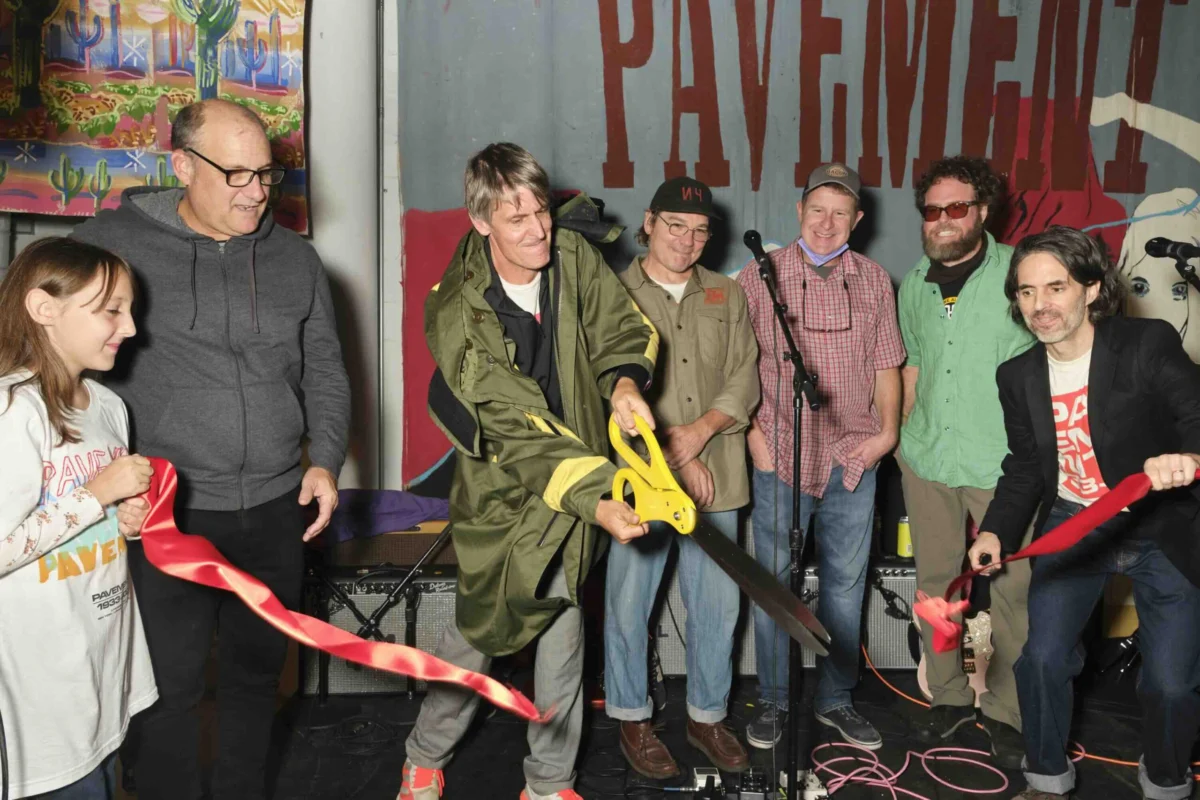
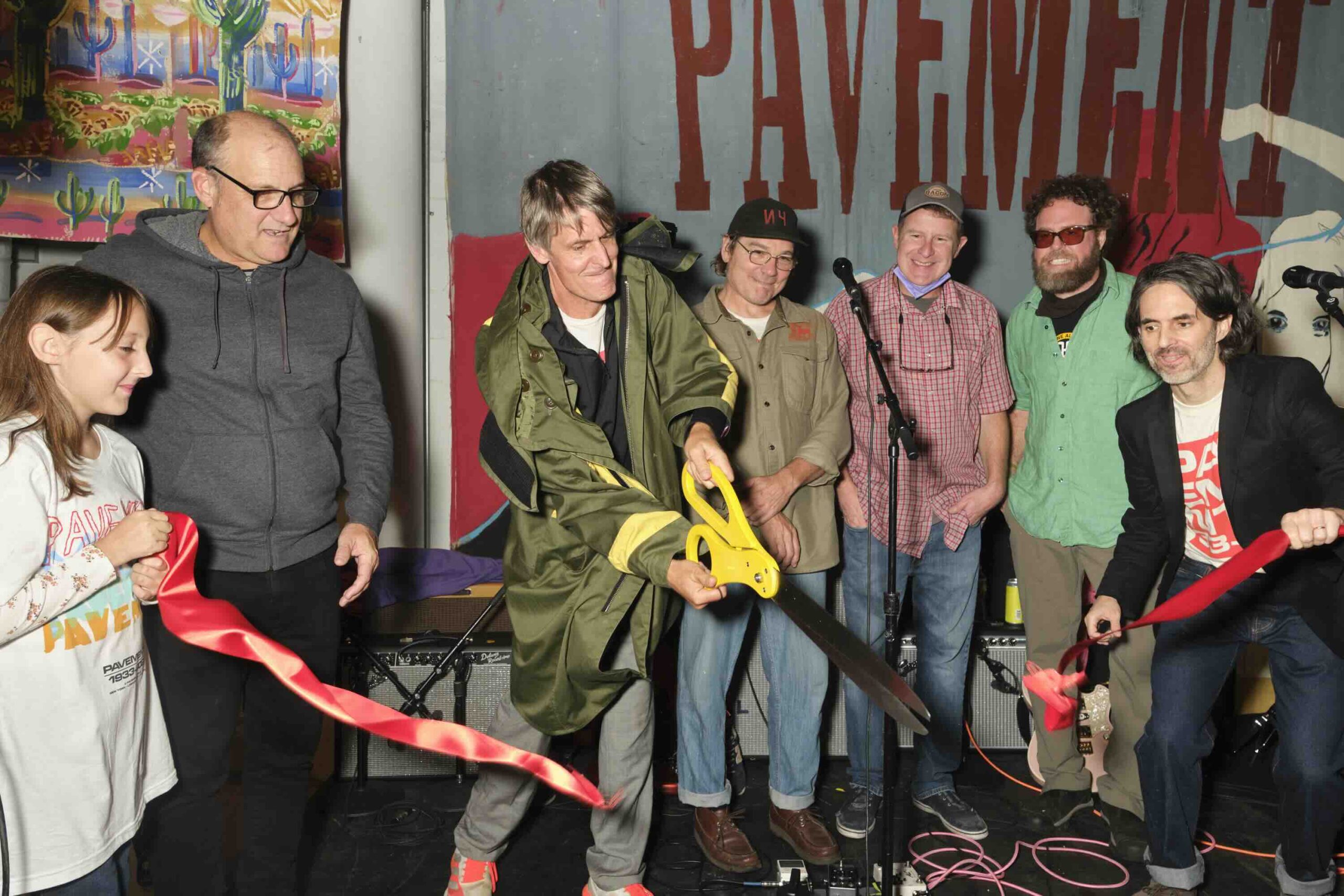
Conversely, Pavements—a kaleidoscopic look at the legendary indie band Pavement—originated from a more collaborative prompt. When approached to create a project about the band, Perry was struck by a producer’s comment: "Stephen Malkmus feels like an Alex Ross Perry character." This observation, while hyperbolic, served as the catalyst for a radical approach to the music documentary. Production on Pavements began in 2020 and evolved into a freeform experiment that blurred the lines between reality, reenactment, and performance art.
Supporting Data: The Structure of the Essay Film
Both Videoheaven and Pavements function as "pop-cultural scholarship," utilizing specific formal strategies to mirror their subjects. Videoheaven adopts the cool, academic rigor of Thom Andersen’s Los Angeles Plays Itself (2003). It is a structuralist study of how the video store moved from being a central, functional space in 80s genre cinema to a symbolic backdrop for the suburban malaise of 90s romantic comedies.
Pavements, by contrast, leans into the surrealist lineage of Todd Haynes’ I’m Not There (2007). It is a multifaceted construction: part concert film, part jukebox musical, and part "shoddy" biopic. Perry’s methodology here was to create a "Pavement Museum" and a staged theatrical production of the band’s songs, then film the public’s reactions to these manufactured events. By the time the cameras were rolling, the events had become "real" through the sheer force of the production’s commitment.
Official Responses and Creative Philosophy
In a candid discussion regarding his shift away from narrative fiction, Perry admits that his interest in traditional storytelling has waned. "I don’t think that Videoheaven and Pavements would make for an illogical double feature," he notes. "I think Pavements is more of a scripted and manufactured movie than it will ever seem like to any given viewer, but that’s mostly a product of my increasing lack of interest in traditional filmmaking."
Perry’s approach to these films is marked by a willingness to relinquish total control. In Videoheaven, the reliance on fair-use laws and the collaborative editing process with Michael Koresky and Clyde Folley allowed for a multi-authored perspective. "He’s a co-author of it in remarkable ways," Perry says of Folley, reflecting on his discovery of the communal nature of non-fiction editing.
Regarding Pavements, Perry’s strategy was to lean into the absurdity of the "music documentary" as a modern cultural commodity. "Maybe that’s the ultimate joke: lean heavily into the absurdity that nowadays, every band gets a movie," Perry suggests. By positing that Pavement—a band that famously eschewed mass-market success—is the "best and most important band of all time," Perry forces the audience to confront their own participation in the cult of legacy.
The Implications: Nostalgia as a Double-Edged Sword
What is truly at stake in these films? On the surface, they appear to be exercises in millennial nostalgia—a lament for a time when indie culture was clearly defined against the mainstream. However, Perry’s films are far more sophisticated than mere "whining." They function as a meta-commentary on the nature of the "clerk" and the "rock star" as archetypes.
- The Clerk as Auteur: In Videoheaven, Perry traces the evolution of the video-store clerk from a mundane retail worker in the 80s to the encyclopedic, Tarantino-esque cinephile of the 90s. The film posits that the video store was the original internet—a social hub where cultural currency was traded in person.
- The Myth of Malkmus: In Pavements, Perry explores the paradox of Stephen Malkmus. Does the band care about their legacy, or is the "don’t care" attitude the ultimate performance? By staging a musical and a biopic-within-the-doc, Perry suggests that the truth of a person is often found in the fiction we create to understand them.
The films are inherently insular, a quality Perry embraces. "I guess that’s the same as academia," he observes regarding the research process for Videoheaven. "Two papers on the same movie, both reasonably well-argued, neither what the filmmaker intended."
Conclusion: A New Direction
As Perry looks toward the future, these two films stand as a testament to his evolution from a filmmaker of fictional crises to an investigator of cultural memory. By operating on the fringes of traditional production—using "homemade" techniques and focusing on subjects that are both hyper-specific and widely recognized—he has successfully created a new type of essay film.
Whether or not the audience accepts these films as "documentary" is perhaps beside the point. As Perry himself notes, the value lies in the process—the creation of a museum, the staging of a musical, the editing of hundreds of clips—which exists largely outside the frame of the finished product. These are films that ask why we obsess over the past, why we build shrines to our favorite artists, and why, even in an age of infinite digital access, we still long for the tangible, social, and slightly messy experience of discovering culture in the dark.
For a generation that grew up in the aisles of video stores and listening to the jagged, poetic guitar lines of Crooked Rain, Crooked Rain, Perry’s latest work offers a reflection that is as uncomfortable as it is essential. It is a closing of the book on a specific era, written by someone who was there, and who, in the process of documenting it, has managed to turn the act of remembering into a radical, generative act of art.
