
The Architect of Earth: How the ‘Lanterns’ Finale Positions John Stewart for ‘Man of Tomorrow’

The landscape of James Gunn’s burgeoning DC Universe (DCU) has shifted dramatically. Following the conclusion of HBO’s Lanterns, the cosmic hierarchy of Earth’s defenders has been redefined, setting the stage for Aaron Pierre’s John Stewart to emerge as a pivotal figure in the upcoming cinematic sequel, Man of Tomorrow. By distancing himself from the traditional oversight of the Green Lantern Corps, Stewart has carved out a unique, independent path that promises to intersect with the high-stakes extraterrestrial conflicts facing David Corenswet’s Superman.
The Main Facts: A New Kind of Lantern
The Lanterns season finale, "Dirt and Stars," served as more than just a wrap-up for the mystery surrounding the death of Kyle Chandler’s Hal Jordan; it functioned as an origin story for a new archetype within the DCU. For much of the series, Aaron Pierre’s character was characterized by his reluctance to commit to the mantle of the Green Lantern. Episode 5 notably saw Stewart reject the traditional Power Ring, leaving audiences to speculate whether he would ever fully embrace the hero’s path.
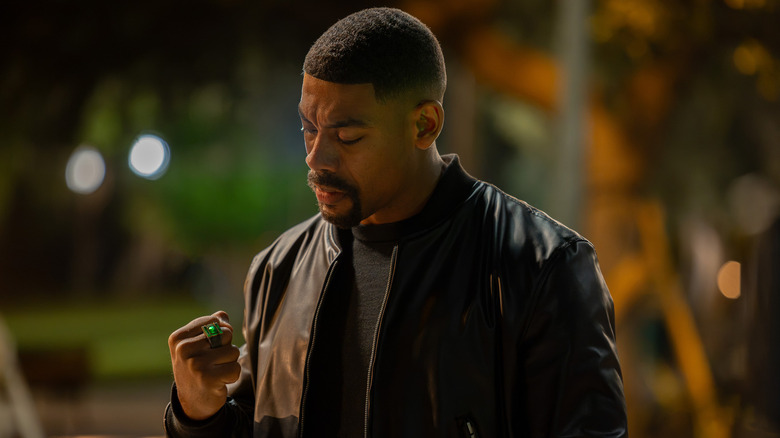
The finale provided a definitive answer. Utilizing a unique power source forged by the villainous Sinestro (Ulrich Thomsen) from the fear-drenched waters of an alien world, Stewart successfully charged a ring of his own. Unlike the standard-issue rings governed by the Guardians of the Universe, Stewart’s ring is fueled by his own internal mastery over fear. This transition establishes him as a "lone wolf" operative—a guardian who protects Earth not because he is ordered to, but because he has chosen to be the sentinel of the planet.
Chronology: Mapping the DCU Timeline
Understanding the placement of Lanterns within the wider DCU is essential to grasping the implications for the future. The series utilized a dual-timeline narrative, jumping between 2016 and 2026. This structure effectively clarified the current state of the DCU following the events of the 2025 Superman film.

By 2026, the status quo is established: Nathan Fillion’s Guy Gardner is recognized as the official Green Lantern of Sector 2814, operating under the purview of the Corps. However, the Lanterns finale brings Stewart into direct opposition with this status quo. In a climactic confrontation in Rushville, Nebraska, Stewart explicitly informs Gardner of his new role. He draws a sharp line in the sand, telling the veteran Lantern that while Gardner is welcome to patrol the stars, Stewart will handle the "dirt"—the grounded, localized threats to Earth.
This timeline placement is crucial for Man of Tomorrow. With the sequel confirmed to take place after the events of both Superman and the 2026 segments of Lanterns, audiences can expect to see a version of John Stewart who is already fully realized as an independent, Earth-bound protector when he inevitably crosses paths with the Man of Steel.
Supporting Data: The Mechanics of Independence
The power dynamic between John Stewart and the traditional Green Lantern Corps is perhaps the most significant departure from source material canon seen in the DCU thus far. By rejecting the Guardians of the Universe, Stewart has removed the "red tape" that typically limits Lanterns to intergalactic jurisdiction.
Sinestro’s role in this transition cannot be understated. By creating a lantern from a world saturated in "fear gas," the showrunners have introduced a nuanced power set that aligns with the emotional spectrum of the DC lore while subverting it. Stewart is not merely a soldier in a galactic police force; he is a man who has looked at the concept of fear and utilized it to forge his own justice. This makes him a perfect foil for the upcoming cinematic threats. With Brainiac—a hyper-intelligent alien android—confirmed as the antagonist for Man of Tomorrow, the need for a guardian who understands both the terrestrial stakes of Earth and the cosmic nature of the enemy is higher than ever.

Official Responses: The Creative Philosophy
The decision to leave Stewart’s future in Man of Tomorrow intentionally open-ended was a deliberate choice by the creators of Lanterns. Both Damon Lindelof and Chris Mundy have emphasized that their primary goal was to provide a satisfying conclusion to their own eight-episode narrative arc, rather than acting as a mere "prologue" to James Gunn’s film.
In an interview with Collider, Damon Lindelof noted that he intentionally avoided reading the script for Man of Tomorrow to ensure the show maintained its own creative integrity. "I think that John, for all the emotional reasons, wants to keep his focus on Earth for now," Lindelof remarked. He further noted that the DCU’s intergalactic scope—as seen in the Supergirl projects and the looming threat of Brainiac—creates a natural vacuum that Stewart is uniquely positioned to fill, even if his motivations remain firmly rooted in the defense of his home.
Chris Mundy echoed this sentiment to Entertainment Weekly, clarifying that the final scene in Lanterns was not a "set-up" in the traditional sense, but rather a "hand-off." The showrunners wanted to ensure that when James Gunn takes the reins for the character in the film, Stewart is a fully fleshed-out protagonist with a clear moral code and a definitive mission, rather than a character still in the middle of an origin story.
Implications: What This Means for ‘Man of Tomorrow’
As we look toward the July 9, 2027, release date for Man of Tomorrow, several implications arise from the conclusion of Lanterns:
- The Intergalactic vs. The Terrestrial: With Superman and Lex Luthor likely heading off-planet to combat Brainiac, the film may explore the tension between global protection and cosmic duty. Guy Gardner, as a formal agent of the Corps, may be forced to prioritize the galaxy, whereas John Stewart’s "independent contractor" status allows him the autonomy to stay behind and protect Earth from secondary threats—or join the fight on his own terms.
- The Evolution of the Lantern Corps: Stewart’s defiance of the Guardians sets a precedent. If one man can forge his own power and succeed, it calls into question the necessity of the Corps. This could serve as a major thematic tension in the upcoming DCU films, potentially leading to a schism in the cosmic hierarchy.
- The Brainiac Factor: Brainiac is a collector of worlds. If he descends upon Earth, he represents the exact type of threat that forces a choice between the status quo and radical action. John Stewart, powered by his own resolve and independent of bureaucratic interference, may be the only force capable of making the unconventional choices necessary to stop a machine of Brainiac’s intellect.
- A Dynamic Duo or Rivalry? The relationship between Stewart and Gardner is now strained. How they reconcile their differing philosophies—the soldier vs. the protector—will likely provide the emotional backbone for their future interactions in the films.
Conclusion
The Lanterns finale has successfully transformed John Stewart from a man caught between two worlds into a guardian who defines his own destiny. By stripping away the shackles of the Corps and anchoring him to Earth, the series has provided James Gunn with a complex, formidable, and deeply human character. Whether Stewart acts as a direct ally to Superman or a disruptive force within the larger DCU, his presence in Man of Tomorrow is no longer just a cameo; it is the arrival of a key player in the next generation of DC storytelling.
As the DC Universe continues to expand, the "independent contractor" of Earth will undoubtedly be the one to watch—a man who has faced his fears, forged his own light, and is now ready to face the stars on his own terms.
