
Bridging the Eras: How ‘Avatar Aang: The Last Airbender’ Lays the Groundwork for The Legend of Korra
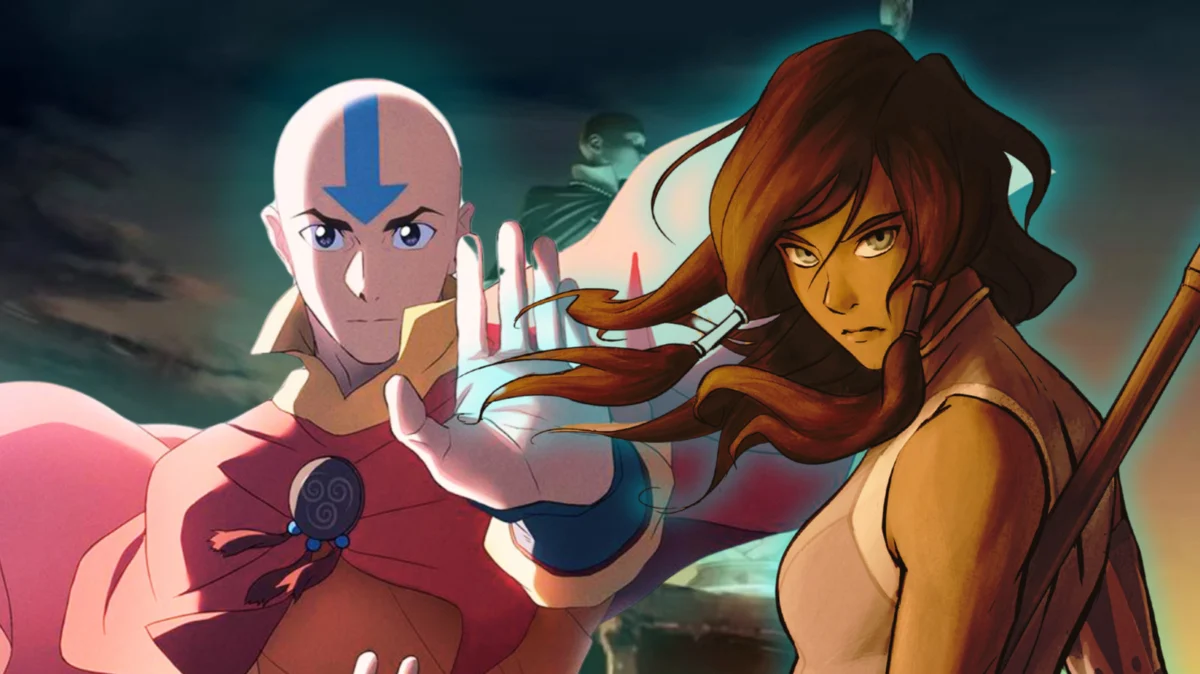
The Avatar universe has always been defined by the cyclic nature of history—the rise and fall of nations, the shifting balance between the spiritual and physical realms, and the immense burden placed upon the shoulders of the reincarnation of light. With the release of Avatar Aang: The Last Airbender, fans have been granted a bridge between the heroic conclusion of the original series and the industrialized, complex political landscape of The Legend of Korra. By exploring the decade immediately following the Hundred Year War, the film provides crucial context for the world that would eventually challenge Avatar Korra.
The Burden of the Last Airbender: A Narrative Shift
While the original Avatar: The Last Airbender animated series was celebrated as a quintessential ensemble piece, Avatar Aang makes a deliberate stylistic choice to narrow its focus. The film centers squarely on Aang (voiced by Eric Nam), grappling with the existential weight of being the final practitioner of a culture erased by genocide.
Where the series explored Aang’s growth from a hesitant boy to a confident leader, the film explores the man he becomes in the vacuum left by his victory. Aang is no longer just the boy who saved the world; he is the man trying to reconcile his cultural identity with the reality of his survival. The film utilizes haunting flashbacks to the Southern Air Temple to establish the trauma that continues to drive Aang, serving as a reminder that the genocide of the Air Nomads remains the most significant, unhealed scar in the world’s history.
Chronology and the Building of a New World
The narrative takes place roughly ten years after the events of the original series. At this juncture, the world is in a state of tentative transition. Aang and his allies, including Zuko (Steven Yeun) and Toph (Dionne Quan), have begun the monumental task of deconstructing the colonial structures established during the Fire Nation’s century of expansion.
The Foundation of Republic City
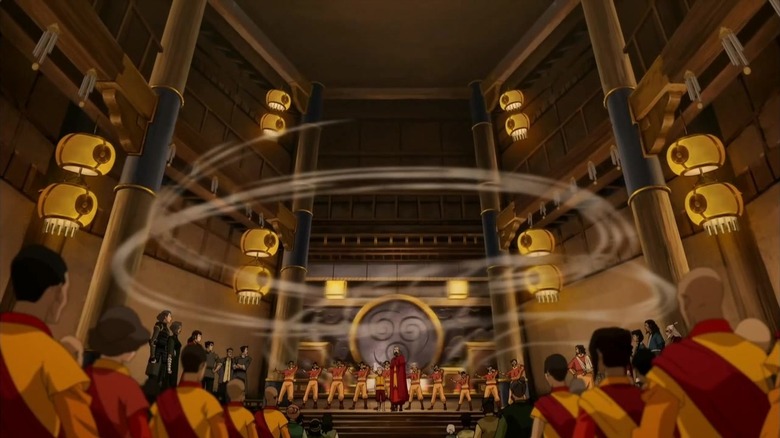
The film primarily functions within the newly established capital, Republic City. This location serves as the crucible of the new world—a place where cultural integration is not merely an ideal, but a necessity. The audience sees the early struggles of this project; the city is designed to be a sanctuary for all, yet Aang remains alienated by the lack of airbending culture in the very city he co-founded. This internal conflict acts as the catalyst for the construction of Air Temple Island, a move that provides the necessary infrastructure for the Air Acolytes—a group that becomes vital in The Legend of Korra.
The Discovery of the Sky Bison
One of the most poignant moments in the film involves the discovery of a hidden herd of sky bison. In the original series, Aang’s companion Appa was believed to be the last of his species. The film reveals that the bison were not extinct, but merely displaced and endangered. This narrative beat provides a satisfying answer to a lingering question from the Korra era: where the vast population of sky bison originated. It highlights the recurring theme of "rebirth" that permeates the Avatar franchise.
The Staff of Sonam: A MacGuffin with Deep Lore
The central conflict of Avatar Aang involves the quest for an ancient artifact: the staff of Sonam, an Avatar who lived 5,000 years prior. The film introduces Tagah (Dave Bautista), a long-frozen Airbender who possesses a radical, revisionist view of history.
Spiritual Power vs. Political Ambition
Sonam, as established in the film’s lore, used the staff to facilitate a spiritual connection that allowed nonbenders to manifest bending abilities. Tagah seeks to use this artifact to restore the Air Nomads to their former glory, intending to forge an "Air Empire." The film uses this as a cautionary tale. Aang, guided by the spirit of Avatar Xian (Ke Huy Quan), eventually chooses to destroy the staff. He realizes that the ability to force spiritual evolution upon the world is a power too dangerous for any mortal—or even an Avatar—to wield.
This decision is critical. It reinforces Aang’s character arc of accepting that he cannot simply "restore" the past. Instead, he must accept the world as it is, leading to his reliance on the Air Acolytes to preserve his culture through tradition rather than magic.
The Denied: Foreshadowing the Equalists
Perhaps the most significant contribution the film makes to the broader Avatar mythology is the introduction of "The Denied." This group of nonbenders serves as the ideological precursor to the Equalists of The Legend of Korra Book 1.
The Anatomy of Social Inequality
The Denied emerge from a place of genuine grievance. They represent the population left behind by the rapid modernization and bending-centric power dynamics of the new world. Their rhetoric—that power is unfairly concentrated in the hands of the benders—is a direct reflection of the unrest that would eventually lead to the rise of Amon.
While the film does not fully resolve these tensions, it effectively illustrates that the "harmony" achieved by Aang and Zuko was fragile. The Denied’s demand for equality, even when weaponized by a radical leader, highlights a systemic issue that the series often touched upon but rarely interrogated with depth. By placing these seeds of dissent in the era immediately following Aang’s victory, the film frames the political instability of Korra’s time as an inevitable byproduct of a society that failed to address the disparity between the bender and the nonbender.
Implications for the Future of the Franchise
The implications of Avatar Aang are far-reaching. By showing the early efforts to preserve Air Nomad culture, the film clarifies why the Air Acolytes were so essential to Tenzin’s mission in The Legend of Korra. Furthermore, it sets the stage for the Harmonic Convergence.
The film’s exploration of spiritual awakening—and the dangers inherent in that power—provides a narrative framework for how the world eventually "corrected" itself at the end of Korra Book 2. When the universe suddenly granted airbending to citizens across the globe, it wasn’t a random event; it was the culmination of a spiritual imbalance that had been building since the genocide.
A Critical Perspective on Political Themes
Critically, the film maintains the franchise’s tradition of presenting complex moral dilemmas while occasionally side-stepping the grittier political realities of its world. As with The Legend of Korra, there is a tendency to categorize the antagonists as "pure villains" rather than exploring the valid sociological critiques they offer. While the film gives the Denied a voice, it stops short of providing a legislative or social solution to the inequality they identify.
However, as a piece of storytelling, Avatar Aang succeeds in its primary mission: it makes the transition from the post-war era to the industrialized setting of Korra feel earned. It honors the legacy of the original series while effectively planting the seeds of the conflict that would define the next generation of Avatars. By the time the credits roll, the audience is left with a deeper understanding of the cost of peace and the burden of legacy—themes that continue to make the Avatar universe a hallmark of modern animation.
