
A Century of Grace: Remembering Eva Marie Saint, Hollywood’s Enduring Icon
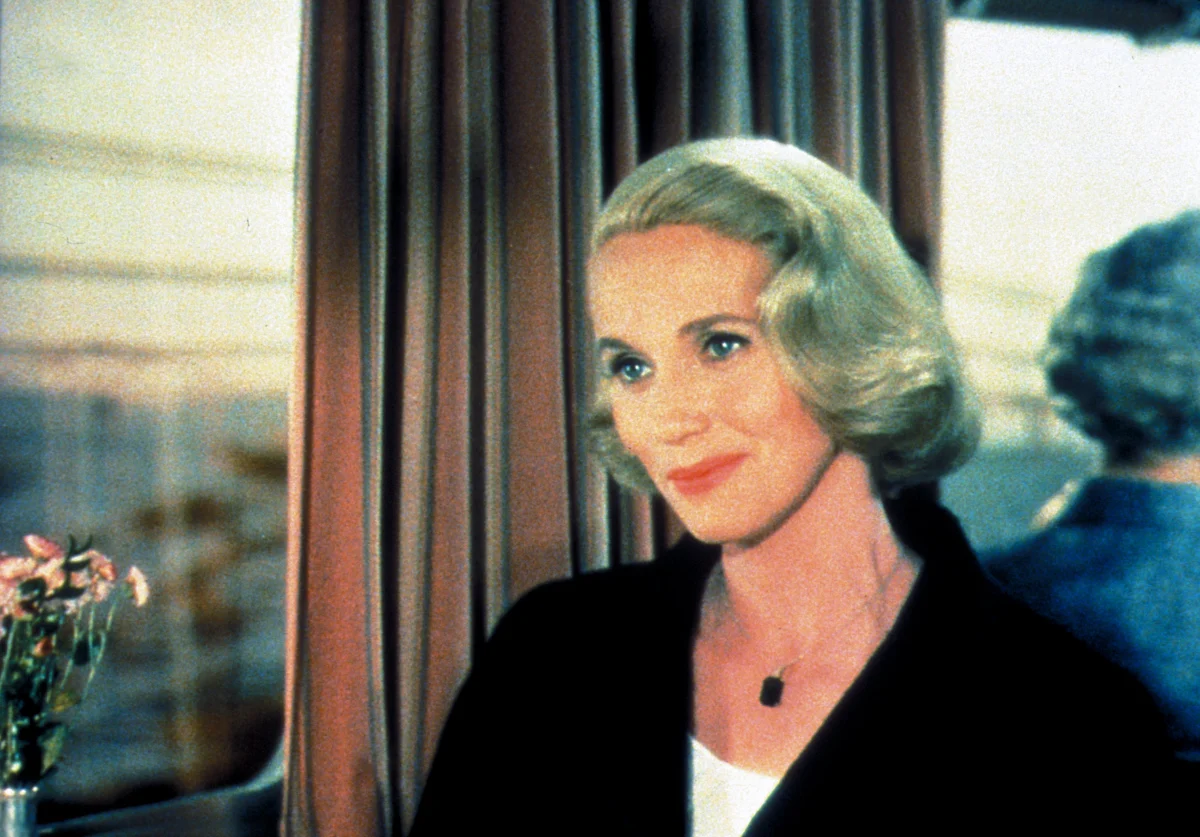
LOS ANGELES — Eva Marie Saint, the quintessential mid-century Hollywood screen icon whose piercing intelligence, naturalistic Actors Studio technique, and ethereal beauty elevated some of the most celebrated films in cinematic history, has died. She was 102.
Her representative confirmed that Saint passed away on Tuesday from natural causes at her home in Los Angeles, surrounded by her loving family and devoted caregivers. With her passing, the cinematic landscape loses one of its final remaining links to the Golden Age of Hollywood—a luminary who was, until her death, the oldest living Academy Award winner.
Over a career spanning more than seven decades, Saint carved out a unique space in film, television, and theater. She defied the era’s reductive typecasting, refusing to serve as mere window dressing for her male co-stars. Instead, she brought a profound emotional depth, sharp wit, and quiet rebellion to every role she inhabited, cementing her legacy across generations of moviegoers.
Chronology of a Legendary Life
Early Foundations and New York Beginnings
Born on July 4, 1924, in Newark, New Jersey, Eva Marie Saint grew up in Albany and Delmar, New York. Her path to stardom began at Bowling Green State University in Ohio, where she studied acting—an institution that would later honor her with a Lifetime Achievement Award in 2018. Upon graduating in 1946, she returned to her home turf, moving to New York City to hone her craft at The American Theatre Wing and study under the legendary Lee Strasberg at The Actors Studio, all while working as an NBC page to make ends meet.
By the late 1940s, Saint was working steadily in the burgeoning medium of live television. By 1950, she had secured a recurring role as the courageous Lt. Wilma Deering in the early sci-fi series Buck Rogers. In 1953, she made her triumphant Broadway debut in Horton Foote’s The Trip to Bountiful, starring alongside stage royalty Lillian Gish and Jo Van Fleet. Her poignant portrayal of Thelma, a kind stranger who bonds with an elderly woman on a bus journey, earned her the 1954 Outer Critics Circle Special Award.
The accolades continued to mount in 1955, when she scored two Emmy nominations for Best Actress in a Single Performance: one for Paddy Chayefsky’s television drama Middle of the Night (starring opposite E.G. Marshall) and another for a Producer’s Showcase presentation of Thornton Wilder’s Our Town, where she played Emily alongside a cast that included Paul Newman and Frank Sinatra.
The Breakthrough: On the Waterfront
While cementing her stage credentials, Saint landed the role that would change her life and cinematic history. In Elia Kazan’s searing 1954 masterpiece On the Waterfront, Saint played Edie Doyle, the moral compass of a dark, corrupt dockside world.
As the grief-toughened girlfriend of Marlon Brando’s embattled, flailing boxer Terry Malloy, Saint brought immense heft to the role. Edie was more than a standard romantic interest; her backstory—marked by her brother’s violent murder on the very docks Malloy exploited—grounded the character in deep-seated trauma and resolve. The undeniable chemistry between Brando and Saint yielded one of the most powerful romantic pairings in cinematic history.
Both actors won Academy Awards for their transformative performances, making Saint’s win for Best Supporting Actress an indelible moment in Oscar history.
The Hitchcock Masterpiece and Mid-Century Stardom
Following her relocation to Los Angeles in 1956, Saint entered a remarkable five-year, five-picture cinematic streak. After starring in the gritty addiction drama A Hatful of Rain (1957) and the historical epic Raintree County (with Elizabeth Taylor and Montgomery Clift), she collaborated with Alfred Hitchcock on a film widely regarded as one of the master’s greatest achievements.
In 1959’s North by Northwest, Saint starred alongside a dashing Cary Grant. Defying Hitchcock’s penchant for casting "icy blondes" as helpless victims, Saint played Eve Kendall—a sophisticated, sharp-witted government operative who could easily match Grant’s "wrong man" move for move. Saint not only participated in one of cinema’s most iconic action sequences—clambering down the stone face of Mount Rushmore—but she also delivered one of the smoothest, most famous come-on lines in film history on a cross-country train: "It’s going to be a long night, and I don’t particularly like the book I’ve started."
Her powerhouse run continued with Otto Preminger’s prestige historical epic Exodus (1960), which reunited her with Paul Newman, and John Frankenheimer’s star-studded 1962 drama All Fall Down. Although All Fall Down failed to resonate with commercial audiences, Saint’s performance drew widespread critical acclaim.
Television Triumph and Later Career
As the 1960s progressed, Saint intentionally scaled back her heavy film schedule to raise her two children with her husband, director Jeffrey Hayden, whom she married in 1951. She balanced select feature films—such as Norman Jewison’s comedy The Russians Are Coming, The Russians Are Coming (1966) and Frankenheimer’s racing epic Grand Prix (1966)—with a robust television career.
Throughout the 1970s, ’80s, and ’90s, Saint became a television fixture. She lent her considerable talents to groundbreaking TV movies, including 1981’s The Best Little Girl in the World, which broke taboos by exploring anorexia nervosa years before it entered the mainstream cultural lexicon.
In 1990, she won an Emmy Award for her portrayal of a narcissistic socialite in the NBC miniseries People Like Us, based on Dominick Dunne’s novel. Later television audiences embraced her as Roz Doyle’s sharp-tongued mother on the hit sitcom Frasier, and she continued working well into the 21st century, voicing characters in animated series like The Legend of Korra (2012) and appearing in films such as Superman Returns (2006) and Winter’s Tale (2014). Her final film credit came in 2019 with Mariette in Ecstasy.
Supporting Data and Career Highlights
- Academy Award: Best Supporting Actress for On the Waterfront (1954).
- Emmy Awards: Won in 1990 for People Like Us; received four total nominations across her career.
- Key Filmography: On the Waterfront (1954), North by Northwest (1959), Exodus (1960), Grand Prix (1966), Nothing in Common (1986), Superman Returns (2006).
- Stage Credits: The Trip to Bountiful (Broadway, 1953), First Monday in October (with Henry Fonda), Death of a Salesman (with Judd Hirsch), and numerous productions at the Kennedy Center.
- Personal Life: Married to director Jeffrey Hayden from 1951 until his death in December 2016 (65 years). Survived by two children, four grandchildren, and two great-grandchildren.
Official Responses and Tributes
The entertainment industry and cultural institutions responded to Saint’s passing with an outpouring of grief, reverence, and admiration for her historic contributions to the arts.
The Academy of Motion Picture Arts and Sciences released a statement noting, "Eva Marie Saint was an unmatched talent who brought a rare authenticity, elegance, and steel to the silver screen. From the docks of Hoboken to the heights of Mount Rushmore, she left an indelible mark on cinematic history. We mourn the loss of a true Hollywood legend."
Colleagues and fans alike remembered her iconic appearance at the 90th Academy Awards in 2018, where, at age 93, she stepped onto the stage to present the Oscar for Best Costume Design. Received by a thunderous, prolonged standing ovation, she joked warmly about her age and her late husband: "I just realized something. I’m older than the Academy. Plus four months, maybe five. I’m very proud of that. Just keep moving."
Her family released a short, heartfelt statement reflecting on her extraordinary life: "Our mother lived her life with grace, dedication, and boundless love for her family and her art. While our hearts are heavy, we take comfort in knowing that her brilliant spirit and timeless performances will live on forever."
Implications for Hollywood and Cultural Legacy
The passing of Eva Marie Saint marks the definitive closing chapter of a golden era where Method-honed psychological depth met classic Hollywood glamour. In an industry historically prone to sidelining women or reducing them to tropes, Saint’s career serves as a masterclass in agency, intellect, and artistic integrity.
She proved that an actor could maintain a long, dignified career without compromising personal values or professional standards. By successfully balancing motherhood, a lifelong marriage, stage work, and high-profile screen roles, Saint set a high-water mark for generations of performers who followed in her footsteps.
As film historians and contemporary artists reflect on her century-long journey, Saint’s legacy remains secure. She did not merely witness the evolution of modern American cinema; she helped shape its golden foundations—proving that true cinematic greatness is measured not just by beauty or stardom, but by staying power, truth, and grace.
