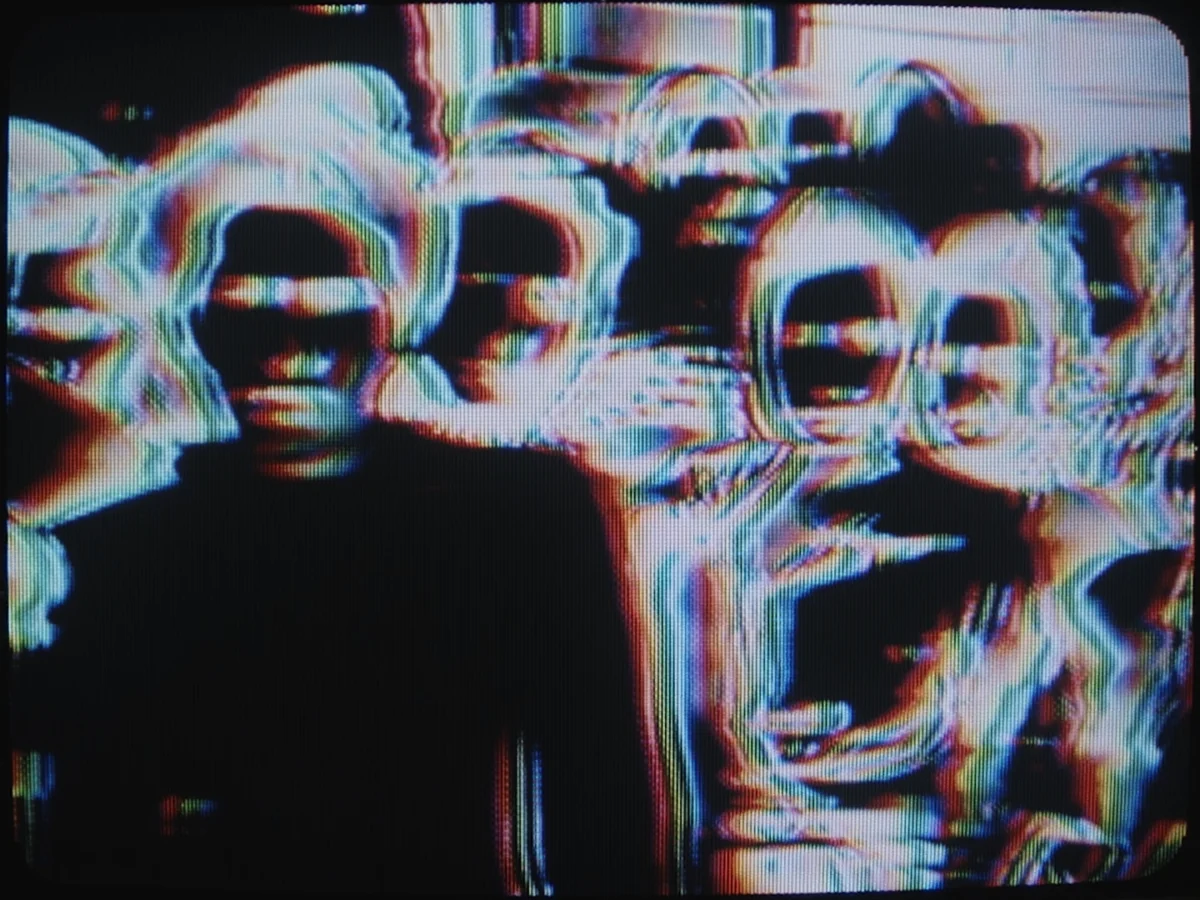
Unlocking the Past: How Jack Auen and Kevin Walker Turned Real Archives and Digital Text into the Occult Thriller “Chronovisor”
Main Facts
The written word has long held a mysterious, hypnotic power, often carrying layers of meaning far beyond what appears on a simple page. This interplay between text, truth, and obsession forms the thematic and stylistic backbone of Chronovisor, an occultthriller written, directed, and edited by the filmmaking duo JackAuen and KevinWalker.
Described by its creators as a lean, spare, yet thoroughly captivating piece of cinema, Chronovisor follows its protagonist, Beatrice Courte (played by Anne Laure Sellier), down a dizzying rabbit hole of historical conspiracy. Beatrice lives an isolated, introspective existence in New York City, finding her deepest connections not in awkward professional dinners with colleagues, but in the philosophical and psychological texts she pores over by the warm glow of research lamps.
Her meticulous study draws her into the orbit of a legendary—and historically debated—device known as the Chronovisor, an alleged apparatus purportedly capable of viewing past and future events. As Beatrice searches for evidence of whether the machine truly exists, the film relies heavily on physical texts, authentic historical documents, and archival materials.
Remarkably, despite the common cinematic pitfall that text messages and printed words on screen often look sterile or unengaging, Auen and Walker transform the reading process into the primary engine of discovery and suspense. Through careful rhythm, musical cadence, and innovative visual superimpositions, the directors turn ancient manuscripts and archival pages into objects of profound illumination, anchoring a psychological thriller that challenges traditional storytelling boundaries on a modest budget.
Chronology
The creation of Chronovisor was an organic, iterative process that inverted traditional filmmaking steps, unfolding over months of pre-production experimentation long before a single roll of 16mm film was purchased or a lead actress was cast.
1. The Pre-Production Research and Editing Phase
Before writing a traditional screenplay or hiring a cast, Auen and Walker embarked on their own deep-dive research journey into the lore surrounding the Chronovisor—a real-life conspiracy theory tied to Italian priest Pellegrino Ernetti, who claimed to have built a time-viewing device.
During this pre-production phase, the directors laid out an order of documentation and historical texts, structuring them precisely how information is distributed in real life. They utilized pulls from Gustav Holst’s orchestral suite The Planets as a temporary sonic blueprint. By editing these sequences digitally to Holst’s music, they established the exact rhythm, timing, and cadence of the text reveals. This preemptive editing allowed them to calculate a near one-to-one shooting ratio when they finally moved to physical film, drastically reducing waste and preserving their limited budget.
2. Refining the Visuals
Early digital tests of the text sequences relied on standard fonts like Microsoft Word, which felt starkly disconnected from the imagery. Recognizing a lack of "embeddedness," the duo engineered specific editing tricks in post-production. They carefully tuned the superimpositions to mimic the texture, timing, and atmospheric warmth of 16mm film footage until the text appeared to glow from within, seamlessly merging with the physical media.
3. Principal Photography
With their digital blueprint locked in, Auen and Walker transitioned to physical production. They shot on rich 16mm film with cinematographer Leo Zhang, utilizing stunning, authentic locations such as the George Peabody Library at Johns Hopkins University, which served as a grand stand-in for the New York Historical Society.
4. Release and Theatrical Run
Following its critical reception on the festival circuit and subsequent distribution by Grasshopper Film, Chronovisor officially opened in theaters, inviting audiences to parse through its intricate web of historical reality and fabricated fiction.
Supporting Data
The production of Chronovisor stands out for its unique blend of practical resourcefulness, aesthetic precision, and high-concept archival curation:
The Cast: Headlined by Anne Laure Sellier as researcher Beatrice Courte.
The Cinematography: Shot entirely on 16mm film by cinematographer Leo Zhang, giving the picture a tactile, timeless quality.
Key Locations: Filmed at the historic George Peabody Library at Johns Hopkins University, doubling for the New York Historical Society.
Musical Score: Features budget-friendly, atmospheric selections from Gustav Holst’s classical suite, The Planets, which dictated the rhythmic editing of the film’s text-heavy sequences.
Authenticity vs. Fabrication: According to co-directors Jack Auen and Kevin Walker, every single document and video utilized in the film is entirely authentic—except for one document and one video, leaving viewers to guess which elements are historical fact and which are cinematic fiction ("the wheat and the chaff").
Distribution: Released theatrically by Grasshopper Film.
Official Responses
Speaking with IndieWire, co-directors Jack Auen and Kevin Walker offered candid insights into the unorthodox writing and production choices that defined Chronovisor.
Reflecting on the early stages of the project, Walker humorously acknowledged the unconventional nature of their screenplay:
"In many ways the script is objectively bad," Walker joked to IndieWire, noting that the film’s power derived from its formal execution rather than traditional dramatic plotting.
Elaborating on how they tackled the notoriously difficult task of making text compelling on screen, Walker explained how music guided their editorial decisions:
"We laid out the order of documentation, in the order in which information is distributed, but we had the pleasure of cutting that arrangement to Holst’s music, which provided the impetus for the rhythm and the cadence of [those text sequences]. That was all done initially in pre-production, and shot digitally, so we could edit it to the music, see how it all fit together, get the timing right, and save on film costs because then, when we shot it all on film, it was with basically a one-to-one shooting ratio. We knew exactly what we needed."
Addressing the visual evolution of the text overlays, Walker recalled the hurdle of making digital typography feel organic on celluloid:
"When we first did it, it was a font out of Microsoft Word, and it felt separate from the image, and there was a lack of embeddedness. It took a few editing tricks to make it feel like the 16mm. But once we got it there, we were like, ‘This is gonna work.’"
Auen emphasized that their choice to focus heavily on the presentation of text sparked a creative domino effect, shaping everything from Beatrice’s psychological profile to the film’s overarching atmosphere:
"Kevin and I talk often about what it is that gets us attached to an idea and makes it worth making a movie about, because you deal with a lot of headache and heartbreak. It’s kind of ineffable. But there was something about this challenge, narratively, cinematically, and then also the opportunity to not have to compromise on the creative and formal choices while keeping it in a realistic budget for us."
Discussing the interactive nature of the film’s archival puzzle, Auen noted:
"We really did mimic the journey that Beatrice goes on in the film for several months, just the two of us, before putting it onto film. So our process of going down that rabbit hole inspired the story. All of the documents in the film are authentic, except for one. And all of the videos in the film are authentic except for one."
Walker added regarding the audience’s role in deciphering the narrative:
"We’re leaving it open to everyone’s guesses to see what people decide is the wheat and what is the chaff."
Finally, summarizing their philosophy as filmmaker-curators rather than traditional image-makers, Auen concluded:
"We trust ourselves and our tastes as consumers of art and literature and media. So we have a much easier time reacting to something and saying, ‘I know what’s working for me,’ and that’s why I think we found such a wellspring of inspiration from the conspiracy itself, from literary sources which we credit in the film, from the music. We wanted to create this cumulative effect building up, even if you couldn’t pinpoint an exact moment that creates that feeling. It’s a build-up and release."
Implications
Chronovisor presents several notable implications for independent filmmaking, narrative structure, and media consumption in the modern cinematic landscape:
Redefining Exposition and Visual Literacy
Most commercial thrillers struggle to make research, reading, and text-based communication visually dynamic, often resorting to flashy, superficial computer graphics or expository dialogue. Auen and Walker demonstrate that meticulous pacing, rhythmic editing tied to classical music, and thoughtful visual grading can transform the act of reading into a visceral, cinematic experience. By forcing audiences to "learn how to read" the screen alongside the protagonist, the film cultivates an active, hypnotic form of viewer engagement.
Pushing the Boundaries of Budget-Conscious Curation
The film serves as a masterclass in financial and creative efficiency. By locking down their editorial rhythm and narrative sequencing digitally during pre-production, the directors avoided costly overshooting on 16mm film. Their strategy proves that filmmakers working on micro-budgets can achieve a distinct, high-end aesthetic by treating themselves as curators of archival media, literature, and sound rather than relying solely on expensive special effects or expansive set pieces.
Blurring the Line Between Fact and Fiction
By weaving authentic historical documents, genuine archival footage, and real-world fringe theories (such as the legend of the Chronovisor) with a singular fictional fabrication, the film engages audiences in a playful, intellectual game. This meta-textual approach challenges viewers to question the nature of documentary truth versus narrative manipulation, positioning Chronovisor not just as a genre thriller, but as an interactive intellectual exercise currently playing in theaters.