
A Legacy of Sound: Remembering the Extraordinary Life and Career of George Fenton (1950–2026)
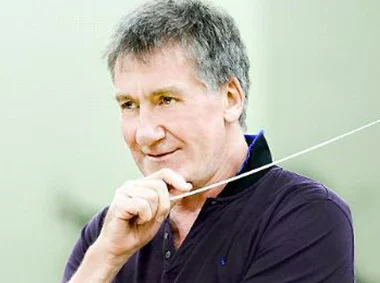
By Film Music Reporter | October 5, 2026
The world of cinema and natural history broadcasting is mourning the loss of one of its most versatile and prolific sonic architects. George Fenton, the British composer whose evocative melodies defined the emotional landscape of countless films and landmark documentary series, passed away unexpectedly today at the age of 76.
Over a career spanning more than four decades, Fenton’s work served as the heartbeat for projects ranging from intimate romantic comedies to sweeping historical epics and the awe-inspiring depths of the natural world. His death leaves an indelible void in the creative industry, marking the end of a chapter for a composer whose ability to marry image with sound was nothing short of masterful.
The Life and Work of a Musical Polymath
Born in London, Fenton’s journey into the world of film scoring was defined by a remarkable range. He was a chameleon of composition, equally at home orchestrating the grandeur of a 19th-century period drama as he was crafting the minimalist, poignant themes that underscored the social realism of Ken Loach’s cinema.
His sudden passing has prompted an outpouring of tributes from across the entertainment sector, reflecting the profound impact he had on audiences and collaborators alike. Beyond the accolades—which included five Academy Award nominations, three BAFTAs, and two Emmys—Fenton will be remembered for his intellectual curiosity and his unwavering commitment to the narrative power of music.
A Chronological Journey: From Theatrical Roots to Global Icons
To understand George Fenton’s influence, one must look at the arc of his professional life. His career trajectory was not merely a series of jobs, but a chronological evolution of his craft.
The Formative Years and Breakthrough
Fenton’s early career was deeply rooted in theater and television, providing him with a rigorous foundation in storytelling. However, it was his foray into feature films in the early 1980s that brought him to international prominence. His collaboration with director Richard Attenborough proved to be a defining chapter. Together, they tackled some of the most ambitious projects of the era, most notably the 1982 masterpiece Gandhi. Co-scored with the legendary Ravi Shankar, the film’s music was a delicate, haunting bridge between Eastern and Western musical traditions, earning Fenton his first Academy Award nomination.
The Golden Era of Hollywood Comedies and Dramas
By the 1990s and early 2000s, Fenton had cemented his status as a "go-to" composer for Hollywood’s most beloved films. He brought a specific brand of whimsy and warmth to the romantic comedy genre, particularly in his work with Nora Ephron. You’ve Got Mail remains a touchstone for many, with a score that perfectly captured the burgeoning digital romance of the late 90s.
Simultaneously, he showcased his ability to handle genre-defining classics like Harold Ramis’s Groundhog Day. The score for this film was a lesson in repetition and character growth, subtly evolving to mirror Phil Connors’ internal journey. His work on Ever After, Anna and the King, and Sweet Home Alabama further solidified his reputation as a composer who could elevate any narrative through nuanced, emotionally intelligent underscoring.
The Loach Connection: A Commitment to Social Realism
Perhaps the most consistent thread in Fenton’s career was his decades-long partnership with director Ken Loach. Unlike his glossy Hollywood scores, his work for Loach—seen in films like The Wind That Shakes the Barley, I, Daniel Blake, and the recent The Old Oak—was stripped back, raw, and deeply human. This partnership highlighted Fenton’s integrity; he understood that some stories require the music to be a quiet observer rather than an overbearing narrator.
Supporting Data: An Unparalleled Body of Work
Fenton’s contribution to the medium is quantifiable through his extensive discography and industry honors. His Academy Award journey alone tells the story of his range:
- Gandhi (1982): Best Original Score (Shared)
- Cry Freedom (1987): Best Original Score & Best Original Song (Shared)
- Dangerous Liaisons (1988): Best Original Score
- The Fisher King (1991): Best Original Score
Beyond the Oscars, his television work became the definitive sound of the natural world. When people hear the opening bars of a David Attenborough documentary, it is almost certainly a Fenton composition. His scores for The Blue Planet, Planet Earth, Frozen Planet, and the 2023 series Wild Isles brought the mysteries of the planet into millions of living rooms, creating a sense of wonder that bridged generations.
His accolades include:
- 3 BAFTA Awards
- 2 Emmy Awards
- 1 Classic Brit Award
- Multiple Ivor Novello and BMI Awards
His final work, Trudie Styler’s Up Against It, premiered at the Toronto International Film Festival just last month, serving as a testament to his continued creative vitality right up until his final days.
Official Responses and Industry Reflections
The news of Fenton’s death has sent shockwaves through the industry. Colleagues have described him as a mentor, a gentleman, and a rare creative force who remained humble despite his massive success.
"George didn’t just write music for scenes; he wrote the soul of the film," said one prominent industry producer. "He was a quiet, contemplative man who understood that silence is often just as important as the notes themselves. His loss is not just a loss for his family, but for the art of cinema."
Representatives from the British Academy of Film and Television Arts (BAFTA) issued a brief statement: "We are deeply saddened by the passing of George Fenton, a composer whose work enriched our cultural landscape and moved audiences worldwide. His contribution to both film and television is unparalleled, and he will be greatly missed by all who had the pleasure of working with him."
Implications: The End of an Era
Fenton’s passing marks the end of a specific school of film scoring—one that prioritized melody, thematic development, and a deep, empathetic connection to the script. In an era where many scores are becoming increasingly atmospheric and synth-heavy, Fenton remained a champion of the orchestral narrative.
The Future of Natural History Scoring
His work on the BBC’s landmark documentary series set a standard for "nature music" that future composers will find daunting to replicate. He managed to make the vastness of the ocean and the harshness of the tundra feel intimate. The challenge for the industry moving forward will be to find composers who can maintain that same level of intellectual engagement with the subject matter.
A Personal Loss
Beyond the professional legacy, Fenton is survived by his wife, Amanda, his two children, and five grandchildren. While the world celebrates his scores, his family mourns a husband, father, and grandfather. The private man behind the public icon was known for his love of his family and his quiet life away from the red carpets, a fact that friends say grounded him throughout his high-profile career.
Conclusion: The Music Remains
While George Fenton is no longer with us, the legacy of his music is woven into the fabric of contemporary culture. Every time a student of film watches Dangerous Liaisons to study the interplay of period music and modern sensibilities, or a family sits down to watch the majesty of Planet Earth, Fenton’s voice will be heard.
He was a master of his craft, a storyteller without words, and a composer who understood the human condition better than most. As we revisit his vast catalog of scores, we are reminded that while a life may be finite, the melodies created during that life have the power to echo through time.
George Fenton did not just write music; he wrote the soundtrack to our collective memories. Though the baton has been set down, the symphony he composed for the world continues to play.
