Inside the Lens: Cinematographers at the Venice Film Festival Reveal the Tech and Techniques Shaping Modern Cinema
VENICE — With Labor Day firmly in the rearview mirror, the global film industry has officially plunged into the high-stakes back half of the calendar year. For cinephiles and industry insiders alike, this seasonal transition marks the arrival of the autumn film festival circuit—and with it, the return of IndieWire’s eagerly anticipated camera and lens surveys.
As features premiere on the Lido for the Venice Film Festival, a central question remains: What tools are cinematographers using to bend reality, construct new worlds, and pull audiences directly into the psychological depths of complex characters? To find out, IndieWire reached out to the directors of photography (DPs) steering the visual narratives of this year’s festival selections. Their answers reveal an industry caught in a fascinating dichotomy, stretching from hyper-resourceful, single-camera DIY setups to sprawling, multi-format epics that utilize everything from industry-standard digital cinema workhorses to medical equipment.
Main Facts: The Venice 2026 Camera Survey
The primary takeaway from this year’s Venice cinematography survey is that modern independent filmmaking defies standardization. While corporate backing and massive budgets often mandate specific, high-end camera packages, the creative constraints and stylistic ambitions of independent features push cinematographers into territory that is as technologically eclectic as it is artistically daring.
At the heart of this year’s festival visual language are two distinct philosophies:
Total Maximalism: The embrace of a staggering array of cameras, formats, and hybrid optical tools to create deeply textured, collage-like cinematic worlds.
Intimate Minimalism: The weaponization of long-owned, budget-friendly legacy gear, where physical familiarity with a single camera body breeds profound narrative authenticity.
Whether utilizing a dozen distinct formats or leaning on a trusty 13-year-old sensor, the DPs lighting up the Venice screens this year are utilizing technology not merely to record images, but to actively psychologicalize the frame—translating trauma, disorientation, joy, and instability directly into visual grammar.
Chronology: From Concept to Screen on the Lido
The journey of crafting a festival-ready aesthetic is rarely linear. For the cinematographers whose work is currently screening in Venice, the pipeline from pre-production brainstorming to the final theatrical grade involved complex logistical and creative milestones.
Phase One: Conceptualizing the Visual Language
Months—and sometimes years—before rolling film, DPs and directors sit down to map out the emotional arc of their characters. For Jai Ip, shooting Arrested Memory, the challenge was bridging two distinct cultural and stylistic filmmaking backgrounds: his own training in high-octane Hong Kong action cinema and director Sabu’s signature Japanese narrative sensibility. The pre-production timeline was dedicated to figuring out how camera movement could externalize psychological fragmentation.
Phase Two: Production and the Multi-Format Chaos
During principal photography, the reality of the shoot often diverges wildly from initial storyboards. For David Bolen and director Lance Oppenheim on Primetime, production turned into an exercise in perpetual adaptation. As Bolen cataloged equipment, the camera package expanded organically to fit whatever bizarre framing or framing-within-a-framing the scene demanded.
Phase Three: Post-Production and Textural Alchemy
The creative process did not stop when the last camera stopped rolling. For Primetime, the post-production timeline required an intensive finishing process. The digital footage was literally printed out to 16mm film stock and subsequently regraded. This analog-digital hybrid loop introduced organic grain, halation, and a tactile warmth that digital sensors alone could never replicate. Similarly, DPs utilizing vintage glass or specialized filters relied heavily on in-camera or intermediate optical choices to bypass the hyper-clean sterility often associated with contemporary digital capture.
Supporting Data and Technical Breakdown: The Tools of the Trade
A closer look at the gear lists shared by the Venice cinematographers highlights the radical divergence in resource allocation across the independent and festival landscapes.
Primetime (Dir. Lance Oppenheim | DP: David Bolen)
The Scale: Massive technical scope featuring over a dozen camera bodies and at least 10 distinct formats.
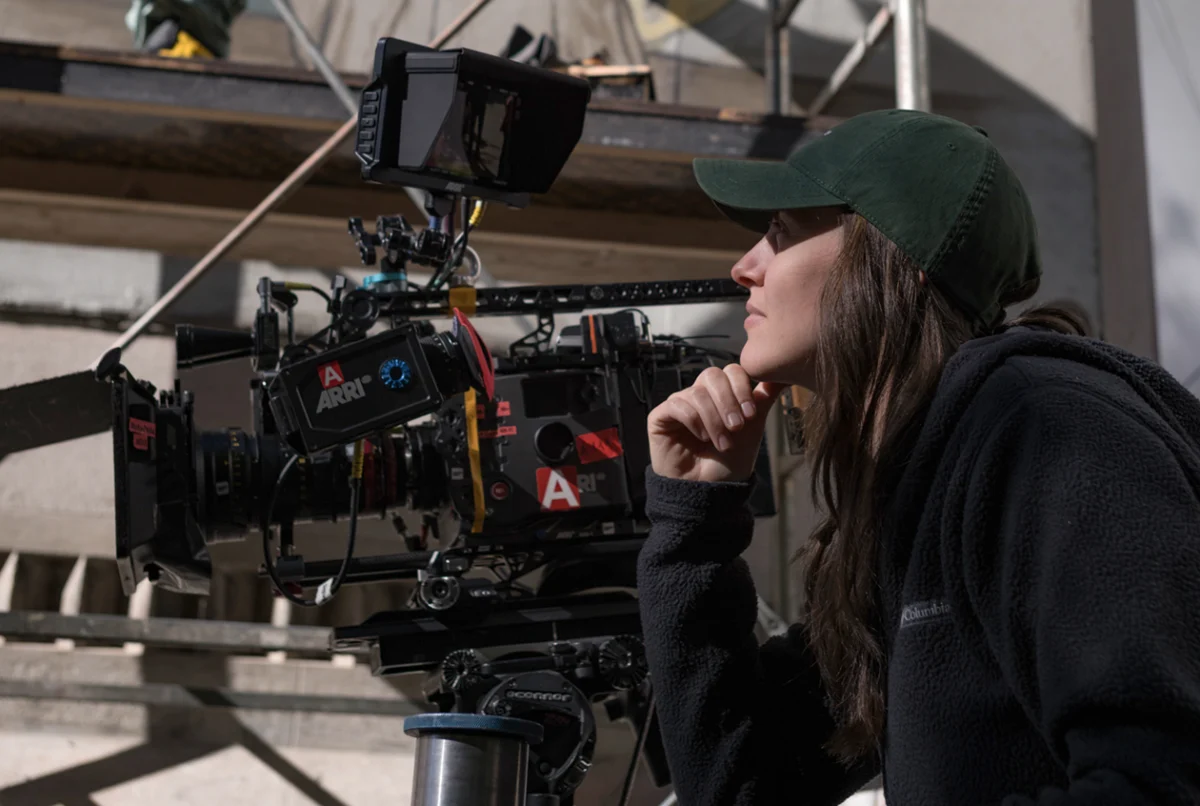
Key Equipment: ARRI ALEXA 35 (the primary digital workhorse); specialty tools including an Endoscope Colonoscopy camera used for a surreal sequence where the visual narrative travels through a computer screen.
Finishing Process: Outputted to 16mm film stock, then digitally regraded for texture and halation.
Too Much Sugar (Dir./DP: Robert Kolodny)
The Scale: Literal zero-budget production with zero rental allocation.
Key Equipment: A personal Sony FS7 digital cinema camera owned by Kolodny for 13 years, paired with Canon L-Series lenses dating back to the Canon EOS 5D Mark II era.
Ergonomics: Designed for maximum mobility, quick pack-downs, and zero production overhead, allowing the camera to become a physical extension of the operator’s body.
Arrested Memory (Dir. Sabu | DP: Jai Ip)
The Scale: Stylized psychological thriller utilizing targeted optical modifications.
Key Equipment: Digital cinema packages augmented with ARRI Impression Filters.
Optical Mechanics: The filters maintain absolute sharpness in the dead center of the frame while introducing a pronounced, detuned distortion toward the peripheral edges. Combined with dynamic movement, this setup visually translates the protagonist’s disorientation and skewed point of view.
Official Responses: In the Cinematographers’ Own Words
The philosophical underpinnings of these technical choices are best understood through the perspectives of the artists who wielded them. The constraints of budget, narrative, and physics shaped their approaches in unexpected ways.
Speaking on the sheer breadth of equipment used on Primetime, David Bolen noted the organic way their toolkit expanded:
"At the end of the process, we printed the final edit to 16mm film and regraded for additional texture and halation based on the print. By the end of production, Lance and I realized we had shot the movie on more than a dozen camera bodies and at least 10 different formats."
For Robert Kolodny, working on Too Much Sugar without financial safety nets transformed into an unexpected artistic liberation:
"We had no budget for this film — not hyperbolic, quite literal. So, surely no allotment for rentals. I’ve owned my workhorse Sony FS7 for 13 years and my Canon L Series longer (from the 5DMKII days). It was the setup I could bring on with no overhead and could pack at a moment’s notice as the story developed. Moreover, it’s second nature to my physicality; it sits on my shoulder, and we become one. We’ve spent tens of thousands of hours together."
Addressing the emotional mechanics of Arrested Memory, Jai Ip explained how specialized glass can act as a narrative window into a fractured psyche:
"By combining different types of camera movement with ARRI Impression Filters, we could express the protagonist’s disorientation and psychological state, while also supporting the energy of the action. The filters keep the center of the image sharp while creating a stronger detuned effect toward the edges. Combined with movement, this gave us a sense of instability and confusion while keeping the protagonist’s point of view clear."
Implications for the Future of Independent Filmmaking
What do the choices made by DPs at the 2026 Venice Film Festival tell us about the broader trajectory of the film industry?
First, they demonstrate that technological democratization is no longer just a marketing catchphrase—it is an active reality. The fact that a zero-budget feature shot on a 13-year-old Sony FS7 can sit comfortably in a major international festival lineup alongside multi-format hybrid productions proves that the barrier to entry for cinematic storytelling has fundamentally shifted away from pure capital investment and toward visual ingenuity.
Second, the trend toward hybrid workflows—mixing cutting-edge sensors like the ARRI ALEXA 35 with medical endoscopes, vintage Canon glass, physical film printing, and optical detuning filters—highlights a collective industry fatigue with hyper-clean, clinical digital imagery. Audiences and creators alike are hungry for tactile imperfections. Whether achieved through the accidental grit of a decades-old shoulder rig or the engineered aberrations of modern diopters and filters, texture has become the ultimate currency of cinematic authenticity.
As the Venice Film Festival rolls on and these films find their distribution paths, the conversation sparked by IndieWire’s survey serves as a vital reminder: the camera is never a neutral observer. It is an active participant, shaped as much by the financial realities and physical habits of its operator as it is by the characters whose worlds it brings to life.