
Grounded Style Meets Ideological Pitfalls: A Critical Examination of Cristian Mungiu’s Fjord
Main Facts
Renowned Romanian auteur Cristian Mungiu returns to the global cinema stage with Fjord, a film that has already claimed a prestigious Palme d’Or victory. Known for his unflinching examinations of systemic friction, human rights dilemmas, and cultural clashes—such as his 2007 masterpiece 4 Months, 3 Weeks and 2 Days and 2022’s xenophobia-focused R.M.N.—Mungiu turns his lens toward a deeply sensitive European controversy: the intersection of state child protection, religious freedom, and cross-cultural family dynamics.
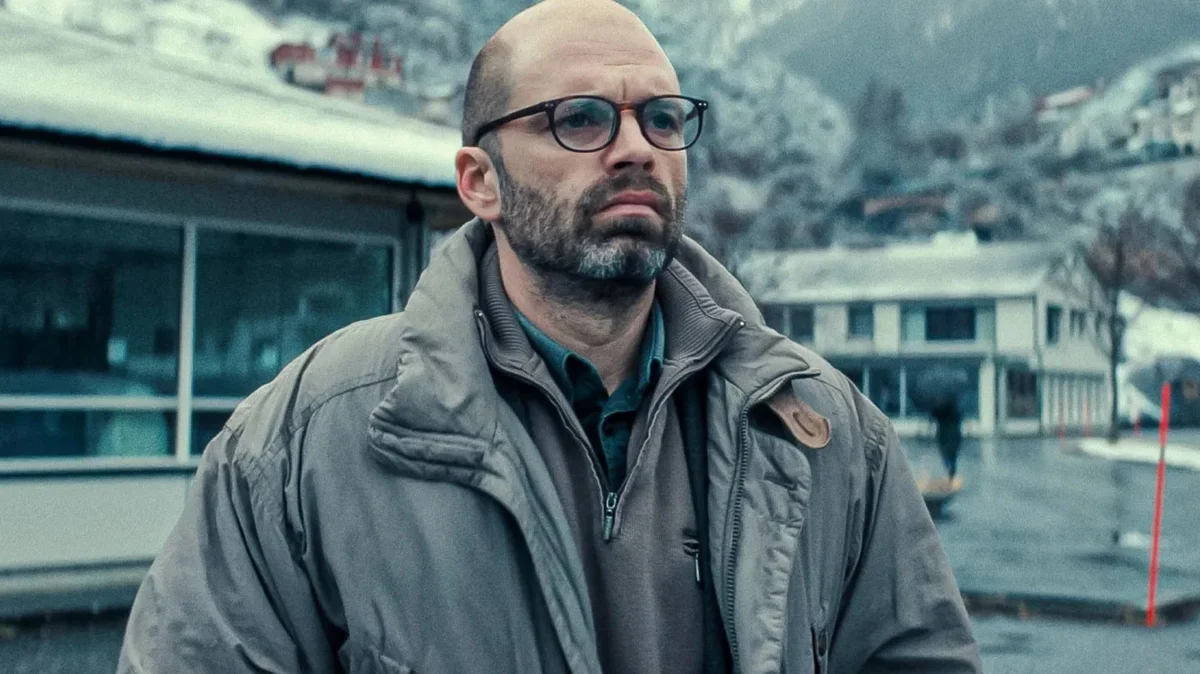
Starring Sebastian Stan as Mihai Gheorghiu and Renate Reinsve as Lisbet Gheorghiu, Fjord is anchored by exceptional, grounded performances. The narrative follows a married couple—she is Norwegian, and he is Romanian—who have relocated their five children from Romania to a small, tight-knit Norwegian village for financial reasons.
The core conflict erupts when Norwegian Child Protective Services (CPS) intervenes swiftly after school officials discover a bruise on one of the children. Prompted by admissions of periodic, light corporal punishment (specifically, mild spankings), the state removes all five children into foster care within hours.
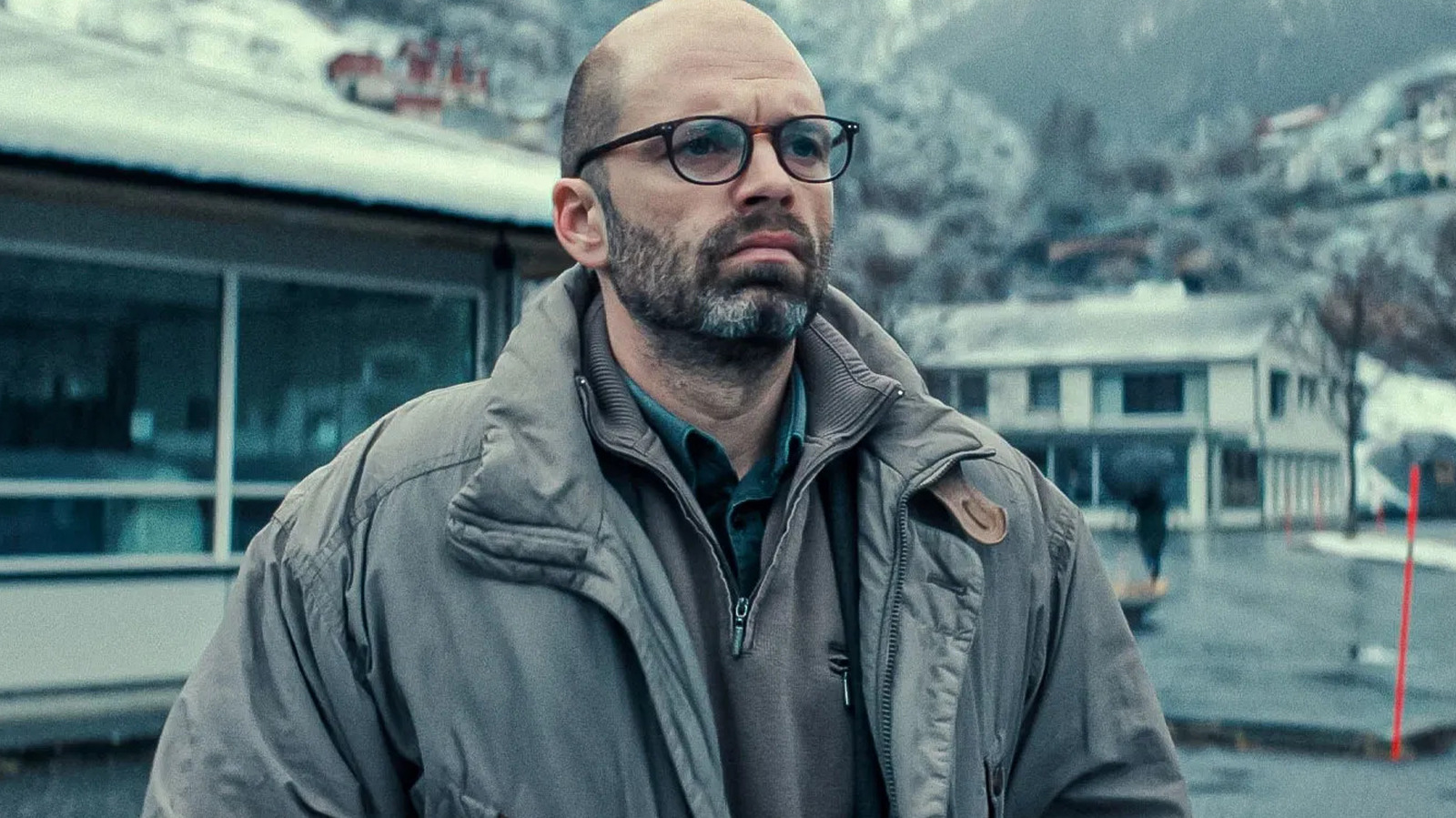
Despite its veneer of kitchen-sink realism, stylistic austerity, and critical acclaim, Fjord has sparked intense debate. Critics argue that behind its naturalistic presentation lies a clumsy, deeply one-sided polemic that leans into a global narrative of religious persecution, weaponizing straw-man arguments against modern European social institutions.
Chronology
To understand the trajectory of Fjord—both within its fictional universe and its real-world inspiration—it is helpful to trace the timeline of events leading up to the film’s release and narrative setup.
- The Real-World Precedent: Fjord is a heavily fictionalized adaptation of the real-life Bodnariu family case, heavily detailed in Sherwood Dobson’s book Fjord: The True Story of Marius and Ruth Bodnariu, Their Children, and the Norwegian Family Separation Case.
- The Relocation: In the film, Lisbet and Mihai Gheorghiu move their family from Romania to a rural Norwegian community, placing them in immediate proximity to local figures, including Mats, their children’s school principal.
- The Inciting Incident: A schoolteacher notices a bruise on the young daughter, Elia (Vanessa Ceban). During subsequent interviews, Elia and her older brother, Emmanuel (Jonathan Ciprian Breazu), acknowledge that light spankings occur at home.
- State Intervention: Acting with remarkable administrative speed, the Norwegian CPS removes the children on the same day the disclosure is made. Mihai is visited by law enforcement and pressured into signing an admission regarding corporal punishment.
- Escalation and Media Mobilization: Seeking recourse, Mihai contacts a conservative advocacy group, inadvertently triggering a wave of right-wing protests outside the courthouse. The legal battle intensifies, pitting the family against a skeptical, culturally detached state prosecutor.
- Theatrical Release: Following its festival run and Palme d’Or triumph, Fjord is scheduled to open commercially in theaters on October 9, 2026.
Supporting Data and Production Details
Fjord benefits from high-caliber talent behind and in front of the camera, aligning with Mungiu’s historically rigorous production values.
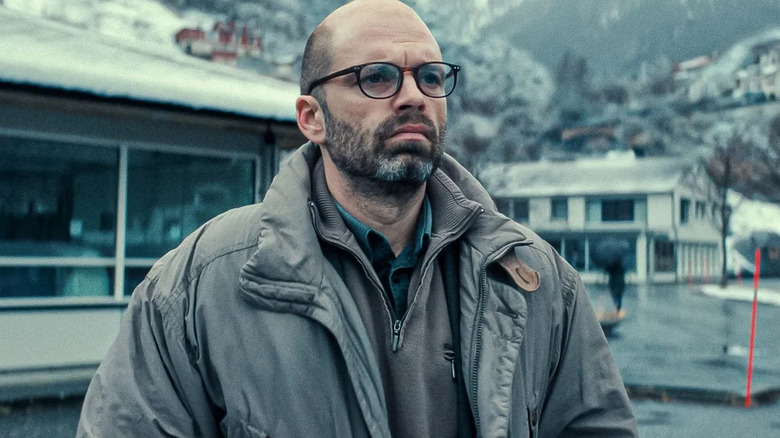
- Director: Cristian Mungiu, celebrated for Palme d’Or winner 4 Months, 3 Weeks and 2 Days and R.M.N.
- Key Cast Members:
- Sebastian Stan as Mihai Gheorghiu
- Renate Reinsve as Lisbet Gheorghiu
- Vanessa Ceban as Elia Gheorghiu
- Jonathan Ciprian Breazu as Emmanuel Gheorghiu
- Markus Tønseth as Mats (School Principal)
- Lisa Carlehed as Mia (Mats’s wife and attorney)
- Henrikke Lund-Olsen as Noora (Neighboring teen)
- Distributor: Neon
- Release Date: October 9, 2026
- Critical Rating: 3 out of 10 (/Film review evaluation, highlighting a stark disconnect between technical execution and narrative bias).
Official Responses and Thematic Reception
The reception of Fjord highlights a profound schism between cinematic appreciation for Mungiu’s stylistic restraint and ideological objections to the film’s messaging.
Mungiu has historically framed his work as an exploration of human complexity under duress, forcing audiences to reckon with the messy gray areas of cultural misunderstandings. In Fjord, the stylistic choices—ranging from Mihai’s stiff, repressed stoicism to Reinsve’s portrayal of a mother desperately holding her psychological fracture together—initially suggest a nuanced meditation on differing parental philosophies.
However, cultural and film critics have pointed out that the film’s external apparatus fails to maintain this neutrality. Official and critical reactions highlight several key issues:

- The Portrayal of State Agencies: The Norwegian CPS and local legal authorities are depicted not as bureaucratic institutions grappling with child welfare mandates, but as cold, monolithic caricatures. Opponents of the film’s message argue that the narrative sets up the state as overly aggressive, devoid of empathy, and hostile toward Christian conservatism.
- The Simplification of Ideological Conflict: While the film momentarily introduces a balanced perspective—such as when media manipulation by advocacy groups threatens to polarize the situation further—it ultimately retreats into a defensive posture. Critics note that right-wing protestors and the persecuted family are ultimately exonerated by the narrative arc, leaving little room for systemic self-reflection.
- Marginalized Complexities: Secondary characters, such as the troubled neighboring teen Noora (Henrikke Lund-Olsen), carry significant emotional weight. Noora’s struggles with her sexuality and her complex friendship with Elia provide the story’s most authentic emotional beats, yet these elements are frequently sidelined to serve the overarching legal and ideological melodrama.
Implications for International Cinema and Cultural Discourse
The release of Fjord carries broader implications for how international cinema handles politically charged, cross-border controversies.
By translating the real-world trauma of the Bodnariu family case into a dramatic feature, Mungiu enters a volatile global conversation concerning parental rights versus state intervention in child welfare. Norway’s child welfare system (Barnevernet) has frequently been the subject of intense international scrutiny and cultural debate, making it a high-stakes setting for narrative exploration.
However, Fjord demonstrates the perils that arise when an esteemed auteur applies a veneer of naturalistic realism to a fundamentally partisan premise. While the film’s grounded cinematography and powerhouse performances by Sebastian Stan and Renate Reinsve command attention, the underlying script risks alienating viewers who expect the rigorous, multi-faceted moral inquiry that defined Mungiu’s earlier masterworks.
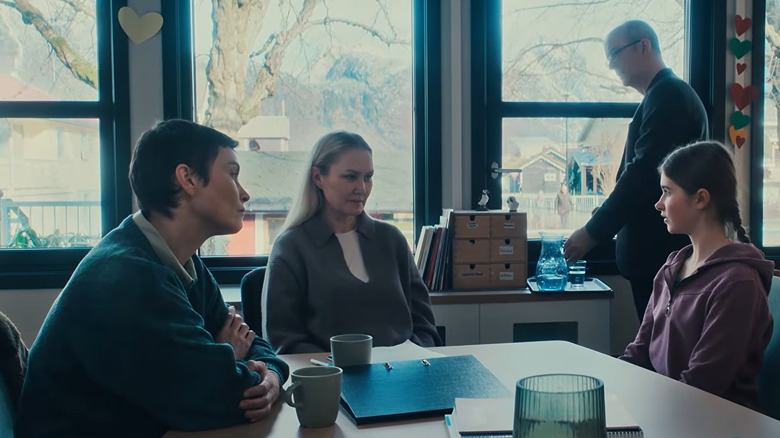
Ultimately, Fjord serves as a cautionary case study in contemporary filmmaking: stellar production values and prestigious festival accolades cannot entirely mask a clumsy, one-sided narrative that prioritizes ideological grievances over authentic human complexity.
