
The Sony FX5 Odyssey: Another Delay Leaves Filmmakers and Production Houses in Limbo
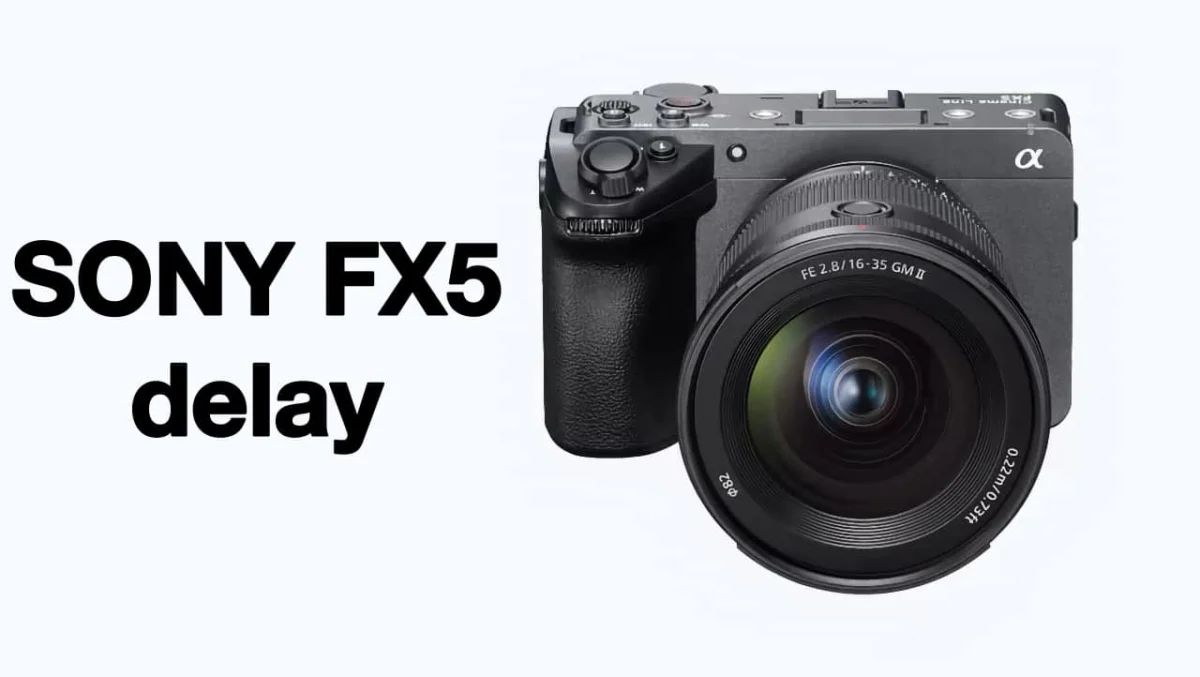
The much-anticipated Sony FX5 cinema camera—a device touted as a potential industry disruptor—has once again hit a significant roadblock. For creative professionals and rental houses worldwide who have been eagerly awaiting the arrival of this powerhouse, the horizon has shifted further out. Recent updates across Sony’s official European storefronts suggest that the global shipping schedule for the FX5 has been pushed back by an additional month, with a new target date of November 16, 2026.
This latest adjustment marks a recurring pattern in the camera’s troubled rollout, fueling speculation regarding the root cause of these persistent delays. As the industry watches closely, the gap between initial excitement and actual deployment continues to widen, raising questions about manufacturing stability, supply chain integrity, and the future of Sony’s professional cinema lineup.
The Latest Developments: A European Shift
The news of the delay first emerged through Sony’s regional e-commerce portals. Official sites for the United Kingdom, France, and Germany, which previously held October 16 as the tentative shipping date, have updated their listings to November 16. This shift is not merely a regional clerical update; it mirrors the cascading nature of previous delays.
While major US-based retailers, such as Adorama, still display the October 16 estimate on their product pages, industry analysts view this as a temporary discrepancy. Historically, Sony’s European distribution updates have served as a leading indicator for global shipping timelines. When the FX5 previously saw its release window slide, the European market updated first, followed by US retailers within 48 to 72 hours. Consequently, domestic buyers should likely prepare for a similar adjustment in the coming days.
The scope of this delay is comprehensive, affecting not only the primary camera body but also critical modular accessories designed to integrate with the FX5 ecosystem. These include the DVF-EL1 OLED viewfinder, the XLR-H2 XLR handle unit, and the VMC-BNCU1 timecode adapter cable. For professionals who have pre-ordered the full kit to ensure a seamless workflow on set, the delay of these specific peripherals is as disruptive as the camera body itself.
Chronology of a Disrupted Rollout
The saga of the Sony FX5 began with high expectations following a formal product announcement that promised to push the boundaries of "open gate" recording and high-speed XOCN (eXtended Original Camera Negative) internal capture. However, the timeline since the initial announcement has been marked by a series of "production-related circumstances."
- August 18, 2026: Sony Japan issued an official statement acknowledging initial manufacturing hurdles. At the time, the company communicated a vague window for delivery, citing "production-related circumstances" as the primary driver for the initial postponement.
- September 18, 2026: A follow-up statement from Sony Japan, while cryptic, attempted to manage expectations. The notice, which translated roughly to "late October or later," provided the company with a wide enough margin to avoid further official updates for several weeks, even as supply chain whispers began to circulate.
- October 2026: With the calendar turning to October, the expectation was a definitive move toward mass shipment. Instead, European regional sites preemptively shifted dates to mid-November, indicating that the "late October" goal had become unattainable.
This timeline reflects a reactive rather than proactive communication strategy. For a company of Sony’s stature, the inability to provide a concrete, global shipping date has created a vacuum of information, which is currently being filled by industry rumors and independent reporting.
The "Rear LCD" Theory: Assessing the Technical Culprit
Why has the FX5 been delayed for three months? While Sony maintains its official stance regarding "production-related circumstances," investigative reporting from outlets like PetaPixel has pointed toward a more specific, hardware-based issue.
Recent reports, originating from a user and industry source in Mexico City, suggest that the bottleneck may be linked to a flaw in the camera’s rear LCD display. In the world of high-end cinema manufacturing, an LCD issue is not merely a cosmetic concern; it is a critical failure point. If the display unit—which serves as the primary interface for focus pulling, menu navigation, and exposure monitoring—fails to meet Sony’s rigorous quality control standards, the entire production line must effectively grind to a halt.
For a cinema camera, the rear monitor is the "window" into the sensor. If there is an issue with color accuracy, refresh rate, or physical connectivity (ribbon cable longevity, for instance), the camera cannot be released as a "professional" tool. Given that the FX5 is intended for high-stakes environments where reliability is paramount, it is logical that Sony would choose to delay the launch rather than risk a mass recall of defective units. The prospect of thousands of backordered units arriving with faulty monitors is a reputational risk that Sony is clearly unwilling to take.
Official Responses and Corporate Strategy
Sony’s corporate communication has remained remarkably consistent, if not intentionally opaque. By sticking to the phrase "production-related circumstances," the company successfully avoids disclosing proprietary manufacturing details. While this protects Sony from revealing specific supply chain vulnerabilities, it leaves the customer base—particularly those who have already committed thousands of dollars in pre-orders—in a state of uncertainty.
From a strategic perspective, Sony is likely navigating a "perfect storm" of challenges. Beyond the potential LCD issue, global logistics, component shortages for specialized sensors, and the integration of new firmware for the XOCN codec all contribute to the complexity of the launch.
The silence from Sony’s headquarters in Japan is also noteworthy. By leaving the September 18 statement as the most recent "official" word, the company is attempting to maintain the "late October or later" narrative, even though the reality on the ground has clearly shifted. This is a common tactic in high-tech manufacturing: keep the messaging vague until the final shipping date is absolutely guaranteed to avoid further eroding consumer confidence.
Implications for the Industry
The delay of the FX5 has ripple effects that extend far beyond the Sony warehouse.
1. The Rental House Dilemma
Large-scale rental houses rely on having the newest technology available to secure contracts for feature films and high-end commercials. Many have already slotted the FX5 into their inventory schedules. Every week of delay translates to lost revenue and the potential need to sub-rent competing cameras from other manufacturers, which complicates logistics and budgeting.
2. The Professional Workflow
Independent filmmakers who planned their upcoming projects around the FX5’s specific capabilities—such as its open-gate sensor utilization—are now forced to make difficult compromises. Do they wait for the FX5 and risk their production schedule, or do they pivot to the Sony FX6 or Venice 2? The lack of a firm date makes this decision-making process agonizing.
3. Impact on Brand Loyalty
Sony has built a dominant position in the cinema camera market through reliability and rapid iteration. However, prolonged delays can damage this perception. If the FX5 eventually arrives, it must perform flawlessly. If there are any lingering hardware issues upon release, the frustration of the pre-order customers will likely be magnified, leading to a negative perception of the entire product line.
Conclusion: Waiting for the Green Light
As we move toward the middle of November, the camera industry remains in a state of watchful waiting. The Sony FX5, which promised to be a cornerstone of modern digital cinematography, is currently a "ghost" device—highly desired, yet nowhere to be found.
Whether the delay is indeed tied to the rear LCD or a broader series of manufacturing complications, the lesson here is clear: the complexity of modern cinema cameras is reaching a point where even the most seasoned manufacturers face significant hurdles. For now, the global community of cinematographers, rental house managers, and gear enthusiasts must wait to see if November 16 becomes the day the FX5 finally reaches the hands of its users, or if it will prove to be yet another milestone in a journey of indefinite waiting.
For Sony, the goal must be twofold: resolve the technical defect entirely and provide a transparent, definitive update to its global customer base. Anything less will only continue to strain the trust of those who have invested their professional future in the brand.
