
The Anatomy of Fear: A Definitive Retrospective on the Evolution, Sociology, and Mastery of the Slasher Film
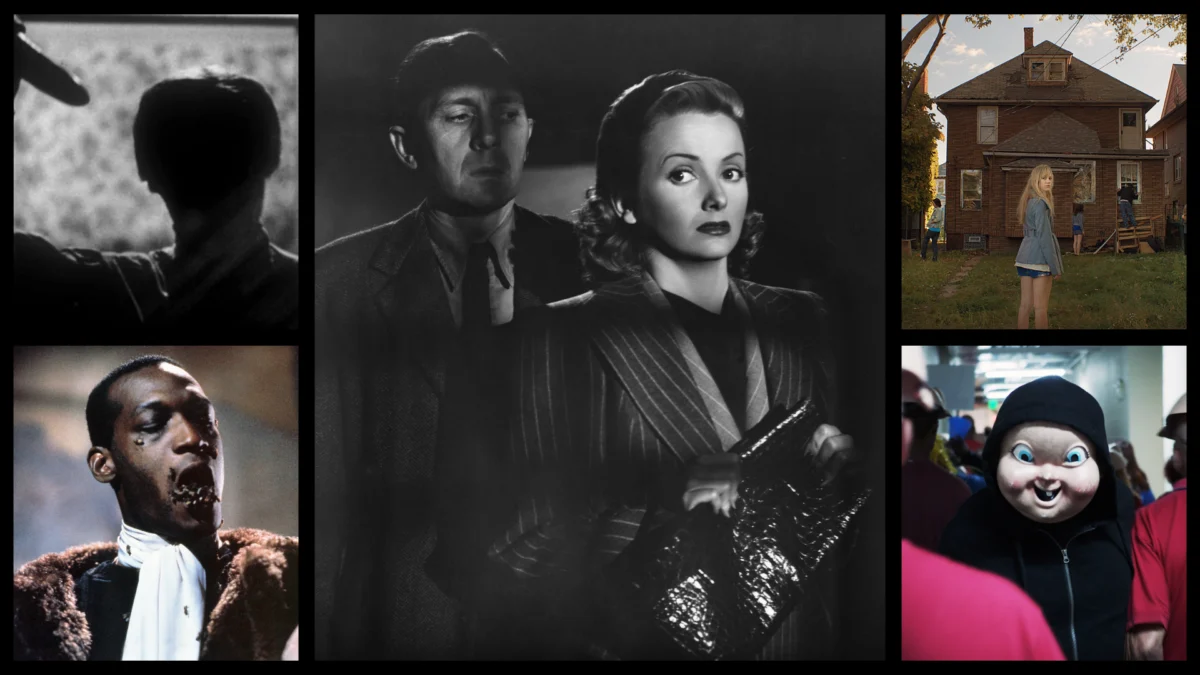
Introduction: The Taboo Appeal of the Blade
For decades, the slasher film has occupied a paradoxical space within the cinematic landscape. Often dismissed by high-brow critics as a disreputable, low-budget subgenre characterized by gratuitous violence, misogyny, and formulaic storytelling, it has simultaneously remained one of the most enduring, commercially lucrative, and culturally significant corners of horror. At its worst, the genre has historically punished women for their sexual autonomy, catering to prurient voyeurism by celebrating the predatory male gaze while reducing female characters to either cannon fodder or the sanctimonious, surviving "Final Girl."
Yet, at its best, the slasher film achieves something profound. It cuts closer to the bone of true-crime fascination than almost any other cinematic medium. The issues of representation and violence woven into these narratives often hold up a mirror to an audience that hungers for the packaged consumption of beastly criminality. Far from mindless gore-fests, the finest slasher films are deeply idea-oriented works of art. They confront the viewer with an uncomfortable moral inventory, asking a deceptively simple question: What is the exact line between passively watching a horrific act unfold on screen, and finally looking away in disgust?

As IndieWire revisits and updates its definitive canon of the greatest slashers ever made—with editorial contributions from critics including Tambay Obenson, Christian Blauvelt, Eric Kohn, Anne Thompson, and Alison Foreman—we trace a blood-soaked timeline from early cinematic experiments to the mainstream juggernauts that continue to convert horror skeptics into passionate devotees.
Main Facts: Deconstructing the Slasher Blueprint
To understand why the slasher genre commands such fervent loyalty, one must first deconstruct its foundational anatomy. Unlike supernatural horror, which relies on ghosts, demons, or cosmic dread, the classic slasher is rooted in a terrifyingly tangible reality: a human (or human-like) monster wielding a sharp instrument, systematically eliminating a group of isolated victims, usually teenagers or young adults.

Key Characteristics of the Subgenre:
- The Antagonist (The Killer): Usually masked, silent, or possessing a relentless, unstoppable momentum. Figures like Michael Myers, Jason Voorhees, and Ghostface transcend individual films to become modern cultural icons and pop-culture folklore.
- The Weapon: While firearms are occasionally used, the slasher prefers up-close, tactile violence—kitchen knives, machetes, meat hooks, and gardening tools. This proximity forces a visceral intimacy between the killer and the victim.
- The Setting: Typically isolated from societal protection. Summer camps, suburban cul-de-sacs, abandoned motels, or high school grounds cut off communication and assistance, amplifying the claustrophobia.
- The Final Girl: Coined by film scholar Carol J. Clover, the Final Girl is the sole survivor who confronts the killer, utilizing resourcefulness, intelligence, and a stark lack of hedonism to outlast her peers.
While the modern discourse surrounding horror is frequently dominated by "elevated" arthouse titles like Hereditary or The Babadook, slashers remain the ultimate gateway drug to the genre. They are egalitarian thrill-rides that democratize terror, turning collective theater audiences into screaming, cheering communities.
Chronology: The Evolution of the Blade
The history of the slasher film is a rich evolutionary tapestry, stretching from silent-era psychological thrillers to the self-aware meta-commentary of the 1990s and beyond.

1. The Roots: The 1940s and the Birth of the Stalker
Long before teenage campers were sliced to pieces, early cinematic pioneers laid the groundwork for the suspense of the stalker. Formative 1940s films such as Alfred Hitchcock’s The Lodger (though earlier, 1927, its DNA persisted) and Val Lewton-produced atmospheric thrillers like The Leopard Man (1943) introduced audiences to the chilling concept of an unseen predator moving silently through the shadows. These films relied heavily on expressionistic lighting, subjective camera angles, and psychological tension rather than explicit gore.
2. The Giallo Wave: Italy’s Stylized Blueprint
In the late 1960s and 1970s, Italian cinema experienced an explosion of giallo films—stylish, murder-mystery thrillers directed by auteurs like Mario Bava (Blood and Black Lace) and Dario Argento (Deep Red, Suspiria). These films served as direct structural and aesthetic blueprints for the American slasher wave. Characterized by gloved killers, elaborate and vividly lit murder set-pieces, progressive electronic or orchestral scores, and a focus on baroque visual flair, giallo proved that stylized violence could be treated as high art.

3. The American Indie Revolution: The Mid-1970s to 1980s
The genre as contemporary audiences recognize it was truly birthed in the mid-1970s by American independent filmmakers operating outside major studio systems. Tobe Hooper’s grimy, sun-baked masterpiece The Texas Chain Saw Massacre (1974) introduced a documentary-like realism to cruelty. A few years later, John Carpenter’s Halloween (1978) codified the aesthetic and narrative template: suburban safety shattered by an inexplicable, pure evil, accompanied by one of the most recognizable synthesizer themes in film history.
Following Halloween, the 1980s became the golden age of the franchise slasher. Studios churned out iconic properties featuring supernatural or indestructible boogeymen, including Wes Craven’s dream-invading A Nightmare on Elm Street (1984) and the endless sequels of Friday the 13th. Don Mancini’s Child’s Play (1988) introduced the homicidal doll Chucky, proving that the genre’s malleability knew no bounds.

4. Deconstruction and Meta-Commentary: The 1990s and Beyond
By the mid-1990s, the slasher genre had begun to collapse under the weight of its own exhausted formulas. Enter screenwriter Kevin Williamson and director Wes Craven, who revitalized the entire ecosystem with Scream (1996). Injecting a razor-sharp, self-referential streak into the narrative, Scream featured characters who had actually watched horror movies and knew the "rules" of survival. This meta-commentary forever changed how filmmakers approached the genre, paving the way for modern iterations that constantly converse with their own cinematic history.
Supporting Data: Box Office Dominance and Cultural Footprint
To measure the cultural footprint of the slasher film, one need only look at the box office receipts and franchise longevity. Unlike prestige dramas that enjoy a brief theatrical window, slasher franchises operate as perennial cultural touchstones.

- Franchise Longevity: The Halloween franchise, spanning over four decades across multiple timelines, has grossed well over $800 million worldwide. Similarly, the Friday the 13th and A Nightmare on Elm Street series spawned numerous sequels, comic books, video games, and merchandising empires.
- Budget-to-Profit Ratios: Historically, slashers are among the most financially reliable investments in Hollywood. John Carpenter’s original Halloween was produced on a micro-budget of roughly $325,000 and went on to gross over $70 million globally—one of the most profitable independent films in history. This high-yield model encourages studios to continually finance new entries, fostering up-and-coming directorial talent.
- Demographic Shift: Contemporary audience data reveals that horror fans skew younger and more gender-balanced than ever before. Far from alienating female audiences, modern slasher films frequently boast massive female fandoms who rally enthusiastically behind complex Final Girls and subversive storytelling.
Official Responses and Industry Perspectives: How Creators View the Carnage
The creators behind these cinematic nightmares have frequently spoken about the complex socio-political subtexts embedded within their work. Far from celebrating mindless violence, many pioneering directors viewed their films as critiques of contemporary societal anxieties.
When discussing the creation of The Texas Chain Saw Massacre, director Tobe Hooper frequently noted that the film was a reflection of the growing disillusionment and paranoia in post-Watergate, Vietnam War-era America. The loss of institutional trust, economic anxiety, and the breakdown of rural-urban divides were all funneled into the relentless pursuit of Leatherface.

John Carpenter has often remarked that the creation of Michael Myers as "The Shape" was designed to tap into an inexplicable, causeless malevolence. Myers was not a man with a complex psychological motive; he was a force of nature—an embodiment of the random, indifferent cruelty that lurks beneath the polished veneer of American suburbia.
Wes Craven, speaking on the cultural impact of Scream, highlighted the necessity of adaptation:

"Horror doesn’t create fear. It releases it. By acknowledging the tropes and laughing at them, we aren’t destroying the genre; we’re validating the audience’s intelligence and making the subsequent scares land even harder."
Implications: Where Does the Slasher Go From Here?
As the cinematic landscape shifts toward streaming platforms, franchise reboots, and the aforementioned "elevated" horror movement, the slasher film continues to adapt. It no longer has to apologize for its low-brow origins; instead, it wears them as a badge of honor.

The implications of the modern slasher’s survival point toward a healthier, more inclusive horror community. Contemporary filmmakers are actively subverting the tired tropes of the past. Women of color, LGBTQ+ characters, and deeply flawed antiheroes now regularly occupy the role of the Final Girl, transforming a once-exclusionary subgenre into a remarkably dynamic playground for diverse storytelling.
Ultimately, the slasher film end لأنه speaks to our deepest primal fears of violation, isolation, and mortality. Yet, by packaging these fears into structured narratives with rules, logic, and triumphant survivors, it offers a paradoxical comfort. We watch the blade fall, we grip our armrests, we scream into the dark—and when the credits roll, we step back into the light, alive.
