
The Duke’s Failed Frontier: The Rise and Fall of the ‘Hondo’ Television Franchise
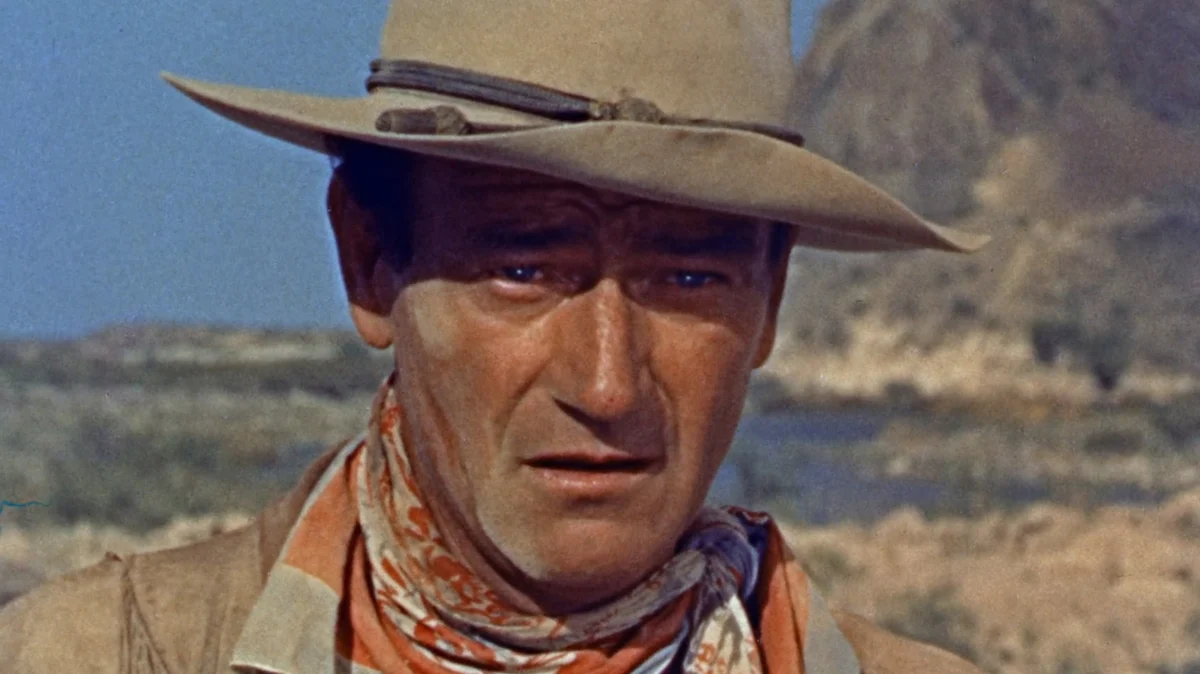
In the annals of Hollywood history, few figures loom as large as John Wayne. Known to the world as "The Duke," Wayne’s filmography defined the American Western for decades. While his cinematic legacy is cemented by masterpieces like The Searchers and Stagecoach, his ventures into television production often reflect a more experimental, albeit frequently turbulent, chapter of his career. Among these efforts stands Hondo, a project that began as a groundbreaking 3D feature film in 1953 and concluded as a fleeting, star-crossed television series in 1967.
Main Facts: The Genesis of an Icon
The saga of Hondo began in the early 1950s, a period of profound transition for the motion picture industry. As television began to siphon off cinema audiences, Hollywood sought technological gimmicks to lure people back into theaters. John Wayne, ever the shrewd businessman, co-founded Wayne-Fellows Productions alongside his close friend and producer, Robert Fellows.
The company acquired the rights to Louis L’Amour’s short story, "The Gift of Cochise," published in Collier’s magazine in 1952. Recognizing the cinematic potential of the narrative, Wayne brought on writer James Edward Grant to flesh out the screenplay, while director John Farrow was tapped to bring the vision to life. The resulting film, Hondo, was released in 1953 as one of the first major 3D Westerns.
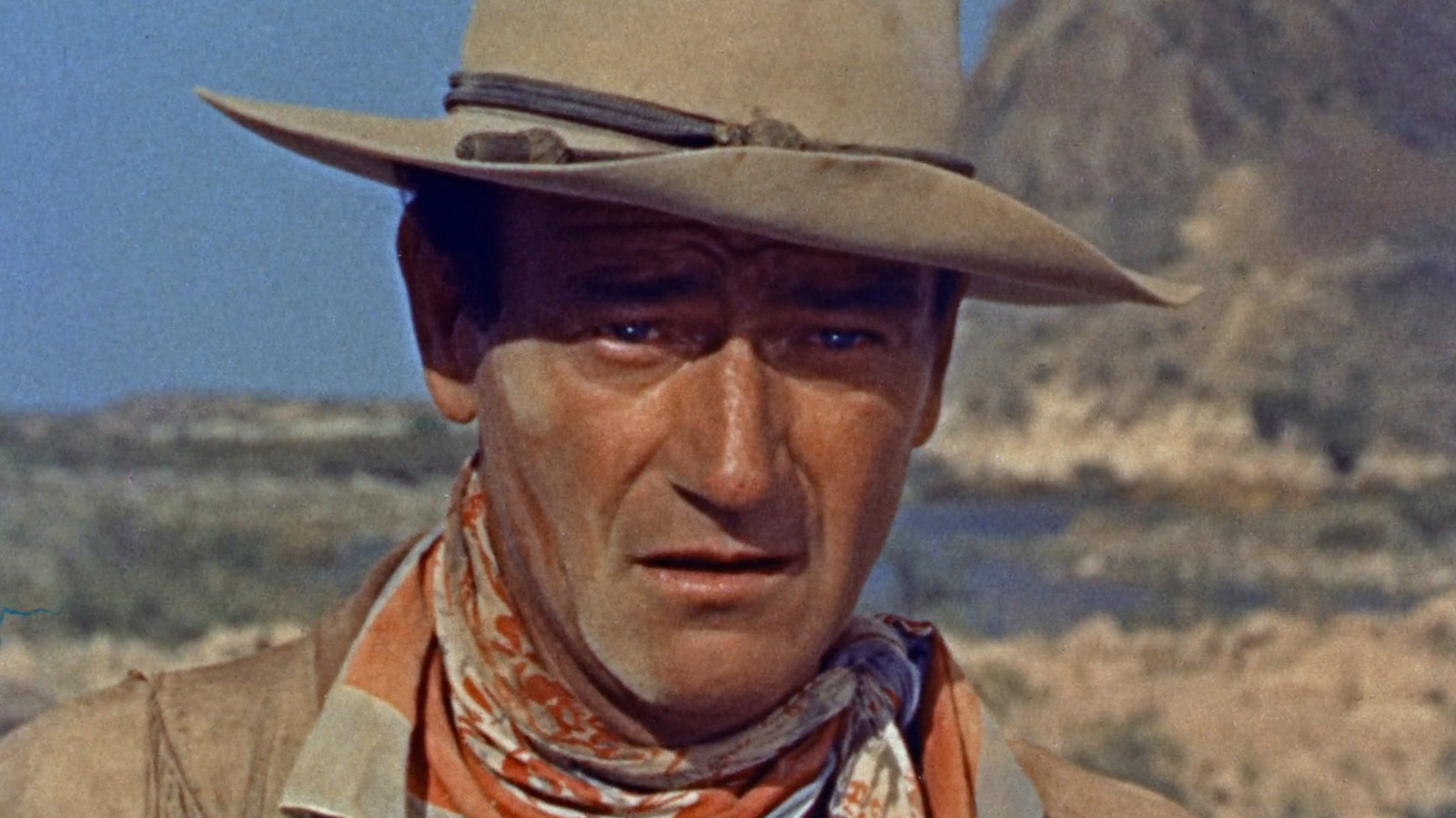
The story follows Hondo Lane (Wayne), a rugged U.S. Army dispatch rider, and his loyal dog, Sam. Hondo encounters a homesteading woman, Angie Lowe (Geraldine Page), and her young son, Johnny (Lee Aaker), in the dangerous Apache territory of the Arizona frontier. As Hondo becomes entangled in their survival against both the elements and the indigenous tribes, a slow-burn romance develops, complicated by the eventual return of Angie’s estranged and villainous husband, Ed Lowe.
Chronology: From Box Office Gold to Television Dust
The trajectory of the Hondo brand is a study in the volatility of mid-century entertainment.
- 1952: John Wayne and Robert Fellows acquire the rights to Louis L’Amour’s "The Gift of Cochise."
- 1953: The 3D feature film Hondo premieres to significant commercial success, grossing $4.1 million domestically—the highest-earning project for Wayne-Fellows Productions at that time.
- 1955: Wayne films a promotional introduction for the television series Gunsmoke, cementing his awareness of the power of the small screen, yet he remains detached from the development of a Hondo television adaptation for over a decade.
- 1967 (September 8): The Hondo television series, produced by Wayne’s rebranded Batjac Productions, debuts on ABC.
- 1967 (December): After airing only 17 episodes, the series is officially canceled, unable to compete with the cultural juggernaut that was NBC’s Star Trek.
Supporting Data: A Departure from the Source Material
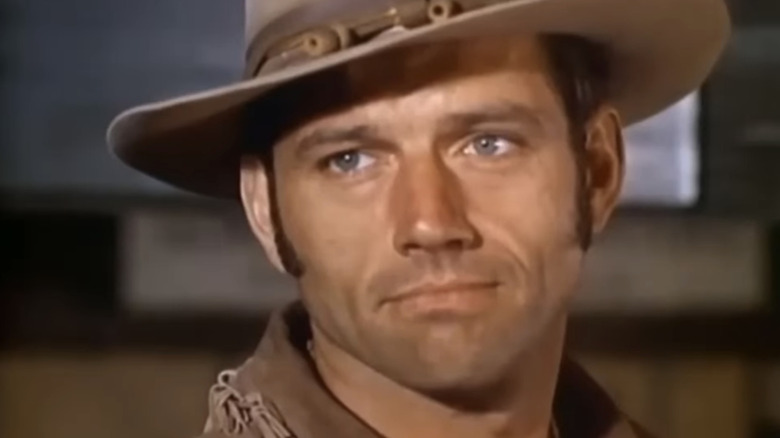
When Batjac Productions—renamed from the original Wayne-Fellows entity—decided to revive the concept for television in 1967, they chose not to lean on the established star power of Wayne himself. Instead, actor Ralph Taeger was cast as Hondo Lane. This version significantly diverged from both the 1953 novelization and the film.
In the television iteration, Hondo’s backstory was given a darker, more tragic edge. He was reimagined as a man who had married into a Native American tribe, only to have his wife murdered by corrupt U.S. Army officers. This trauma fueled his decision to briefly fight for the Confederacy before returning to the cavalry to serve as a peacekeeper on the Arizona frontier. The homesteaders were renamed the Dows, and the dynamics of the central trio—Angie (Kathie Browne), Johnny (Buddy Foster), and Ed (John Smith)—were adjusted to better fit an episodic, weekly format.
The production featured notable talent, including Jim Davis (later of Dallas fame) as the recurring antagonist Krantz. Despite the pedigree of the production house and the involvement of Wayne’s brother, Robert Morrison, as an associate producer, the series failed to capture the zeitgeist.
Official Responses and Industry Context
Why did a property that was so successful as a film struggle so mightily on television? Industry analysts point to several factors, most notably the competitive landscape of 1967. By placing Hondo in a time slot that put it in direct competition with Gene Roddenberry’s Star Trek, ABC effectively doomed the show. While Star Trek was cultivating a loyal, intellectual fanbase, Hondo was viewed as an anachronism—a traditional Western struggling to find its footing in a decade characterized by counter-culture movements and a shift toward more complex, cynical television dramas.
Furthermore, the absence of John Wayne’s physical presence proved to be a critical marketing failure. Unlike his 1955 appearance for Gunsmoke, which provided a stamp of authenticity to that series, Wayne remained entirely hands-off regarding the Hondo television show. To audiences of the late 1960s, a "Hondo" without the Duke felt like a hollow imitation, an assessment that proved fatal to the show’s ratings.
Implications: The Legacy of a "Failed" Experiment
The cancellation of Hondo after just 17 episodes serves as a quintessential example of the "brand dilution" trap in Hollywood. The film Hondo remains, by all accounts, a beloved classic. It was famously John Wayne’s personal favorite of his Western works, and its influence can be traced through his later career, where he continued to utilize the name "Hondo" for characters in subsequent films.
However, the transition from silver screen to cathode ray tube proved that prestige does not always translate across formats. The television series was an attempt to recapture the lightning-in-a-bottle success of 1953, but it lacked the urgency and the singular charisma that made the original film a staple of the genre.
The failed series also highlights the changing nature of the Western in the late 1960s. As the Vietnam War raged and the American public grew weary of authority figures, the traditional "cavalry vs. Native Americans" narrative—even one attempting to provide a balanced, "peacekeeper" perspective—felt dated to the younger, urban demographics that television networks were desperate to court.
Ultimately, the Hondo television show is remembered today primarily as a footnote in the expansive biography of John Wayne. It serves as a reminder that even the most successful producers, backed by the most iconic stars in the world, are subject to the brutal realities of scheduling, market shifts, and the simple truth that some stories are perfectly contained within the runtime of a single, definitive motion picture. While the series has largely faded into obscurity, the original 1953 Hondo stands as a testament to a specific moment in Hollywood’s golden age—a moment where the Duke, the 3D lens, and the frontier spirit aligned to create something that, unlike its televised successor, truly endured.
