
The Great Write-Off Gamble: How ‘Coyote vs. Acme’ Became a $100 Million Lesson in Hollywood Economics
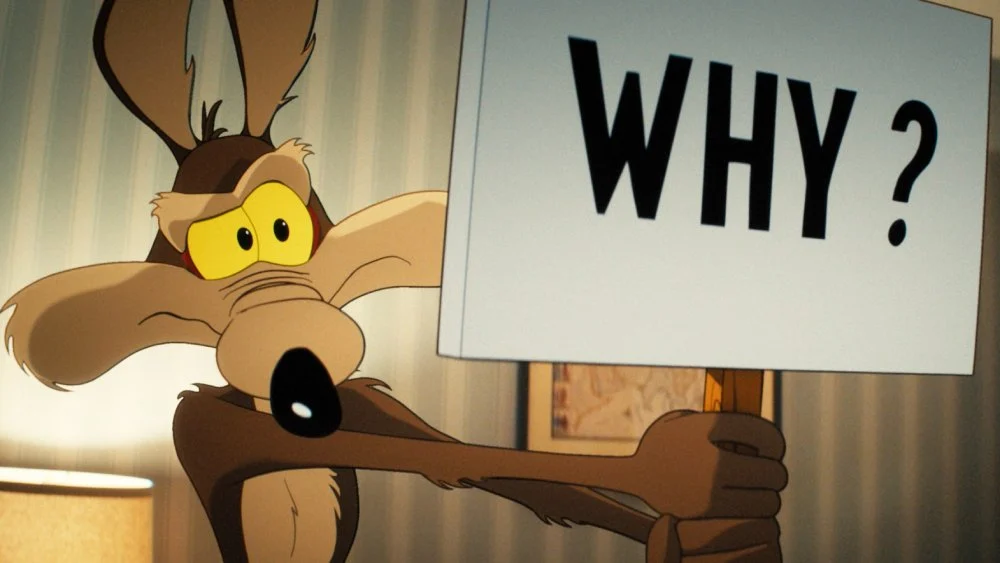
Three years after it was unceremoniously pulled from the release schedule, relegated to a tax write-off, and left for dead in the vaults of Warner Bros. Discovery, the live-action/animation hybrid Coyote vs. Acme has emerged as the most unlikely box-office hero of the decade. With a global haul exceeding $100 million, the film—rescued from obscurity by the indie distributor Ketchup Entertainment—has transformed from a corporate casualty into a cautionary tale regarding the collision of modern accounting and creative legacy.
As the dust settles, industry analysts and studio insiders are grappling with a singular, uncomfortable question: Was Warner Bros. Discovery CEO David Zaslav wrong to bury a film that clearly held significant commercial value?
A Chronology of the Shelving
To understand the magnitude of this outcome, one must look at the timeline of the film’s turbulent existence. Produced by James Gunn under the DC Studios banner, Coyote vs. Acme was originally greenlit during the tenure of former CEO Jason Kilar, who championed a hybrid release strategy for HBO Max. When David Zaslav took the reins, his mandate was clear: prioritize theatrical releases and slash costs to pay down the massive debt incurred by the merger.
In 2022, the industry was rocked when Zaslav opted to shelve the nearly finished Batgirl ($90 million) and Scoob! Holiday Haunt to secure tax write-downs. Coyote vs. Acme, starring Will Forte and John Cena, became the third high-profile victim of this austerity drive. At the time, the studio claimed the film simply did not fit the "new creative direction" of the company.
For nearly two years, the film remained in limbo, generating a "wall-to-wall" PR nightmare for the studio. Creatives throughout Hollywood grew increasingly wary of working with a studio that viewed finished assets as mere ledger entries. Following immense public outcry and a persistent campaign by the filmmakers to find a new home, Ketchup Entertainment stepped in, acquiring the distribution rights for $50 million—a move that has now paid massive dividends.
The Economics of a "Lost" Film
Why did Warner Bros. deem a $70 million production unworthy of a theatrical run, only for a smaller distributor to turn it into a $100 million success? The answer lies in the diverging incentives of a mega-conglomerate versus an agile indie distributor.
For a major studio like Warner Bros., the threshold for a "hit" is astronomical. With the $70 million production cost—plus the heavy marketing spend required for a global tentpole release—the studio would have needed to clear roughly $200 million just to break even after theaters took their 50% cut. By choosing the tax write-down, Warner Bros. opted for a guaranteed $30 million in immediate financial relief, avoiding the risk of a potential box-office underperformance.
Conversely, Ketchup Entertainment operated with a leaner business model. By pre-selling foreign territories to offset their $50 million investment, they de-risked the venture before the film even hit screens. They didn’t need a massive, $500 million global blockbuster; they needed a steady, profitable performer. And that is exactly what Coyote vs. Acme delivered. With $59.8 million in domestic sales and $42 million overseas, the film proved that there was still an audience hungry for the iconic Looney Tunes brand.
Supporting Data: Why It Worked
The success of Coyote vs. Acme wasn’t a fluke; it was a testament to the enduring power of intellectual property (IP).
"There was legacy value in that IP, and the box office grosses of Coyote vs. Acme reflect it," says David A. Gross of FranchiseRe. "All-audience films are extremely valuable and among the biggest earners at the box office. There would have been significant upside with stronger marketing [from the original studio]."
The data supports this. While original animation has faced headwinds in the post-COVID landscape, kid-friendly franchises—such as Sonic the Hedgehog and PAW Patrol—have remained the most reliable draws for families. Coyote vs. Acme benefited from this exact brand recognition, as well as a "rallying effect" from fans who were eager to see the film succeed simply to prove the studio’s initial assessment wrong.
Compared to other Ketchup-distributed projects, the difference is stark. In 2024, when Warner Bros. quietly offloaded The Day the Earth Blew Up: A Looney Tunes Movie, Ketchup turned it into one of their highest-grossing films ever, earning $15.4 million globally. While that figure is smaller, it demonstrated a consistent trend: the Looney Tunes brand possesses a "floor" of profitability that the studio had seemingly ignored.
The View from the Theater Owners
For theater owners, the success of Coyote vs. Acme is a vindication of their long-standing complaints. Exhibitors have frequently argued that studios are starving the theatrical market of new, family-oriented content.
"It’s easy to opine on a decision after we’ve seen the effects," notes Shawn Robbins, founder of Box Office Theory. "The movie did well partly because of rallying from fans. But at the end of the day, it turned out to be a good movie. It provided what audiences wanted: familiar characters in a fun, live-action environment."
The film’s performance highlights the value of the PG-rated slot. While other studios pivoted heavily toward R-rated dramas or hyper-specific superhero epics, Coyote vs. Acme filled a void in the calendar, drawing families into cinemas during a period when high-quality, brand-familiar family entertainment was in short supply.
Implications for Warner Bros. Discovery
The irony of this success is punctuated by Warner Bros.’ own recent struggles. The studio has had an abysmal 2026 at the box office, suffering through a string of flops including The Bride!, the Supergirl adaptation, and the Tom Cruise-led dark comedy Digger. As these films struggled to find an audience, the "lost" $100 million of Coyote vs. Acme became a glaring reminder of the studio’s miscalculation.
The decision to shelf the film, according to insiders, was ultimately a triumph of accountants over creative executives. Despite internal pushback from employees who recognized the film’s quality, Zaslav reportedly relegated the final decision to the bottom-line analysts. This move did little to endear him to the creative community, who view the "write-off" tactic as an existential threat to the industry.
"We see so many remakes and sequels because they make money," Robbins explains. "The fact that Coyote vs. Acme was based on established IP makes the studio’s decision to get rid of it all the more puzzling. They had the asset, they had the brand, and they had the finished product. To walk away from that is a fundamental misunderstanding of what makes a studio valuable in the long run."
Conclusion: The Cost of the "Write-Off"
The saga of Coyote vs. Acme serves as a sobering reminder that in the rush to optimize balance sheets, companies may be sacrificing their most valuable assets: their brand equity and their relationships with the creative class.
By prioritizing a $30 million tax credit over the potential of a $100 million-plus theatrical property, Warner Bros. Discovery may have won the accounting battle but lost the war of perception. As Hollywood continues to navigate the post-pandemic landscape, the success of this "abandoned" film will likely be cited for years to come—a glowing, $100 million neon sign pointing to the folly of dismissing the power of a beloved brand, and the filmmakers who bring it to life.
For David Zaslav and his team, the lesson is clear: in the movie business, the numbers on the ledger only tell half the story. The rest is written by the audience, and they have spoken loud and clear.
