
The Ghost of Woodsboro: Why Skeet Ulrich Says Billy Loomis’s Journey Ends with Sam Carpenter
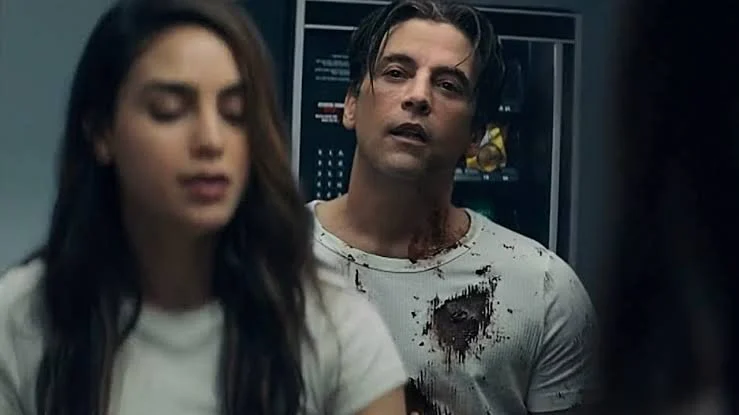
The Scream franchise has long been defined by its meta-commentary on the horror genre, its revolving door of iconic villains, and its ability to resurrect legacy characters in increasingly creative ways. However, as the series pivots toward its next chapter, the return of one of its most seminal figures appears to have reached a definitive conclusion. Skeet Ulrich, who famously portrayed the original Ghostface, Billy Loomis, has stated unequivocally that his tenure in the franchise is inextricably linked to the character of Sam Carpenter, played by Melissa Barrera. With Barrera’s exit from the series, Ulrich argues that the narrative purpose for his character’s spectral presence has evaporated.
The Narrative Foundation: A Father’s Shadow
To understand Ulrich’s stance, one must look at the structural role Billy Loomis played in the recent revival of the Scream franchise. Introduced in the 2022 soft reboot, Sam Carpenter—the daughter of Billy Loomis—grappled with the terrifying realization that her biological father was the architect of the original Woodsboro murders.
Ulrich did not return as a living man, but rather as a psychological manifestation: a hallucination born from Sam’s trauma and her burgeoning fear that she, too, possessed a predilection for the same brutal violence that defined her father. Across both the 2022 Scream and Scream VI, Billy served as a literal voice in Sam’s head, representing her internal struggle against the "Loomis legacy."
"Without Melissa Barrera and Sam Loomis, there’s no Billy Loomis," Ulrich explained in a recent interview with Us Weekly at a Scream-themed promotional event. "He was in her head. That was the extent of the relationship."
A Trilogy Cut Short: The Lost Arc
Ulrich’s comments shed light on what was intended to be a three-film narrative arc for the character of Sam Carpenter. According to the actor, the creative roadmap discussed during the development of the 2022 film was designed to evolve over a trilogy, with the endgame being a much darker exploration of Sam’s psyche.
"The plan was that he would gradually influence Sam into becoming the killer herself," Ulrich had previously revealed to Entertainment Weekly. The proposed arc suggested that Sam would eventually succumb to her heritage, turning the franchise on its head by centering a film around a protagonist who fully embraces the mantle of Ghostface.
This vision, however, was disrupted by a series of high-profile departures and corporate decisions. The creative team behind the revival, Radio Silence (Matt Bettinelli-Olpin and Tyler Gillett), transitioned away from the franchise, and in November 2023, Spyglass Media Group fired Melissa Barrera following her social media commentary regarding the conflict in Gaza. The loss of the lead actress effectively shattered the narrative trajectory that Ulrich was tethered to, rendering his role as a psychological foil for Sam redundant.
Chronology of a Franchise in Flux
The instability currently surrounding Scream 7 is the culmination of a rapid, often chaotic series of events that have left fans and industry insiders questioning the direction of the horror staple:

- January 2022: Scream (the fifth installment) is released to critical and commercial success, re-establishing the franchise with a new generation of characters.
- March 2023: Scream VI hits theaters, expanding the role of Billy Loomis as Sam’s "dark passenger."
- August 2023: Christopher Landon is tapped to direct Scream 7, replacing the Radio Silence duo.
- November 2023: Spyglass Media Group terminates its relationship with Melissa Barrera, citing controversial social media posts.
- December 2023: Jenna Ortega, who played Sam’s sister Tara, also exits the project, reportedly due to scheduling conflicts with Wednesday, leaving the Scream 7 production in a state of creative limbo.
- October 2026: Ulrich publicly confirms that without the specific narrative conduit of Sam Carpenter, his participation in any future Scream installments is off the table.
The "Stu Macher" Factor and Legacy Casting
While Ulrich has closed the door on his own return, he remains a vocal supporter of his peers. The same Us Weekly interview touched upon the persistent fan theory—and recent confirmation—that Matthew Lillard’s Stu Macher could potentially return to the franchise.
Ulrich expressed enthusiasm for Lillard’s potential involvement, even lending credence to the fan-favorite theory that Stu survived his televised electrocution in the 1996 original. However, Ulrich is quick to draw a line in the sand regarding his own character. "Billy took a bullet to the head," he noted, dismissing the possibility of a physical resurrection for Loomis. His return was strictly defined by the "haunting" aspect of his presence, a nuance that would be lost if the studio attempted to force him into a new storyline that lacks the Sam Carpenter connection.
Implications for the Future of Scream
The situation surrounding Scream 7 highlights a recurring tension in modern Hollywood: the struggle between maintaining a "legacy" brand and the need for fresh, character-driven storytelling. For years, Scream succeeded by balancing the old with the new. However, the current impasse suggests that the reliance on legacy characters—whether through flashbacks, hallucinations, or retconned survivals—may have reached a point of diminishing returns.
The implication is clear: if Spyglass and the Scream production team wish to continue the franchise, they may need to abandon the "legacy crutch." Barrera herself has indicated that she would only consider a return to the franchise if the current ownership, Spyglass, were no longer involved. This creates a binary outcome for the series: either it continues under the current corporate structure with entirely new characters and a clean slate, or it remains dormant until a potential change in leadership allows for the "Carpenter saga" to be resolved on the terms originally envisioned by the creative team.
The Verdict: Moving Forward
As Ulrich’s comments make clear, the "Ghost of Woodsboro" is no longer interested in haunting hallways he no longer recognizes. His perspective serves as a critique of the industry’s tendency to recycle IP long after the narrative fire has gone out.
Fans of the series are currently divided. Some argue that the franchise should have concluded with the original trilogy, or perhaps with the definitive end of the Sidney Prescott era. Others believe that the "new blood" of Sam and Tara Carpenter offered a genuine, modern evolution of the slasher genre that deserved its full three-act structure.
Ultimately, the Scream franchise stands at a crossroads. By tethering itself so tightly to the specific, complex dynamic between a dead father and a struggling daughter, the filmmakers inadvertently created a situation where, once the lead was removed, the foundation collapsed. If Scream is to survive its current identity crisis, it must find a way to stop looking backward at the ghosts of 1996 and start building a future that doesn’t require a constant resurrection of the past.
Whether audiences are ready to embrace a Scream movie that lacks the familiar faces of Loomis, Macher, or even the Carpenter sisters remains to be seen. But for now, the message from those who helped build the house that Ghostface lives in is definitive: the story is over. It is time to let the characters rest, or to start a brand-new game entirely.
