
The Impossible Longevity of Tom Cruise: A Definitive Retrospective of Cinema’s Greatest Action Franchise
Nearly three decades after a 1960s television spy show was successfully translated to the silver screen, the Mission: Impossible franchise remains an anomalous titan in the modern Hollywood landscape. Few actors in motion picture history have been sustained by a single ongoing enterprise quite like Tom Cruise. As the anticipation surrounding Mission: Impossible — The Final Reckoning demonstrates, the property’s engine of high-octane spectacle and high-stakes espionage has not lost a single ounce of its kinetic potency.
The longevity and consistency of the franchise are a rare cinematic phenomenon. Across eight feature films, the series has not only eclipsed the cultural footprint of Bruce Geller’s original television series—starring Peter Graves as the steadfast leader of the Impossible Mission Force (IMF)—it has fundamentally redefined what audiences expect from a Hollywood blockbuster. While the foundational elements remain intact (Lalo Schifrin’s iconic theme music, the signature self-destructing briefing, and the immortal phrase, "Your mission, should you choose to accept it"), the feature films have evolved into an exquisite masterclass of practical stunt work and auteur-driven action filmmaking.

Main Facts: The Anatomy of a Blockbuster Dynasty
At its core, the Mission: Impossible franchise operates on a simple yet demanding premise: put Tom Cruise in extreme physical danger, capture it practically on IMAX cameras, and build a taut, globe-trotting thriller around it.
Yet, the series’ true strength lies in its structural evolution. What began in 1996 as an episodic, director-driven showcase morphed under Christopher McQuarrie’s modern stewardship into a tightly serialized narrative saga. Alongside Cruise, foundational cast members like Ving Rhames (as the brilliant hacker Luther Stickell) have provided emotional continuity, while a rotating and eventually recurring roster of elite talent—including Simon Pegg, Rebecca Ferguson, Vanessa Kirby, and Jeremy Renner—has elevated the material far above standard popcorn fare.

Crucially, the franchise is defined by its directors. Unlike cinematic universes overseen by corporate committees, Mission: Impossible has consistently invited visionary filmmakers—Brian De Palma, John Woo, J.J. Abrams, Brad Bird, and Christopher McQuarrie—to leave distinct stylistic thumbprints on individual installments.
Chronology: Ranking the Franchise From Worst to Best
With eight films spanning nearly thirty years and entirely devoid of an outright "dud," ranking the Mission: Impossible series is an exercise in splitting hairs. Here is the definitive retrospective ranking of every installment in the franchise.

8. “Mission: Impossible II” (2000)
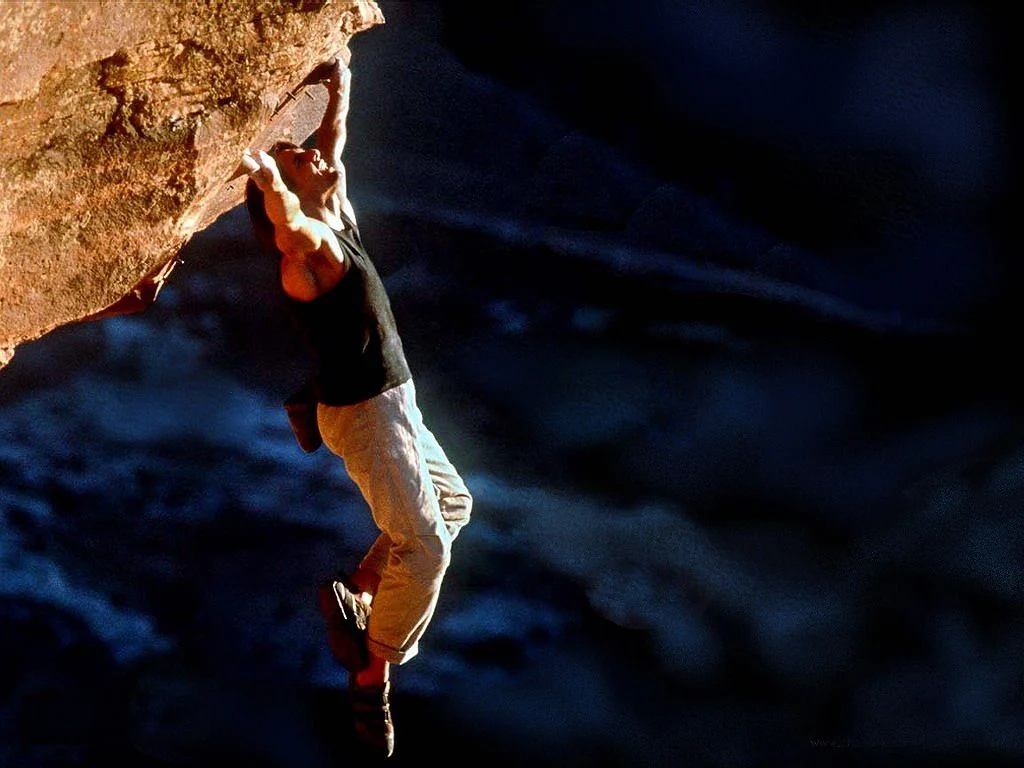
John Woo’s 2000 entry is an intriguing misfire that attempts to ground the franchise in early-aughts action tropes, complete with rogue viruses, corporate espionage, and an excess of slow-motion sequences. While it occasionally feels like a disjointed stew of narrative ideas, it introduces Thandie Newton as Nyah Nordoff-Hall, a compelling thief-turned-spy who stands as the most Bond-girl-esque of Ethan Hunt’s love interests. Memorable moments—such as an opening rock-climbing sequence and a blistering motorcycle chase with villain Dougray Scott—ultimately feel quaint, having been thoroughly eclipsed by the ambition of later sequels.
7. “Mission: Impossible — The Final Reckoning” (2025)
A heartbreaking departure from the franchise’s usual heights, The Final Reckoning occasionally loses sight of the pure visceral joy that made these films global sensations. In attempting to tie all seven previous movies together in a sprawling narrative knot (even utilizing the release date of the 1996 original as a plot point), director Christopher McQuarrie bogs down the momentum. The first act struggles with an uninspired, downbeat adversary in the AI "Entity," though the film recovers somewhat in its final, pulse-pounding set pieces. If this truly marks Ethan Hunt’s curtain call, fans are left wishing for a tighter, more triumphant send-off.

6. “Mission: Impossible III” (2006)
Television auteur J.J. Abrams made his feature film directorial debut with this tight, character-driven entry, which introduced a deeply human element to Ethan Hunt by giving him an Achilles’ heel: his wife, Julia Meade (Michelle Monaghan). While the plot hinges on a generic MacGuffin known as "The Rabbit’s Foot," the film’s true masterstroke is Philip Seymour Hoffman’s chilling portrayal of arms dealer Owen Davian. Hoffman’s cold-blooded demeanor provides the franchise with its most terrifyingly realistic villain, capped off by an indelible, dead-eyed stare into the howling wind that remains iconic.
5. “Mission: Impossible — Dead Reckoning Part One” (2023)
Suffering slightly from "middle-chapter syndrome," Dead Reckoning Part One delivers incredible standalone thrills—including a frenetic Rome car chase, a cliffside motorcycle BASE jump, and a breathtaking train wreck finale—while leaving its core battle against the rogue AI "Entity" on a cliffhanger. Narrative missteps, particularly the abrupt sidelining of Rebecca Ferguson’s beloved Ilsa Faust in favor of Hayley Atwell’s Grace, prevent it from reaching the absolute upper tier of McQuarrie’s filmography, though the action choreography remains top-tier.

4. “Mission: Impossible — Rogue Nation” (2015)
Marking Christopher McQuarrie’s directorial debut in the franchise, Rogue Nation is a triumph of classical storytelling. Channeling the spirit of Alfred Hitchcock and classic espionage thrillers, McQuarrie delivered a tightly constructed narrative anchored by Rebecca Ferguson’s sensational breakout performance as MI6 agent Ilsa Faust. Faust goes toe-to-toe with Cruise in both combat and magnetism. Bolstered by an unforgettable opera house assassination sequence, Rogue Nation revitalized the series by proving that brains and brawn could exist in perfect equilibrium.
3. “Mission: Impossible — Ghost Protocol” (2011)
Pixar veteran Brad Bird made a stunning live-action debut with Ghost Protocol, utilizing his animation background to orchestrate action sequences that function as breathtaking symphonies. From a kinetic, balletic fight between Léa Seydoux and Paula Patton to Tom Cruise fearlessly scaling Dubai’s Burj Khalifa, Bird treats set pieces as works of pure kinetic art. The film reinvented the franchise as a relentless exercise in one-upping expectations, cementing the modern formula for blockbuster success.

2. “Mission: Impossible” (1996)
Brian De Palma’s original stylish thriller laid the bedrock for everything that followed. Driven by iconic imagery—most notably a sweat-beaded Ethan Hunt suspended inches above a high-security computer floor—the film subverts audience expectations immediately by wiping out Hunt’s original team in a brutal double-cross. Culminating in the delightfully bonkers high-speed train-and-helicopter tunnel finale, De Palma’s atmospheric masterpiece established the template for cinematic espionage madness.
1. “Mission: Impossible — Fallout” (2018)
Unrivaled and universally acclaimed, Fallout stands comfortably as one of the greatest action movies ever made. Director Christopher McQuarrie strings together a series of death-defying set pieces—from a breathtaking HALO jump captured in a single long take to a brutal, music-free bathroom brawl featuring a powerhouse Henry Cavill—with supreme confidence. Beyond the stunts, Fallout serves as a meta-textual fulfillment of a promise Tom Cruise made to moviegoers over two decades ago: a vow to keep the dying art of practical, star-driven cinematic spectacle alive at all costs.

Supporting Data: Box Office Resilience and Critical Acclaim
The trajectory of the Mission: Impossible franchise is uniquely defined by a rare cinematic phenomenon: critical and commercial appreciation that scales upward with time.
- Box Office Growth: While the 1996 original grossed a stellar $457 million worldwide, the franchise experienced exponential global growth in its latter half. Ghost Protocol brought in nearly $700 million globally in 2011, and Fallout shattered series records in 2018 by pulling in over $791 million worldwide.
- Critical Consensus: On review aggregator Rotten Tomatoes, the franchise holds an astonishingly high aggregate rating across all entries. Beginning with mixed-to-positive reviews for De Palma and Woo’s entries, the series experienced a critical renaissance starting with Abrams’ third installment, culminating in near-universal acclaim for Bird’s and McQuarrie’s contributions.
Official Responses and Industry Impact
Paramount Pictures and Skydance Media have repeatedly positioned the franchise as the crown jewel of their theatrical slates. Studio executives and industry analysts frequently cite Cruise’s uncompromising dedication to theatrical exhibition—most notably demonstrated by his efforts to safely resume and complete production during the COVID-19 pandemic—as a vital stabilizing force for the global box office.

Fellow filmmakers and industry peers have continuously lauded the franchise for preserving practical stunts in an era increasingly dominated by computer-generated imagery. In numerous interviews, directors like Christopher Nolan and Brad Bird have acknowledged the series’ unique contribution to pushing the technical boundaries of large-format IMAX cinematography.
Implications: The Last Movie Star of His Kind
As Hollywood navigates an era heavily reliant on recognizable intellectual property and digital effects, the Mission: Impossible franchise stands as a glorious contradiction. It is a massive corporate brand, yet it functions entirely as an intensely personal vehicle for an analog movie star willing to risk his life for the audience’s entertainment.

The implications of the franchise’s sustained success extend far beyond box office ledgers. It proves that audiences still crave tangible, high-stakes physical peril executed by real humans on real locations. Whether The Final Reckoning truly closes the book on Ethan Hunt or simply marks another breathtaking chapter in a never-ending saga, Tom Cruise has already secured his legacy. He promised moviegoers he wouldn’t let them down—and across nearly thirty years of celluloid adrenaline, he has never broken that promise.
