
The Digital Panopticon: A Review of John Torres’s The Remotes [NYFF 2026]
At the 64th Annual New York Film Festival, audiences were confronted with a visceral, haunting, and undeniably strange vision of our immediate future. The Remotes, directed by John Torres and penned by the collaborative duo of Dodo Dayao and Torres, serves as a searing indictment of the modern condition—a world where human agency is slowly being eroded by the very tools we created to simplify our lives.
Clocking in at over two and a half hours, the film is an experimental odyssey that feels less like a traditional narrative and more like a fever dream of late-stage capitalism. It invites comparison to the voyeuristic, technologically obsessed works of David Cronenberg, yet it carves out its own niche in the pantheon of “cautionary tales” regarding our reliance on algorithms and smart-device ubiquity.
The Core Premise: A Society at the Mercy of Algorithms
The central narrative anchor of The Remotes is Detective Mijares, portrayed with a palpable, aching sense of grief by Alchris Galura. Mijares is a man haunted by the loss of his wife in a catastrophic car crash, a tragedy that serves as the catalyst for his descent into the underworld of modern technology. As he investigates a series of bizarre, fatal accidents, he discovers a common thread: a mysterious, invasive GPS-based application that seems to be orchestrating these “nasty” events.
The narrative expands from this procedural core to encompass two sisters—played by Gabby Padilla and Julia Richards—who operate as the enigmatic, human architects behind the app. Their inclusion complicates the morality of the film; they are not mere villains, but rather embodiments of the detached, often chilling indifference required to maintain the digital ecosystems that govern modern life. As the film progresses, the sisters receive significant screen time, allowing the audience to witness the internal friction of those who pull the strings of our digital reality.
Chronology and Thematic Flow
The Remotes does not adhere to a traditional three-act structure. Instead, it mirrors the fragmented nature of the digital experience. It flows in a stream-of-consciousness manner, where characters and dialogue drift from one scene to the next with the fluidity of a social media feed.
The Party Scene: A Mirror to Modern Paranoia
Perhaps the most resonating sequence in the entire film is an extended party scene that acts as the movie’s philosophical centerpiece. A character launches into a monologue about the terrifying ubiquity of targeted advertising—the phenomenon where one’s internal thoughts or whispered conversations manifest as digital ads on a screen moments later.
This scene is not just a dialogue; it is a confession of our collective entrapment. It articulates the unspoken fear that technology has effectively breached the firewall of the human mind. The audience is forced to confront the reality that our private thoughts are now commodities, sold and manipulated by the same interfaces that guide our commutes and dictate our social circles.
The Mechanical Breakdown
In the final act, the film leans into the absurdity of our dependence on tech. The recurring motif of a car that “dies”—an inanimate object rebelling against its human master—serves as a metaphor for the breakdown of the relationship between man and machine. The scenes featuring Enchong Dee and Julia Richards’ character, Eva, highlight this tension, showing how even our intimate relationships are mediated, and eventually hindered, by the devices we refuse to put down.
Supporting Data: Acting and Direction
While the film’s plot may meander, its emotional resonance is carried almost entirely by its ensemble cast. The performances are raw, dedicated, and deeply committed to the film’s experimental tone.
- Alchris Galura (Detective Mijares): Galura provides the film’s heart. His portrayal of a man defined by sorrow allows the audience to ground themselves in the human cost of the technological tragedies depicted on screen.
- Enchong Dee: Dee delivers a masterclass in the “ordinary.” By playing a character who is fundamentally mundane, he highlights how average people are often the most susceptible to the subtle, creeping influence of the film’s central technology.
- Padilla and Richards: As the architects of the “app,” the two actresses are tasked with conveying a chilling detachment. Their performance is a testament to the idea that the architects of our digital cages are often as trapped as the inhabitants within them.
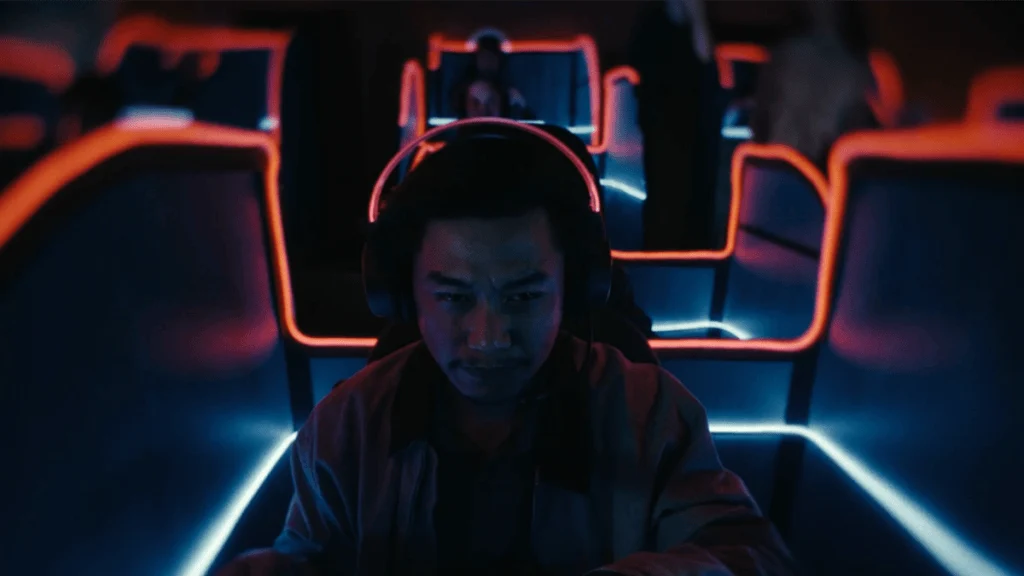
The direction by John Torres is, for the most part, technically proficient. He creates a visual language of shadow, flickering screens, and claustrophobic urban landscapes. While the film struggles with pacing, particularly in the middle act, the dark, haunting imagery remains consistent.
![Film Review: THE REMOTES: Technology Can Be Wicked in This Frightening Cautionary Tale [NYFF 2026]](https://film-book.com/wp-content/uploads/2026/10/The-Remotes-01-1200x675-1.png)
Official Responses and Critical Reception
The debut of The Remotes at the New York Film Festival has sparked intense debate among critics. The general consensus suggests that while the film is a bold, ambitious swing, it is hampered by its refusal to edit for clarity.
Critics have noted that the film suffers from a lack of narrative tightness. The silences between dialogue and the occasionally sluggish transitions between scenes suggest that a more rigorous editorial hand could have elevated the film from a “curiosity piece” to a masterpiece. However, there is universal praise for the film’s atmosphere. It succeeds in creating a world that feels perpetually like a “bad dream”—a suffocating environment where the characters are unable to purge the nightmares of their own creation.
Implications: The Human Cost of Connectivity
The Remotes is ultimately a film about the erosion of the self. By examining how technology drives our lives, often for the worse, Torres poses a terrifying question: Can we ever truly “log off” when the world we live in is built on the architecture of constant surveillance and algorithmic influence?
The "Crash" Comparison
The film is frequently compared to the 1997 film Crash (not to be confused with the 2005 Best Picture winner). Where the 1997 film found erotic, taboo meaning in the mechanics of car accidents, The Remotes finds a different kind of horror. Here, the accidents are not a source of sexual gratification, but a symbol of our fascination with the failure of the systems we trust with our lives. The eerie similarity in the way both films treat the automobile as a lethal extension of human pathology is a point of frequent discussion.
Future Perspectives
While The Remotes may be flawed in its execution, it serves as a vital entry in the growing genre of “tech-noir.” It is the work of a director who is clearly testing the boundaries of the medium. For Torres, this film serves as a foundational project—a rough, dark, and provocative stepping stone. One suspects that his future works will build upon the substance of The Remotes while refining the structural weaknesses that prevent this particular iteration from reaching its full potential.
Conclusion: A Worthwhile Descent
The Remotes is not an easy watch, nor is it a perfect one. It demands patience, attention, and a willingness to sit with ambiguity. It is a film that reflects our own negative experiences with technology back at us, making it an deeply uncomfortable, yet essential, viewing experience.
Despite the thinness of some character arcs and the occasional lapse in narrative fluidity, the film’s ability to conjure a mood of pervasive, technological dread is undeniable. It is a cautionary tale that lingers in the mind long after the credits roll, serving as a bleak reminder that in the age of the algorithm, we are all, in some way, living in a simulation of our own making.
Final Rating: 7/10
Readers interested in deeper analysis of the film or wishing to discuss its more abstract themes are encouraged to share their thoughts in the comments section below. Your engagement helps support the continued independent coverage of film festivals and experimental cinema.
