
Beyond the Grain: The Untold Story of the Patterson-Gimlin Film in ‘Capturing Bigfoot’
By Alex Billington
October 2, 2026
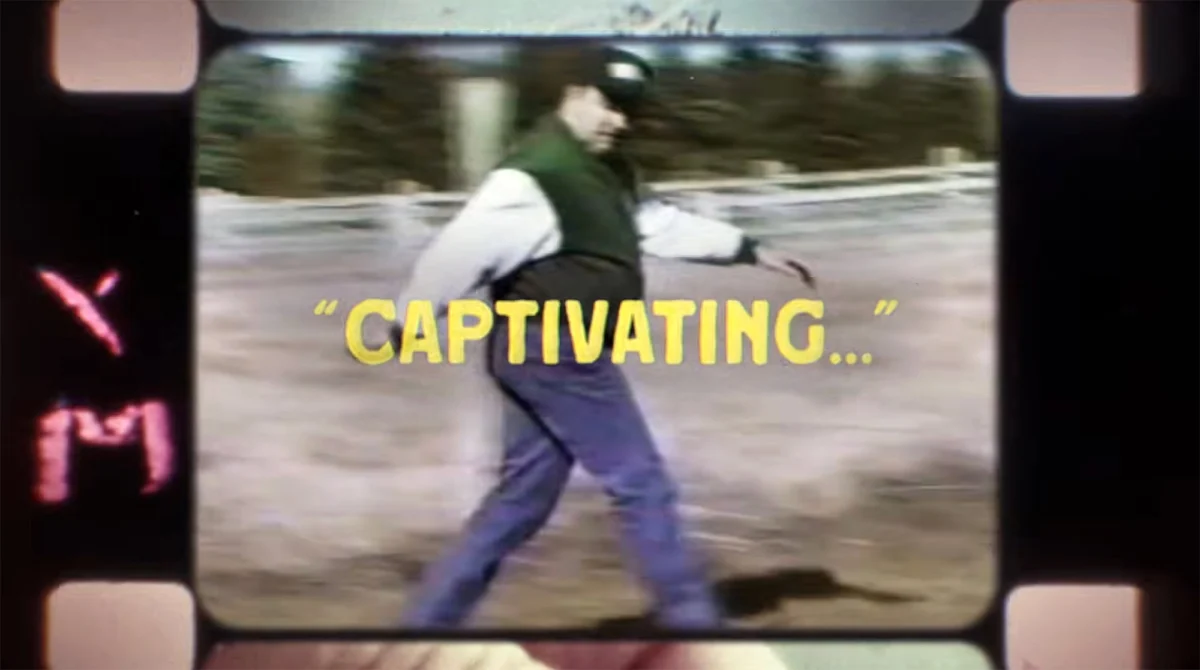
"This IS a story about money and greed!" The declaration echoes through the opening moments of the official trailer for Capturing Bigfoot, a revelatory new documentary that promises to pull the rug out from under six decades of cryptozoological speculation. Directed by Marq Evans and distributed by XYZ Films, the documentary arrives at a pivotal moment, coinciding with the 59th anniversary of the most debated 59 seconds in cinematic history.
For over half a century, the grainy, shaky 16mm footage captured by Roger Patterson and Bob Gimlin in the dense forests of Northern California has served as the "Holy Grail" of Sasquatch research. Now, a long-hidden cache of film, discovered deep within the confines of a private safe, threatens to rewrite the narrative of what actually happened on that October afternoon in 1967.
The Genesis of a Myth: The 1967 Encounter
To understand the gravity of Capturing Bigfoot, one must first understand the cultural footprint of the original Patterson-Gimlin film. On October 20, 1967, Roger Patterson and his partner, Bob Gimlin, emerged from the Bluff Creek area of Northern California with a reel of film that would ignite a global obsession. The footage, featuring a towering, bipedal creature—later affectionately dubbed "Patty"—striding with a rhythmic, almost human gait, became an immediate point of contention.
For skeptics, it was an elaborate hoax, a man in a sophisticated fur suit. For believers, it was the definitive proof of a relict hominid species. Over the decades, the footage has been subjected to every conceivable form of forensic analysis: gait analysis by Hollywood special effects artists, light-refraction studies by physicists, and digital enhancement by computer vision experts. Yet, the mystery persisted. It became a cultural touchstone, a Rorschach test for the American psyche regarding what we are willing to believe in an increasingly empirical world.
A New Revelation: What Was in the Safe?
The core of Marq Evans’ documentary rests on a singular, startling discovery: a previously unseen reel of 16mm film found in a private safe five decades after the fact. While the original footage was known to the public, this supplementary material offers a behind-the-scenes look at the people involved.

According to those who have seen it, the new footage—and the testimony of the family members who held onto it—shifts the focus from the creature to the creators. Capturing Bigfoot explores the human cost of the mystery. It is a narrative of family legacy, fractured friendships, and the immense psychological weight of carrying a secret that the world is desperate to solve. By platforming the voices of Patterson’s son and those who were present during the production of the 1967 film, Evans moves the discourse away from "Is it real?" and toward "Why did they need us to believe it was?"
Chronology of the Patterson-Gimlin Legacy
The history of the Patterson-Gimlin film is not merely a chronicle of sightings, but a timeline of media manipulation and societal curiosity:
- October 20, 1967: Roger Patterson and Bob Gimlin film the creature at Bluff Creek.
- Late 1960s–1970s: Patterson tours the United States, screening the film in high school gymnasiums and town halls. The tour acts as a precursor to the "viral" marketing strategies of the modern age, grossing over $5 million in inflation-adjusted dollars.
- 1980s–2000s: The footage enters the pop-culture zeitgeist, becoming a staple of television documentaries, late-night talk shows, and the burgeoning internet conspiracy community.
- 2024: The release of Sasquatch Sunset signals a renewed cinematic interest in the mythos of Bigfoot, setting the stage for more serious, analytical examinations.
- March 2026: Capturing Bigfoot premieres at the SXSW Film Festival, receiving critical acclaim for its investigative rigor and emotional depth.
- October 20, 2026: The documentary sees a wide release, marking the 59th anniversary of the original event.
Supporting Data: Why This Film Matters Now
Capturing Bigfoot is not just another "monster hunt." It is an anthropological study of a conspiracy-minded era. The decision by XYZ Films to withhold the documentary from public streaming services following its festival run was a calculated move to preserve the "theatrical event" nature of the reveal. By orchestrating a synchronized, North American wide release, the producers are attempting to recreate the communal experience Roger Patterson himself curated in the late 1960s.
Director Marq Evans, known for his incisive work on Claydream and The Diamond King, brings a distinct aesthetic to this project. He eschews the "found footage" horror tropes typically associated with Sasquatch films, opting instead for a grounded, documentary-noir style. The data supporting the film’s significance includes:
- Forensic Context: The film includes expert testimony that contextualizes the 1967 environment, contrasting it with modern digital manipulation capabilities.
- Psychological Impact: The documentary delves into how the pursuit of the "Bigfoot" legend affected the mental health and financial stability of the Patterson family.
- Cultural Longevity: The film analyzes why, in an era of satellite imagery and high-definition surveillance, the blurry 16mm film remains the definitive "proof" for so many.
Official Responses and Director’s Intent
In a recent press statement, director Marq Evans addressed the ethical challenges of revisiting a story so steeped in controversy. "That footage is one of the most recognizable images in the world, but the people behind it have privately carried its weight for almost sixty years," Evans stated. "This film is their story; about family, loyalty, and the truths they’ve held onto or finally let go of. I’m grateful they trusted me to help them finally tell it."
The producers, including Tamir Ardon and Nick Spicer, have emphasized that the film is designed to challenge the audience’s assumptions. By framing the documentary as an "investigative re-examination," they are inviting viewers to look at the footage not as a scientific anomaly, but as a piece of performance art that spiraled out of control.

The Implications: Is the Mystery Finally Solved?
The release of Capturing Bigfoot raises profound questions about the nature of truth in the digital age. If the new film indeed confirms that the 1967 footage was a product of "money and greed," as the trailer suggests, what happens to the legend?
For many, the mystery of Bigfoot has never really been about the creature itself; it has been about the desire to believe that there are still corners of the world left unmapped and untamed. If the legend is debunked, does the story lose its power, or does it become even more fascinating as a study in human deception?
Capturing Bigfoot suggests that the truth is far more complex than a simple "hoax vs. reality" binary. It posits that the myth of Bigfoot is a mirror held up to society—a reflection of our hopes, our fears, and our insatiable need for a grand, overarching narrative. As the film hits theaters and Prime Video on October 20th, audiences across North America will finally have the chance to engage with the reality behind the myth.
Whether you are a lifelong skeptic or a devoted believer, Capturing Bigfoot demands your attention. It is a reminder that even in the age of information, the most powerful stories are the ones we keep locked away in a safe, waiting for the right moment to be brought into the light. The 59-year wait is almost over. On the 59th anniversary of the most famous walk in the woods, the legend is finally ready to be captured.
