
The Digital Revolution: How Technology is Redefining the Art of Filmmaking
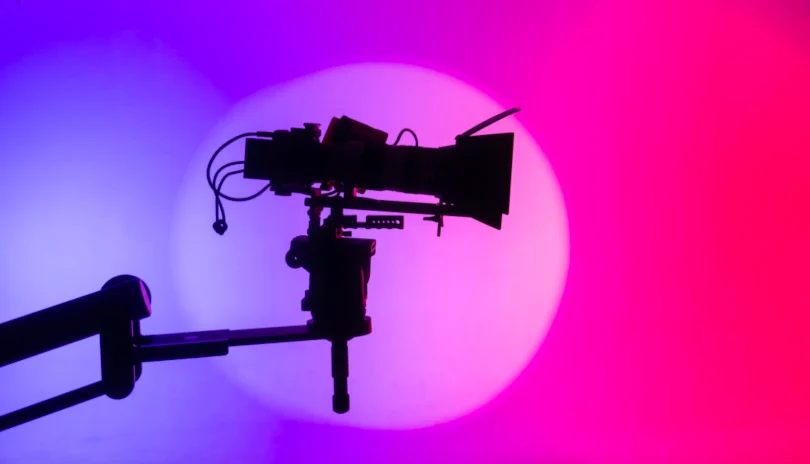
The "secret sauce" behind modern cinema is no longer confined to the chemistry between lead actors or the narrative prowess of a seasoned screenwriter. Today, the heartbeat of the film industry is driven by a sophisticated ecosystem of technological innovation. From the moment a concept is typed into a software interface to the data-driven analytics that dictate its global distribution, technology has evolved from a mere production aid to the backbone of contemporary visual storytelling.
As filmmaking moves into an era of unprecedented accessibility, the industry is witnessing a democratization of power. Once-expensive techniques—such as high-end color grading, complex CGI, and aerial cinematography—are now accessible to independent creators, fundamentally shifting the power dynamics of Hollywood and beyond.
The Chronology of Production: From Concept to Screen
To understand the scope of this transformation, one must look at the lifecycle of a modern film through a technological lens.
Pre-Production: The Architecture of Imagination
The genesis of a film now begins with advanced screenwriting suites like Final Draft. These platforms have standardized the industry, automating the complexities of pagination, dialogue formatting, and character tracking. Beyond formatting, these tools offer narrative analytical features that identify pacing issues and dialogue consistency, acting as a digital script consultant.
Collaboration has shifted to the cloud, with platforms like Celtx enabling real-time script revisions. This ensures that producers, directors, and writers—often located in different time zones—are always working from the same "living" document, eliminating the version-control chaos that plagued earlier generations of production.
The Digital Scout
Perhaps the most significant shift in pre-production is the transition to digital location scouting. Filmmakers no longer rely solely on physical reconnaissance. High-resolution drones provide immersive, 3D topographical data of remote locations, allowing directors to visualize the "look and feel" of a setting before a crew is ever dispatched.
For large-scale sets, connectivity is king. The use of geolocation services and team-tracking apps—which allow production managers to track personnel and assets across vast, sprawling locations—ensures that the logistics of a shoot remain fluid. This integration of mobile technology ensures that even when filming in remote wilderness or dense urban centers, the production remains a cohesive, connected unit.
Production: The Pocket Cinema
On the modern set, the smartphone has graduated from a communication device to a secondary (and sometimes primary) camera rig. With the advent of 4K capture, log-profile recording, and manual focus control, mobile devices are being used for everything from "B-roll" captures to full-scale independent feature production. Their compact form factor allows for unique camera angles that traditional, bulky cinema cameras simply cannot achieve.
Complementing this are advancements in robotic camera systems. Sophisticated motion-control rigs allow for perfectly repeatable, high-speed tracking shots, enabling directors to achieve complex visual sequences that once required a team of ten to execute manually.
Post-Production: The AI Renaissance
The editing room is currently experiencing its most dramatic evolution since the shift from physical film splicing to non-linear digital editing. Artificial Intelligence (AI) platforms like Adobe Sensei are automating the "grunt work" of post-production. AI now handles routine tasks such as color matching across varying lighting conditions, audio noise reduction, and even scene detection, allowing editors to dedicate their focus to the rhythm and emotional arc of the narrative.
Supporting Data: Efficiency and ROI
The integration of these technologies is not merely a creative choice; it is an economic necessity. Data from the film industry suggests that projects utilizing pre-visualization (Previs) software reduce on-set production time by an average of 15-20%. By creating digital "blueprints" of shots, directors can identify potential lighting or camera-movement issues before a single dollar is spent on labor and equipment rental.
Furthermore, the shift toward cloud-based distribution analytics—provided by firms like Luminate and Cinelytic—has transformed the business side of the craft. By analyzing audience demographic shifts and regional performance trends in real-time, studios can optimize marketing spend. For instance, data-driven marketing campaigns have shown a 25% increase in engagement efficiency by targeting specific platforms where the intended audience is most active.
Official Industry Perspectives: The Human-Machine Balance
Industry leaders remain cautiously optimistic about the integration of AI and automation. In recent symposiums, renowned cinematographers have emphasized that while "tools like DaVinci Resolve or generative AI models can simulate lighting or build environments, they cannot replicate the ‘human eye’ for subtext."
The consensus among top-tier production houses is that technology is a force multiplier, not a replacement. "We use AI to strip away the repetitive labor," says one industry lead producer. "If a machine can handle the color grading of a 30-minute sequence in seconds, it gives our human colorist more time to refine the specific mood of a pivotal scene. We aren’t replacing the artist; we are removing the friction that prevents them from working."
Implications for the Future: The Generative Horizon
As we look toward the next decade, the implications of Generative AI and Neural Radiance Fields (NeRFs) are staggering. We are approaching a point where the distinction between "filmed" and "rendered" content may vanish entirely.
- Virtual Sets: NeRF technology allows filmmakers to capture a real-world location and turn it into a 3D digital asset that can be navigated from any angle. This means a director could "re-film" a scene in a digital recreation of the Louvre without leaving a soundstage in Burbank.
- Hyper-Realistic Actors: The development of AI-generated digital doubles is already disrupting the industry. While this raises significant ethical and labor questions, the technical potential for extending the careers of performers or creating seamless, impossible stunt sequences is undeniable.
- Democratization: The barrier to entry for high-quality filmmaking is lowering. As software becomes more intuitive and hardware more portable, the next generation of storytellers will not need a major studio budget to create a visually stunning film. The "studio in a backpack" is becoming a reality.
Conclusion: The Path Forward
Technology has become the unsung hero of the cinematic age. It has moved beyond the shadows of the production office to become a central character in the creative process. Whether it is through the precision of drone-assisted location scouting, the automated speed of AI-driven editing, or the analytical rigor of data-backed distribution, these tools are expanding the boundaries of what is possible on screen.
However, the core of filmmaking remains unchanged: the story. Technology is simply the brush, and the filmmaker is the painter. As we move into an era defined by generative AI and real-time virtual production, the creators who will define the future are those who master these tools while keeping their human intuition at the helm.
Innovation waits for no one. The next great cinematic masterpiece is currently being sketched out on a tablet, scouted by a drone, and edited by an algorithm. The only question that remains is: are you ready to pick up the tools of the future and bring your vision to life?
