
Building Gods and Monsters: How Christopher Nolan’s The Odyssey Redefined Practical VFX on a $250 Million Scale

Main Facts
Christopher Nolan’s highly anticipated $250 million adaptation of Homer’s ancient epic, The Odyssey, has officially arrived to challenge the boundaries of modern filmmaking. Released in 2026 and starring Matt Damon as the legendary Greek king navigating his perilous, decade-long voyage home from the Trojan War, the production achieved a historic technical milestone: it was shot entirely on IMAX 70mm film cameras—a cinematic first.
Under the guidance of Visual Effects Supervisor Andrew Jackson and primary visual effects house DNEG, the production sought to answer a seemingly impossible cinematic question: How do you make the supernatural feel physically real?
Rather than relying strictly on green screens and computer-generated imagery (CGI), Nolan leaned heavily into his trademark philosophy of tactile realism. The film’s mythological entities—including the formidable Cyclops Polyphemus and the towering Laestrygonian giants—were brought to life through a hybrid approach combining full-body prosthetics, live-action actors, physical puppetry, forced perspective, and "invisible" digital compositing.
Chronology: From Homer’s Page to the IMAX Screen
The journey to bringing The Odyssey to the big screen began years prior to its 2026 premiere, rooted in Nolan’s persistent drive to capture as much practical imagery in-camera as possible.

- Pre-Production & Technical Planning: Knowing that shooting entirely in IMAX 70mm presented immense physical constraints—due to the sheer size, weight, and loud operational noise of the cameras—Nolan and his visual effects team mapped out complex sequences that blended classic cinematic tricks with modern compositing.
- Principal Photography (Greece & Studio Sets): Production utilized dramatic real-world locations, notably Nestor’s Cave in Greece, alongside massive practical builds. Instead of acting against blank spaces, the cast performed alongside physical stand-ins, massive mechanical puppets, and actors outfitted in specialized costumes.
- Post-Production & VFX Integration: DNEG stepped in to stitch together live-action plates, remove safety rigs, enhance environmental hazards, and blend prosthetic performances seamlessly into the sweeping IMAX frames.
- The Critical and Podcast Debrief: Following the film’s theatrical release, industry commentators and VFX veterans—specifically the hosts of the VFXShow podcast (Matt Wallin, Jason Diamond, and Mike Seymour)—convened to analyze the technical triumphs and ongoing debates surrounding Nolan’s methodology.
Supporting Data and Technical Breakdown
The sheer scale of The Odyssey production required an intricate marriage of old-school Hollywood magic and state-of-the-art visual engineering.
1. Bringing Polyphemus to Life
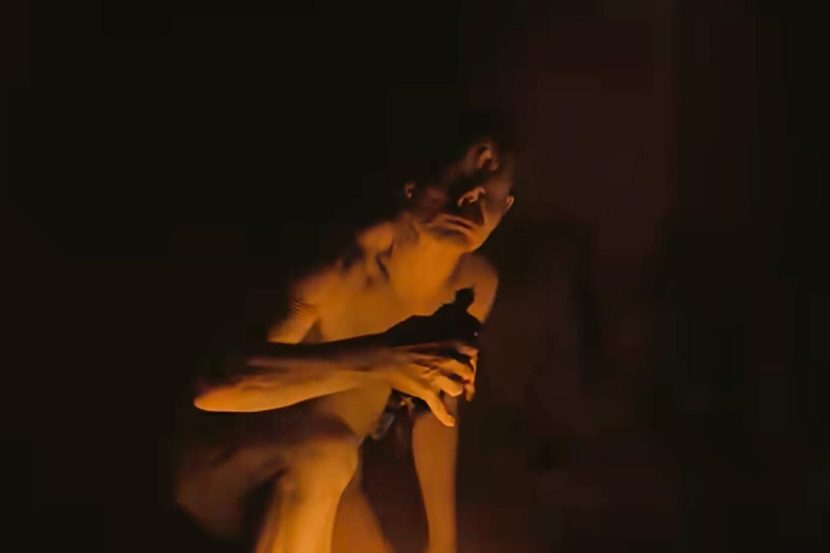
To capture the terrifying presence of the 60-foot-tall Cyclops inside the Greek cave, the production avoided a fully digital creature. Instead, theatrical clown and actor Bill Irwin—who previously collaborated with Nolan to help bring the physical robots of Interstellar to life—stepped into the role.
- The Prosthetic Performance: Irwin performed the role in full-body prosthetics, filmed separately and from a low-angle perspective to artificially inflate his perceived scale.
- On-Set Presence: During the live-action shoots at Nestor’s Cave, the actors interacted with a colossal physical puppet. Irwin provided the creature’s dialogue in real-time, granting Matt Damon and the supporting cast genuine emotional terror to react against.
2. The Laestrygonian Giants and Forced Perspective
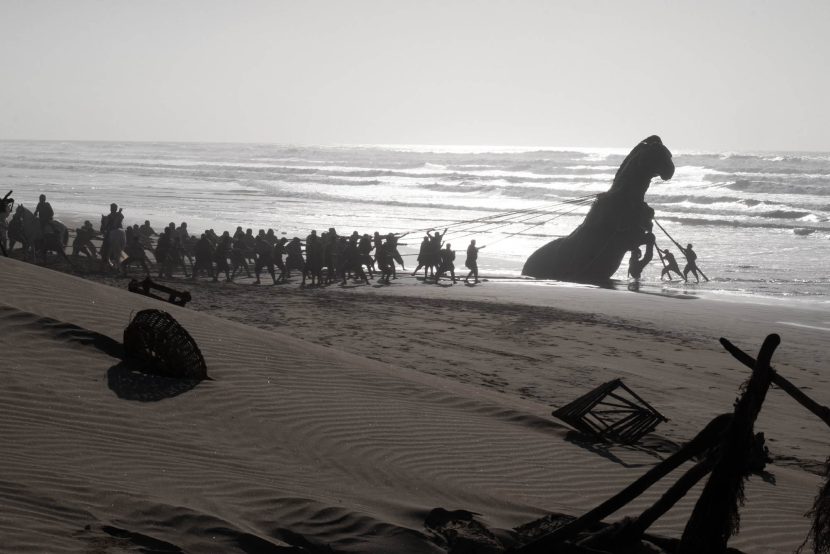
For the man-eating giants of Telepylos, the production bypassed standard digital scaling in favor of classical cinematic sleight-of-hand. By utilizing forced perspective, 7-foot-tall stunt performers, and carefully positioned undersized doubles, Nolan’s crew manipulated physical space to achieve a mythic clash of scales directly in front of the lens.
3. Grounding the Divine in Nature
In adapting the gods of Olympus, Nolan eschewed floating, glowing deities with stylized magic. Instead, divine interventions were reimagined through extreme natural phenomena—weather patterns, geological shifts, and catastrophic ocean elements—that ancient civilizations might have interpreted as the wrath or favor of the gods. This grounded design choice allowed the $250 million blockbuster to maintain internal logical consistency while honoring Homeric fantasy.
Official Responses and Industry Reception
As is customary with virtually every major Christopher Nolan release, the cinematic community and technical experts remain sharply divided on the film’s ultimate success.
The VFXShow podcast team—affectionately categorized in their latest episode as the "God of Mischief" Matt Wallin, "God of Thunder" Jason Diamond, and "Oarsman #3" Mike Seymour—proved that decades of analyzing Nolan’s work have done nothing to unify their opinions. True to tradition, the panel engaged in a passionate debate over where practical filmmaking ends and visual effects begin.
While some critics and technical purists praised the tactile weight of the physical puppets, forced-perspective framing, and DNEG’s invisible compositing, others questioned whether the physical constraints of shooting entirely on 70mm IMAX limited the narrative fluidity required for a sprawling fantasy epic.
Nevertheless, the industry at large has lauded the production for pushing the envelope of what can be captured practically. By forcing actors to react to real textures, weights, and spatial dimensions, The Odyssey achieved a level of grounded immersion rarely seen in modern blockbuster filmmaking.
Implications for Modern Blockbuster Filmmaking
The Odyssey serves as a watershed moment for the blockbuster landscape, carrying significant implications for how major studios approach visual effects budgets and production workflows.
- The Renaissance of Practical Effects: In an era where audiences have increasingly suffered from "CGI fatigue," Nolan’s steadfast commitment to in-camera reality proves that physical prosthetics, puppets, and old-school tricks like forced perspective still hold immense value. Audiences can unconsciously sense the difference in an actor’s posture and eye-line when reacting to a physical object rather than a tennis ball on a green stick.
- Pushing IMAX Boundaries: By proving that an entire mythological epic can be captured natively on IMAX 70mm film, Nolan has set a new high-water mark for cinematic fidelity. However, it also highlights the extreme technical hurdles required, suggesting that few directors possess the industry clout or stylistic preference to replicate such a massive, uncompromising physical shoot.
- The Future of "Invisible" VFX: DNEG’s work on The Odyssey underscores the evolving role of digital effects. Rather than using CGI to construct entire worlds from scratch, modern techniques are increasingly deployed to enhance and stitch together massive practical builds. The result is a hybrid medium where digital artistry acts as the invisible glue holding tangible, physical artistry together.
Ultimately, whether The Odyssey succeeds as a definitive adaptation of Homer’s epic may remain a matter of fierce debate among film critics and podcast hosts alike. But its triumph as a technical feat of engineering, craftsmanship, and unyielding cinematic ambition is undeniable.
