
The Physics of Peril: Deconstructing the Iconic Bus Jump from ‘Speed’
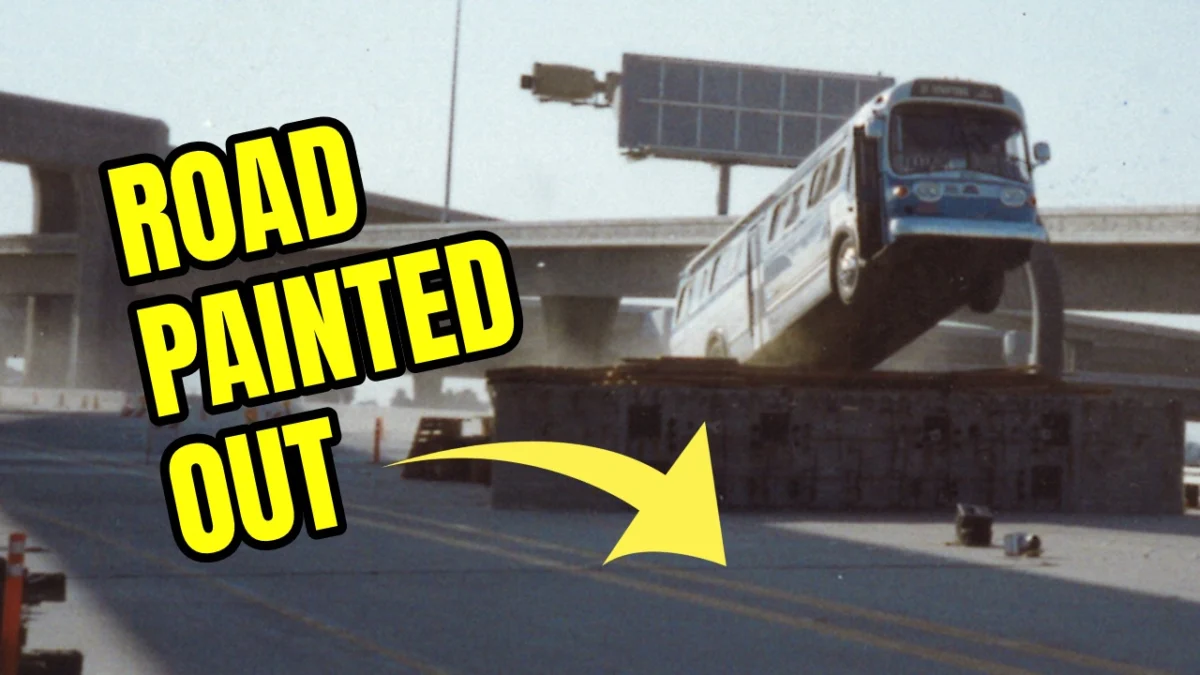
In the pantheon of 1990s action cinema, few sequences possess the visceral, white-knuckle intensity of the "bus jump" from Jan de Bont’s 1994 blockbuster, Speed. It remains a masterclass in practical stunt work, a high-stakes gamble where engineering, cinematography, and sheer audacity collided. In the latest episode of the Great Moments in Effects History series, Ian Failes pulls back the curtain on this legendary sequence, revealing that the "gap" in the highway was far more than just a plot device—it was a logistical nightmare that pushed the limits of stunt coordination and early digital visual effects.
The Main Facts: A Leap of Faith
The premise of Speed is deceptively simple: a city bus rigged with a bomb that will detonate if the vehicle’s speed drops below 50 miles per hour. As the bus encounters a missing section of an unfinished elevated freeway, the protagonist, Jack Traven (Keanu Reeves), must execute a jump that defies both logic and road safety.
While modern audiences have become accustomed to the seamless integration of Computer Generated Imagery (CGI), the 1994 jump relied on a real, 30,000-pound GM New Look bus. The production team, led by director Jan de Bont and stunt coordinator Gary Hymes, opted for a practical approach rather than a miniature model, resulting in one of the most perilous stunts ever captured on celluloid. The sequence was not merely a feat of driving; it was an intersection of heavy-duty stunt engineering and the nascent but vital VFX work provided by Sony Pictures Imageworks and VIFX.
Chronology: From Blueprint to Breaking Point
The journey to the screen began long before the cameras rolled on the construction site of the I-105 freeway in Los Angeles.
Pre-Production: Engineering the Impossible
The stunt team required a ramp that could launch a heavy transit bus at precisely the right trajectory. This involved complex calculations regarding weight distribution, suspension compression, and the structural integrity of the ramp itself. The production utilized a decommissioned section of the freeway, which was still under construction, providing the perfect canvas for the stunt.
The Stunt Execution
On the day of the shoot, the tension on set was palpable. The stunt driver, tasked with accelerating the bus to the necessary speed to clear the gap, had only a handful of attempts to get it right. Contrary to the polished perfection seen in the final cut, the actual stunt did not go entirely according to plan. The weight of the bus caused it to pitch in ways that threatened to overturn the vehicle, and the landing was—by all accounts—a bone-shaking impact that tested the limits of the reinforced chassis.
The Post-Production Polish
Once the practical footage was secured, the task shifted to the visual effects houses. Sony Pictures Imageworks and VIFX were brought in to bridge the gap—literally. They were responsible for enhancing the shot, ensuring the transition from the real bus to the "void" of the missing highway was seamless. This involved rotoscoping, color grading, and digital matte painting to disguise the limitations of the stunt and heighten the sense of scale.
Supporting Data: The Mechanics of the Jump
To understand the complexity of the Speed jump, one must examine the specific engineering constraints.
- The Vehicle: A 1970s-era GM "New Look" bus, stripped of its engine components and lightened where possible to prevent catastrophic structural failure upon landing.
- The Gap: The freeway section was approximately 50 feet wide. Calculating the speed required to clear this distance required an intimate knowledge of the vehicle’s drag coefficient and momentum.
- The VFX Contribution: By 1994, digital compositing was in its infancy. The VFX team had to integrate the practical bus footage with shots of the unfinished roadway, using digital tools to hide the safety equipment and the ramp itself. This was a "hybrid" approach—the gold standard of 90s filmmaking—where the tangible reality of the stunt was augmented, not replaced, by technology.
Official Responses and Behind-the-Scenes Testimony
In the Great Moments in Effects History episode, Failes highlights the collaborative nature of the production. Stunt coordinators often recount that the primary challenge was the unpredictable nature of a heavy vehicle. Unlike a sports car, a bus is top-heavy and prone to swaying; every shift in weight during the jump could have sent the bus careening off the side of the freeway.
"It wasn’t just about driving fast," notes one of the production leads in the series. "It was about controlling a giant, metal brick through the air." The collaboration between the practical effects crew—who built the ramp—and the digital effects crew—who ensured the audience couldn’t see the seams—is often cited as a turning point for how major studios approached action sequences in the mid-90s.
Implications: The Legacy of the Practical Stunt
The legacy of the Speed bus jump extends far beyond its runtime. It represents an era where "practical" was not an antonym for "high-tech," but rather a partner.
The Shift in VFX Standards
Following the success of Speed, the industry saw a marked increase in the integration of digital compositing for stunt sequences. It proved that audiences were willing to suspend their disbelief if the foundational element—the practical footage—was rooted in physical reality.
The Influence on Future Action Cinema
Modern blockbusters, often criticized for "CGI-bloat," look back at the Speed jump as a benchmark for tension. The sequence proved that a physical object interacting with a physical environment creates a level of immersion that purely digital creations struggle to replicate. Every time a car flips or a vehicle crashes in a modern franchise film, the DNA of the Speed bus jump is present.
Educational Value for Modern Creators
The current landscape of VFX, supported by entities like ActionVFX, emphasizes the importance of understanding the "real world" physics behind digital assets. As Failes points out, even the most advanced software cannot simulate the inherent danger and kinetic energy of a 30,000-pound bus hitting a ramp at 50 miles per hour. By analyzing these historic moments, contemporary artists can better learn how to blend the physical and the digital to create truly legendary cinema.
Conclusion: A Moment Frozen in Time
The bus jump in Speed remains a testament to the audacity of 1990s filmmaking. It was a production that relied on the bravery of stunt performers and the ingenuity of visual effects pioneers. As we look back on these "Great Moments," we are reminded that the most memorable scenes in film history are those where the impossible was made tangible.
For those interested in exploring the deeper technical aspects of this jump and other cinematic milestones, Ian Failes’s Great Moments in Effects History offers an unparalleled look into the craft. Whether you are a student of visual effects or simply a fan of high-octane cinema, understanding how these scenes were built provides a newfound appreciation for the art form.
For readers eager to dive deeper into the technical craft of filmmaking, ActionVFX is currently offering a 20% discount on all courses. Use the code B4ACOURSES at checkout to unlock access to industry-standard training. Additionally, for a comprehensive collection of these historical insights, pick up ‘WOAH! Great Moments in Effects History Vol. 1’ by Ian Failes, available now on Amazon in both print and Kindle formats. Support the continuation of this series by joining the befores & afters Patreon.
