
Beyond the Emerald Glow: A Critical Postmortem of HBO’s Lanterns Season 1 Finale
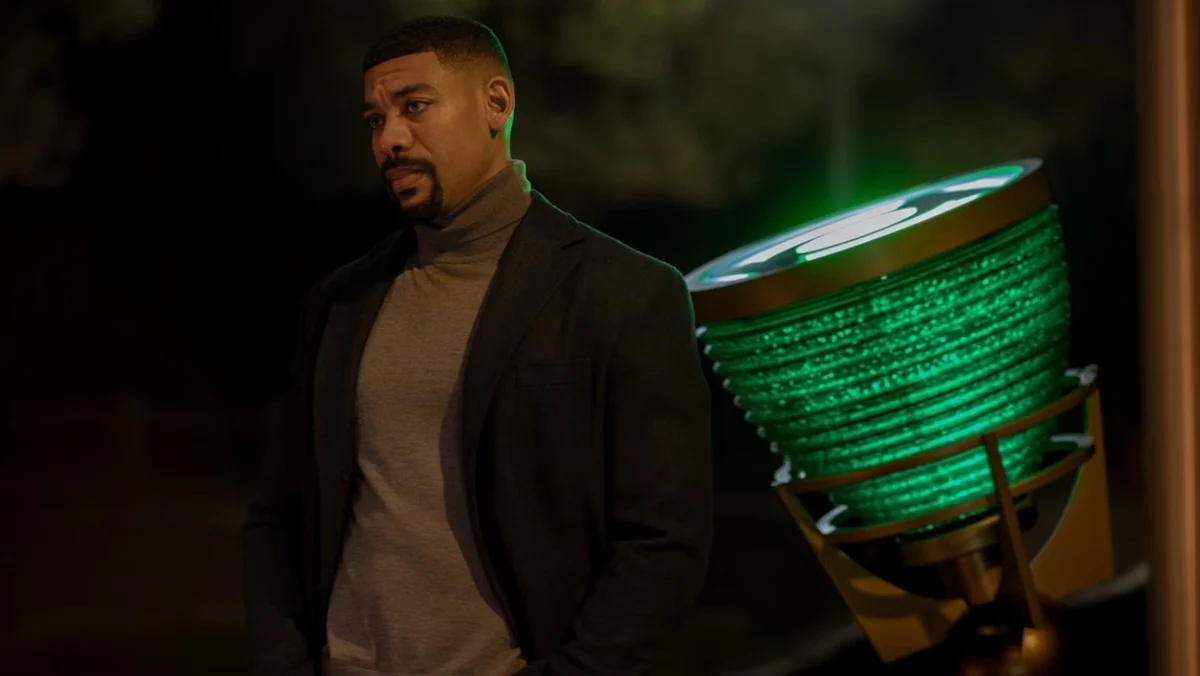
Main Facts: The Close of a Groundbreaking Chapter
With the release of its eighth and final episode, HBO’s gritty, prestige-television adaptation of DC Comics’ Green Lantern lore—simply titled Lanterns—has officially concluded its inaugural season. Defying widespread initial skepticism that a grounded, neo-noir approach could successfully translate the cosmic, high-concept world of emerald space cops to the small screen, the series emerged as a critical darling. Showcasing production values, writing, and performances that consistently rivaled HBO heavyweights like True Detective, the show redefined what comic book television could achieve.
The season finale faced the daunting task of resolving a dense web of interlocking narratives: the season-long murder mystery surrounding Hal Jordan, the ascension of John Stewart (played by Aaron Pierre) to the mantle of a true Green Lantern, and the lingering threat of the Manhunters in Rushville a decade after initial encounters. While the finale successfully delivered on its core emotional and character-driven promises, it left select cosmic threads dangling, setting the stage for what many hope will be an inevitable second season. All eight episodes are currently streaming on HBO Max.
Chronology: Navigating a Complex Timeline
Structuring an eight-episode arc that balances psychological deconstruction with overarching sci-fi mythology requires narrative tightrope walking, and the Lanterns finale demonstrated this ambition by spanning multiple eras. The episode fluidly weaves together three distinct points in the series’ timeline:
- 2016: Ground-level flashbacks in Rushville establishing the early tensions and regional history.
- 2026: Hal Jordan’s much-discussed release from prison.
- The Present Narrative: Picking up immediately where episode seven left off, featuring John Stewart and the "Halogram"—the digital/psychological construct of Hal Jordan, played by Kyle Chandler—interrogating the infamous Sinestro (Ulrich Thomsen) on the desolate, eerie alien world of Ryut.
This non-linear storytelling culminated in a high-stakes interrogation sequence on Ryut. Rather than opting for a standard, rote confession, the writers infused the scene with moral ambiguity. Following a tense, waterboarding-style torture sequence administered by a hardened John Stewart, Sinestro delivers a massive exposition dump that neatly ties together the season’s primary mysteries. This sequence successfully sidestepped the tropes of a cheap Scooby-Doo unmasking, instead functioning as a deeply revealing character study that illuminated the increasingly dark, morally gray depths of Stewart’s psychological state.

Supporting Data: Cast Performances and Narrative Payoffs
While the cosmic elements occasionally stumbled under the weight of exposition, the human core of Lanterns carried the finale across the finish line. The critical consensus points to standout performances from the principal and supporting casts as the driving force behind the episode’s success:
- Aaron Pierre (John Stewart): Pierre anchored the series with a commanding presence, capturing Stewart’s reluctance, grief, and ultimate acceptance of his destiny. His portrayal elevated the superhero genre into genuine dramatic territory.
- Kyle Chandler (The Halogram): Serving as a ghostly psychological sounding board, Chandler’s digital construct of Hal Jordan offered a unique narrative device that forced Stewart to confront his demons literally and figuratively.
- Kelly Macdonald and Shea Pritchard: Macdonald continued her stellar work from earlier in the season, while newcomer Pritchard—introduced just last week as the older Noah Macon—delivered a surprisingly nuanced performance that added emotional gravity to the final hours.
Despite these triumphs, certain structural critiques remained. The cosmic plotline involving Sinestro felt truncated, a byproduct of a creative team clearly more interested in terrestrial neo-noir grit than interplanetary politics. Furthermore, high-caliber talent such as Jason Ritter was arguably underutilized in roles that felt ultimately thankless, while Laura Linney’s enigmatic Guardian of the Universe cried out for deeper narrative exploration that the finale simply didn’t have time to deliver.
Official Responses and Creative Direction
Speaking behind the scenes, the creative team has been vocal about their intentional pivot away from standard comic book bombast in favor of a heavy, character-focused narrative style. By treating the Green Lantern rings less as magical fantasy trinkets and more as psychological burdens, the showrunners aimed to attract a mature audience that might typically dismiss cape-and-cowl properties.
Critical reception reflects this dichotomy. While reviewers have lauded the show’s artistic integrity, pacing, and acting masterclasses, fans of traditional comic book action have expressed a mild yearning for more overt superhero spectacle. The creative leadership has tacitly acknowledged these critiques, hinting that if a second season is greenlit, the production team plans to strike a more equitable balance between introspective character studies and high-octane cosmic action.

Implications: What Lanterns Season 1 Means for the Future of the DCU
The conclusion of Lanterns Season 1 carries significant weight for the broader strategy of the DC Universe (DCU) under its current leadership. By proving that comic properties can be adapted with the prestige, grit, and prestige-drama pacing of an HBO crime thriller, DC Studios has established a viable blueprint for mature television adaptations.
However, the season’s shortcomings offer vital lessons for future installments. The finale underscores the inherent challenge of adapting cosmic source material through a strictly grounded lens: fans want profound emotional character studies, but they also demand the kinetic, large-scale wonder inherent to the source material. If Lanterns returns for a sophomore outing, its ability to fuse its newfound mastery of character-driven noir with traditional Green Lantern action will determine whether it evolves from an acclaimed experiment into an enduring television franchise.
