
Unpacking Mike Flanagan’s Modern Carrie: High School Horrors and Telekinetic Teenagers
Stephen King’s seminal 1974 horror novel Carrie has undergone many transformations over the past five decades, stretching from Brian De Palma’s iconic 1976 Oscar-nominated feature film to multiple television adaptations and stage adaptations. Now, renowned horror auteur Mike Flanagan has set his sights on the material, delivering an eight-episode series adaptation for Amazon Prime Video.
Premiering on Wednesday, October 7, with all episodes dropping simultaneously, Flanagan’s Carrie attempts to modernize the timeless tale for the social-media-dominated era of the 2020s. Yet, in translating King’s classic story of bullying, telekinesis, and religious fanaticism into a contemporary framework, the series sacrifices its razor-sharp genre teeth in favor of an empathetic, albeit overly cautious, teen drama. Earning a mixed critical reception (highlighted by a C+ review score), Flanagan’s first season of an intended three-season trilogy offers a fascinating look at modern adolescence while occasionally stumbling under the weight of its own preachy allegories.
The Main Facts: A 21st-Century Reframing of Ewen P.H.S.
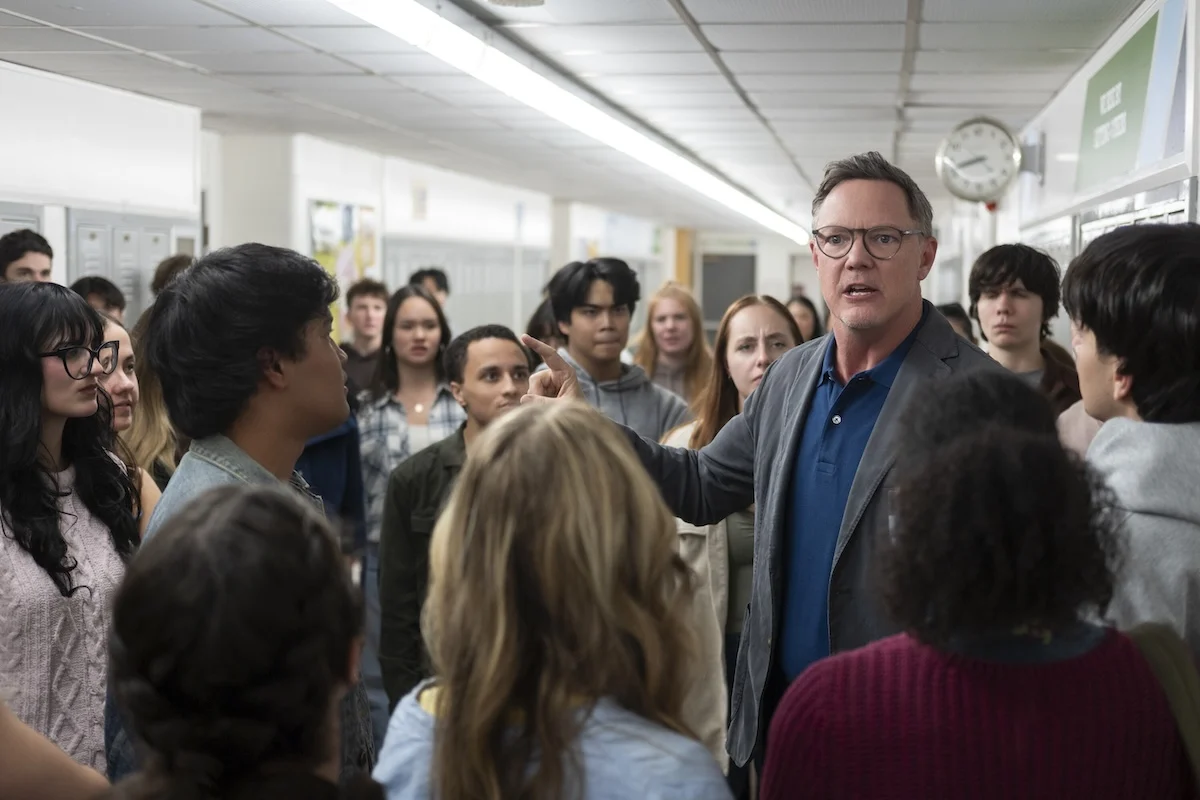
In Flanagan’s vision, the horrors of modern American high school loom larger and more suffocating than ever before. When Carrie White (Summer H. Howell) steps foot into Ewen P.H.S. for the very first time after a lifetime of intense homeschooling, she is immediately confronted with the grim realities of 2026 education.
The front doors are flanked by metal detectors. Hallways are crowded with "zombified" students staring endlessly into their glowing smartphones. Intrusive parents hover at the edges, eager to contort curriculums to satisfy their individual political and ideological demands.
On top of these systemic pressures, Carrie must navigate classic teenage tribulations:

- A Tyrannical Mother: Margaret White (Samantha Sloyan) remains a fanatical, hyper-religious force, though this hormonal 16-year-old’s claims of having a "certified wackjob" for a mom are entirely accurate.
- Nerd-Induced Ostracism: Carrie loves quoting dense literature that nobody outside of her teachers has ever read.
- Omnipresent Bullying: Torment is no longer confined to the hallways; it happens live, in-person, and via toxic social media feeds.
Despite being shielded from the internet, libraries, phones, and diverse social circles—leading a social worker to describe her as "stunningly uninformed"—Carrie is surprisingly openhearted. When her father dies unexpectedly at the start of the series, police find Carrie and Margaret hiding in a domestic "prayer closet." While Margaret is gripped by irate, frantic fear, Carrie greets the police with an elated, curious smile. She is fundamentally unlike her mother, and unlike her peers; she approaches the world less like a traumatized teenager and more like an alien discovering Earth for the very first time.
Of course, she also possesses the terrifying capacity to crush cars with her mind.
Chronology and Narrative Arc: From Isolation to Prom-Tastrophe
The narrative structure of Flanagan’s Carrie blends familiar genre beats from King’s novel and De Palma’s film with contemporary sociopolitical anxieties.
Act I: The Awakening
Following her father’s death and her sudden introduction to public school life, Carrie tries desperately to assimilate. However, her telekinetic abilities leak out in drips and drabs. Flanagan treats her burgeoning powers almost like an embarrassing teenage acne flare-up—she rarely talks about them, and aside from the inevitable explosive climax, the supernatural elements struggle to manifest into consistent, resonant scares.
Act II: The Social Ecosystem
Flanagan extends a deeply understanding embrace not just to Carrie, but to her classmates as well, broadening the narrative scope:

- Sue Snell (Siena Agudong): A friendly, popular student dating the school’s star athlete.
- Tommy Ross (Joel Oulette): Hailed as "the hottest guy in school," Tommy is quiet, sensitive, and fiercely protective of the unjustly maligned, serving almost as a beacon of uncorrupted teenage decency.
- Chris Hargensen (Alison Thornton): A self-described "bitch" who proudly vows to never apologize for her cruelty.
Chris serves as the primary instigator of the locker room harassment that breeds early mockery, eventually ballooning into the disputes that drive the plot toward the tragic prom night. However, Chris is given a narrative safety net: her cruelty is blamed on a one-note, hyper-abusive father (Michael Trucco) who feels transplanted from an entirely different television series. Rather than allowing Chris to revel unmitigated in true evil, the series continuously manufactures excuses for her behavior.
Act III: The Climax and Beyond
While the series carefully builds toward the extended "prom-tastrophe" finale, clunky plot maneuverings bypass the tricky heel-turn typically required for Carrie’s character arc. Instead, the narrative relies on Summer H. Howell’s affecting, nuanced innocence to carry the audience through to the end credits.
Supporting Data: Cast, Crew, and Production Details
- Platform: Amazon Prime Video
- Release Date: Wednesday, October 7 (All eight episodes released simultaneously)
- Showrunner/Creator: Mike Flanagan (known for Midnight Mass, The Midnight Club, The Haunting of Hill House)
- Key Cast Members:
- Summer H. Howell as Carrie White
- Samantha Sloyan as Margaret White
- Siena Agudong as Sue Snell
- Joel Oulette as Tommy Ross
- Alison Thornton as Chris Hargensen
- Matthew Lillard as the High School Principal
- Michael Trucco as Mr. Hargensen
- Future Outlook: This first season is designed as the introductory chapter of an intended three-season trilogy adaptation.
Official Responses and Creative Intent
Mike Flanagan has long been celebrated for his signature brand of empathetic horror, prioritizing deep emotional character work over cheap jump scares. In adapting Carrie, Flanagan and his creative team explicitly sought to use King’s telekinetic protagonist as an allegory for the psychological toll of modern adolescence.
However, critics note that this commitment to universal sympathy acts as a double-edged sword. Despite opening the series with a montage of witnesses debating whether Carrie is a victim, a monster, a hero, or a bully, the show ultimately takes a definitive stance. It refuses to explore evil as a genuine, seductive temptation.
Furthermore, the show shifts the blame for society’s failures squarely onto the shoulders of adults. Margaret White is framed not merely as an abusive mother, but as a walking embodiment of societal hypocrisy—a misanthrope who rails against modern education systems for "pushing an agenda" while simultaneously demanding that teachers enforce her oppressive will. Unfortunately, Margaret’s lack of psychological depth leaves her feeling like a blunt ideological representative rather than a complex, charismatic antagonist.

Implications: A Plea Versus a Scream
The implications of Flanagan’s approach point toward a broader philosophical debate within contemporary horror television. By sanding down the rough, genuinely terrifying edges of malevolence in favor of understanding and empathy, Carrie leans heavily into becoming a high-end teen drama rather than a true horror show.
While the series benefits immensely from Flanagan’s trademark mesmeric monologues and solid, committed performances from Howell and Thornton, it ultimately feels constrained by its own messaging. It operates heavily from an adult perspective looking down at youth culture, offering a polite, earnest plea for compassion rather than an unbridled, cathartic roar. In an era defined by complex, compounding modern crises, critics argue that the story of Carrie White demands a scream—not just a whisper.
