
Cinematic Tensions in the Sunshine State: A Review of Tom McCarthy’s A Statement
Introduction
The 64th Annual New York Film Festival (NYFF) has long been a bellwether for prestige dramas that seek to bridge the gap between historical introspection and contemporary relevance. This year, director Tom McCarthy—best known for his sharp eye for procedural nuance—unveiled his latest project, A Statement. Set against the backdrop of a simmering 1980 election cycle in St. Petersburg, Florida, the film assembles a formidable cast to tackle a deceptively simple premise: the painstaking drafting of a professional statement regarding the environmental impact of carbon dioxide emissions. While the film occasionally stumbles under the weight of its own period-piece aesthetic, it emerges as a thought-provoking, if uneven, meditation on the bureaucratic struggles that define human progress.
The Premise: A Room of One’s Own
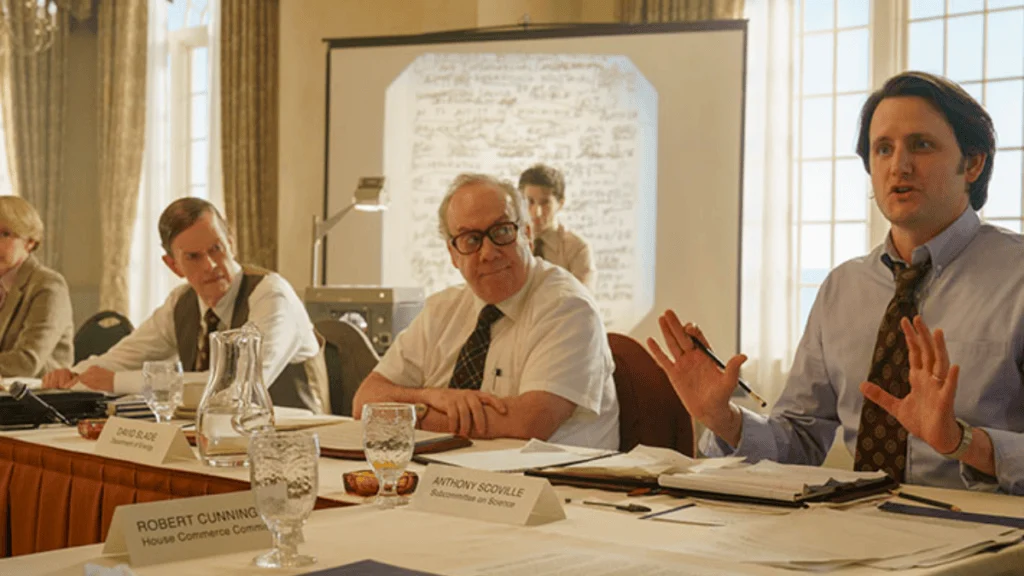
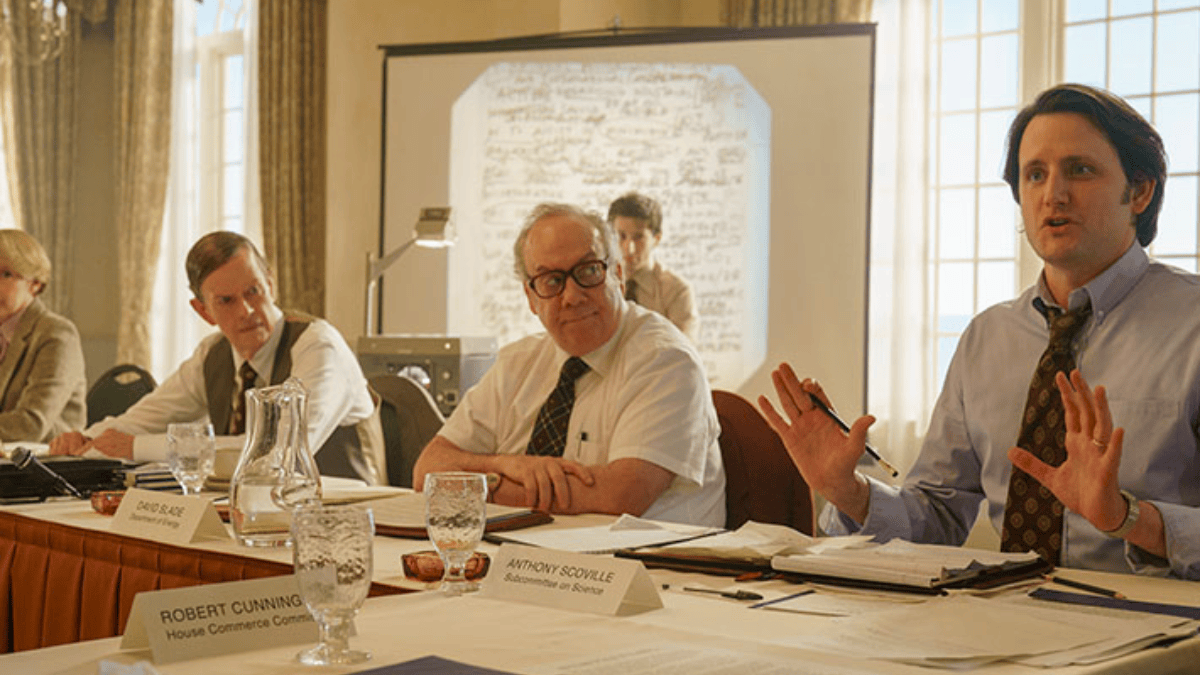
The narrative architecture of A Statement is deceptively intimate. For the majority of its runtime, the film is confined to a hotel conference room, where a group of disparate professionals has gathered to synthesize their findings into a singular, cohesive document. The stakes, though seemingly dry on paper, are elevated by the socio-political temperature of the late 1980s.
As the characters debate the wording of their statement, the film positions itself in the tradition of "room dramas"—most notably 12 Angry Men. However, McCarthy and writers Thomas Bidegain and Noé Debré consciously steer the narrative toward a more fragmented reality. The "statement" serves as a MacGuffin, a focal point that forces the characters to confront their own professional ethics, political anxieties, and personal biases. The choice of 1980 is no coincidence; it is a year defined by the looming transition of power in Washington, a fact that permeates the room as much as the stale air of the Florida hotel.
Chronology and Character Dynamics
The film’s chronology is linear, tracking the group’s progress over a grueling, multi-day session. At the helm is Paul Rudd, playing the moderator tasked with maintaining order. While Rudd’s performance is functional, it lacks the kinetic energy he brought to his earlier 2026 work, Power Ballad. His character often feels like a tether in a storm, struggling to manage a room filled with outsized personalities.
The ensemble is the film’s greatest asset. Paul Giamatti, portraying the earnest David Slade, delivers a masterclass in subtlety. Slade is a man caught between his professional duty and his hopes for a changing political landscape—specifically the election of Ronald Reagan. Giamatti’s ability to imbue mundane dialogue with profound human longing makes him the film’s anchor. Whenever Giamatti is on screen, the film achieves a level of gravity that it otherwise struggles to maintain.
Supporting performances further flesh out the world. Amy Ryan provides the emotional spine of the film; her portrayal of a woman deeply committed to the scientific validity of the statement is both fierce and heartbreaking. Her performance, particularly in the third act, acts as a necessary counterweight to the more cynical elements in the room. Similarly, John Turturro and Nina Arianda provide vital texture. Arianda, playing a rebellious stenographer, introduces a necessary friction to the proceedings, while Turturro’s brief, comedic detours—such as crashing a local wedding—offer the audience a momentary reprieve from the heavy, dialogue-dense atmosphere.
Supporting Data: The Aesthetic and Technical Challenges
Any discussion of A Statement must address its visual execution, which has become a point of contention among critics. The film’s commitment to the 1980s aesthetic is absolute, but it falters in its hair and makeup department. The "wigs" worn by several members of the cast are, at times, distracting to the point of absurdity. These aesthetic choices occasionally pull the viewer out of the narrative, forcing a focus on the artificiality of the production rather than the authenticity of the characters.
However, McCarthy’s direction remains largely steady. His ability to frame the room as both a sanctuary and a prison is effective. He utilizes the physical space to mirror the mental state of the group; as the days progress, the room becomes more cluttered, and the characters more disheveled, paralleling the breakdown of their collective objective.
The sound design and pacing, while deliberate, occasionally suffer from the film’s narrow scope. There are moments where the audience yearns for a deeper dive into the technical aspects of the "statement" itself—the scientific, environmental, and political implications of the carbon emissions debate. By shifting the focus toward interpersonal conflicts and the occasional comedic interlude, the film sometimes obscures the urgency of its own subject matter.
Official Responses and Industry Context
Initial industry response to A Statement has been largely positive, albeit tempered by the acknowledgment of its structural flaws. Critics have praised the film for its ambition, noting that it attempts to tackle the "banality of bureaucracy" in a way that feels distinctly modern. The collaboration between McCarthy, Bidegain, and Debré is being lauded for its sharp dialogue, even if the execution occasionally favors style over substance.
At the NYFF, the film sparked discussions about the role of the "historical drama" in the modern era. Is it enough to look back at the origins of our current environmental crisis, or does the film have a responsibility to bridge the gap to the present? A Statement chooses the former, ending on a poignant note that leaves the audience to reflect on the legacy of the decisions made in that room. The final shot—a subtle nod to the reality of the characters’ lives outside the hotel—serves as a reminder that history is often made in small, overlooked moments.
Implications: The Weight of Words
The true brilliance of A Statement lies in its exploration of how language shapes policy. The characters are not just arguing over facts; they are arguing over legacy. In an era where the public is increasingly skeptical of authority, the film asks what happens when the people in charge cannot even agree on how to describe the world they are changing.
The "nuclear" element introduced by John Turturro’s character adds a layer of complexity that arguably should have been given more screen time. The intersection of environmental policy and energy security is a volatile topic, and the film’s decision to keep it on the periphery feels like a missed opportunity to deepen the discourse. Nevertheless, the film’s refusal to provide a neat, triumphant conclusion is its greatest strength. It acknowledges that, in many instances, the "statement" is never perfect, and the process of reaching an agreement is often as fractured as the conclusions themselves.
Conclusion
A Statement is a fascinating, if imperfect, entry in Tom McCarthy’s filmography. It is a movie that demands patience from its audience, rewarding those who are willing to overlook the distracting wigs and the occasionally sluggish pacing to find the profound human drama beneath. With a standout performance by Paul Giamatti and a haunting, intelligent script, the film succeeds as a portrait of a pivotal moment in American history.
While it may not reach the heights of a classic courtroom drama, its contribution to the conversation regarding environmental awareness and political rhetoric is undeniable. It reminds us that every policy shift, every historic change, and every global crisis began with a conversation—often in a room, behind closed doors, among people who were just as flawed and uncertain as the rest of us. With a rating of 7.5/10, A Statement proves that even when the outcome is uncertain, the act of speaking truth—no matter how difficult—is a cinematic journey worth taking.
Readers, what are your thoughts on Tom McCarthy’s latest ensemble drama? Does the focus on 1980s bureaucratic minutiae resonate with our current climate, or does the film get too lost in its own period-accurate aesthetic? Join the conversation in the comments below.
