
Beyond the Foam Finger: Miley Cyrus Breaks Her Silence on the 2013 VMA Backlash and Industry Double Standards
Main Facts
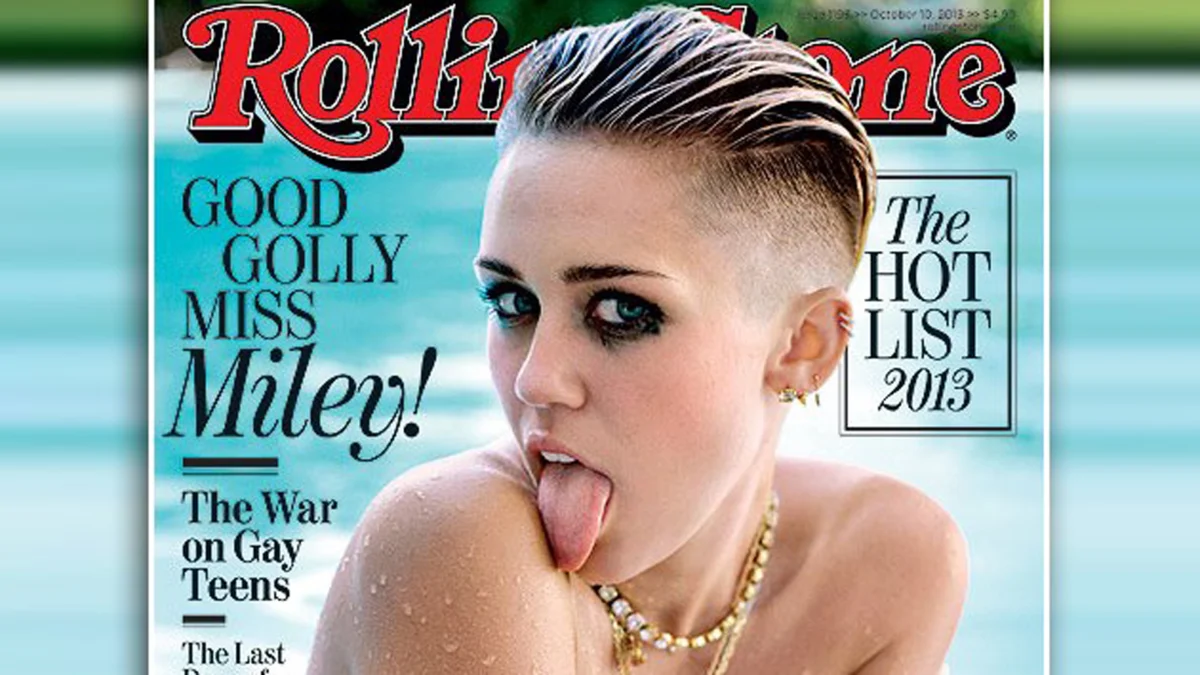
In the autumn of 2013, pop star Miley Cyrus found herself at the white-hot center of a global cultural firestorm following her infamous performance at the MTV Video Music Awards (VMAs). Weeks after dominating headlines, internet search trends, and morning-show debates with a provocative routine alongside singer Robin Thicke, Cyrus stepped forward to share her side of the story in a revealing cover story for Rolling Stone magazine.
The core of the controversy stemmed from Cyrus’s performance of her hit single "We Can’t Stop" and a medley alongside Thicke, during which she shed her signature Disney Channel image, donned a flesh-colored latex bikini, twerked aggressively, and brandished a foam finger. The resulting backlash was immediate and fierce, encompassing public outrage over her sexuality, accusations of cultural appropriation, and widespread debate regarding the appropriateness of the broadcast.
However, in her sprawling interview with Rolling Stone, Cyrus defended the performance as a tame, family-friendly version of what could have transpired, emphasizing that she views the VMAs as a playground for disruption rather than a traditional, gown-wearing awards gala akin to the Grammys or the Oscars. Furthermore, she addressed the glaring gender double standards embedded in the criticism she received, pointing out that media narratives universally targeted her actions while absolving her male collaborator of equal participation. Amid the storm, Cyrus also revealed an unexpected alliance: a vote of confidence from rap icon Kanye West, who visited her backstage to offer words of encouragement.
Chronology of the Controversy
To understand the magnitude of Cyrus’s Rolling Stone interview, it is vital to trace the sequence of events that transformed a four-minute television broadcast into a multi-week cultural debate.
- Late August 2013: Anticipation builds for the MTV Video Music Awards, with promotional spots highlighting a newly edgy Miley Cyrus, who had recently shed her long brown hair for a platinum blonde pixie cut and embraced hip-hop-influenced aesthetics.
- August 25, 2013: Cyrus takes the stage at the Barclays Center in Brooklyn, New York. Starting her set in a furry bear leotard, she strips down to a nude two-piece latex outfit, sings alongside Robin Thicke, bends over to twerk against him, and uses a foam finger to simulate explicit gestures. The performance instantly trends worldwide on social media, generating hundreds of thousands of tweets per minute.
- Late August to Early September 2013: Public reaction cascades into mainstream news cycles. Parents’ advocacy groups, cultural critics, and former child stars weigh in on Cyrus’s transformation. Accusations of cultural appropriation mount as commentators criticize her use of black background dancers and traditional hip-hop dance styles.
- Mid-September 2013: Rolling Stone releases its latest issue featuring Cyrus on the cover—posing topless with a tongue-free expression—accompanied by an extensive interview where the pop star finally responds to her critics, details her backstage encounter with Kanye West, and critiques the media’s framing of the performance.
Supporting Data and Context: The VMA Landscape
The MTV Video Music Awards have long functioned as a calculated platform for disruption and boundary-pushing performance art. From Madonna rolling around in a wedding dress in 1984 to Britney Spears performing with a live albino python in 2001, and the infamous 2003 onstage kiss shared between Britney Spears, Madonna, and Christina Aguilera, the VMAs historically reward artists who generate shock value.
Cyrus’s defenders argued that her performance was merely the latest chapter in a long-standing MTV tradition of challenging television censors and youth norms. Yet, the statistics surrounding the broadcast revealed unprecedented engagement:
- The performance generated an estimated 306,000 tweets per minute on Twitter (now X), breaking previous platform records.
- Google searches for Miley Cyrus spiked by over 1,000% in the 48 hours following the broadcast.
- Despite—or perhaps because of—the intense wave of criticism, digital streaming metrics for Cyrus’s music catalog experienced a massive upward surge, with "We Can’t Stop" climbing higher on international charts.
Despite these engagement metrics, the nature of the backlash differed significantly from past VMA scandals due to the intersection of gender, race, and child stardom. Having spent her formative years starring in the Disney Channel mega-hit Hannah Montana, Cyrus was subjected to intense scrutiny regarding the perceived speed of her transition from wholesome children’s entertainer to hyper-sexualized adult pop star.
Official Responses and Perspectives
Miley Cyrus Defends the Performance and Highlights Double Standards
Speaking candidly to Rolling Stone, Cyrus expressed bewilderment at the severity of the reaction, noting that the staging could have pushed boundaries much further.
"Honestly, that was our MTV version," Cyrus explained during the interview. "We could have even gone further, but we didn’t. I thought that’s what the VMAs were all about! It’s not the Grammys or the Oscars. You’re not supposed to show up in a gown, Vanna White-style. It’s supposed to be fun!"
While acknowledging that parts of the routine became "a little handsy," Cyrus was quick to pivot toward what she perceived as a blatant gender bias in how the media covered the event. She noted that public critique focused disproportionately on her physical posture rather than the active participation of her co-performer.

"No one is talking about the man behind the ass," Cyrus stated. "It was a lot of ‘Miley twerks on Robin Thicke,’ but never, ‘Robin Thicke grinds up on Miley.’ They’re only talking about the one that bent over. So obviously there’s a double standard."
Addressing Accusations of Cultural Appropriation
Beyond the debates surrounding sexuality, Cyrus faced severe accusations of cultural appropriation. Critics argued that she was adopting elements of Black hip-hop culture—specifically twerking and utilizing Black background dancers—as transient accessories to manufacture adult credibility before discarding them.
Cyrus firmly rejected this characterization, asserting deep personal connections to her creative collaborators:
"I don’t keep my producers or dancers around ‘cause it makes me look cool," she said. "Those aren’t my ‘accessories.’ They’re my homies."
She also reflected on the permanence of her public persona, signaling that while the performance was an intentional provocation, she had little interest in repeating the exact same schtick indefinitely. Although media outlets and fans quickly came to associate her with sticking out her tongue while twerking, Cyrus remarked that she would "probably never do that shit again."
Kanye West: An Unlikely Mentor in the Eye of the Storm
Amid the overwhelming negative press, Cyrus found unexpected solidarity from rap superstar Kanye West. West, who was no stranger to weathering severe public backlash following his own notorious awards show interruptions and boundary-pushing artistic choices, reached out to Cyrus backstage after observing her rehearsals.
Recalling the interaction, Cyrus shared how West’s validation helped anchor her nerves during a chaotic period:
"He came in and goes, ‘There are not a lot of artists I believe in more than you right now,’" she recalled. "The whole room went quiet. I was like, ‘Yo — can you say that again?!’ I just kept repeating that over and over in my mind, and it made me not nervous."
Implications of the 2013 Flashpoint
The cultural fallout of Miley Cyrus’s 2013 VMA performance extends far beyond a single magazine profile, leaving lasting implications for the music industry, celebrity image management, and modern cultural discourse.
- The Evolution of the Child Star Exit Strategy: Cyrus established a new, highly aggressive template for how former Disney and Nickelodeon stars shed their wholesome branding. Rather than opting for gradual transitions or quiet image rehabilitations, Cyrus utilized shock and awe to forcefully sever ties with her past, proving that controversy can rapidly accelerate artistic reinvention.
- Discussions on Intersectional Feminism and Cultural Appropriation: The public debate sparked a mainstream conversation regarding power dynamics in pop music, particularly the ways in which white artists interact with Black dance traditions and communities. While critics viewed the performance as exploitative, supporters framed it as part of a broader artistic exploration of agency and self-expression.
- Exposing Industry Double Standards: Cyrus’s critique of the media’s focus on her body versus Robin Thicke’s participation highlighted persistent gender double standards in entertainment journalism. The conversation foreshadowed later reckonnings within the music industry regarding how female sexuality is policed compared to male behavior.
- The Value of Controversy in the Streaming Era: Economically, the incident validated the old adage that "any press is good press." By dominating the global news cycle for weeks, Cyrus successfully captured the attention of millions, converting casual observers into dedicated consumers of her music and establishing herself as an unpredictable, must-watch force in contemporary pop culture.
Ultimately, the Rolling Stone interview marked the beginning of Cyrus’s active reclamation of her narrative. By leaning into the chaos rather than retreating from it, she laid the groundwork for a diverse and critically acclaimed musical career that would see her transcend the sensationalism of that Brooklyn stage and evolve into one of the most distinctive vocalists of her generation.
