In the high-stakes world of commercial advertising and high-end visualeffects (VFX), photorealism is the ultimate currency. For Los Angeles-based boutique visual effects studioImpossible Objects (IO), meeting the exacting standards of elite global brands—including Porsche, Cadillac, Subaru, Nike, and Google—requires striking a delicate balance between cutting-edge technology and human-driven artistic mastery.
Led by AI Lead Nhan Le and co-founder Jerad Anderson, Impossible Objects has carved out a pioneering space in the post-production landscape. Rather than relying on black-box cloud services or fully automated text-to-video generators, the studio has spent two years in intense research and development (R&D). They have successfully forged a hybrid production pipeline that pairs custom-tuned open-source generative AI tools (such as ComfyUI) with traditional 2D compositing and 3D computer graphics (CG).
To fuel the immense computational demands of this workflow, IO integrated HP ZGX AI stations into their infrastructure, powered by the integrated NVIDIA GB10 Grace Blackwell Superchip. By keeping their generative AI pipelines entirely on-premises, Impossible Objects has solved the industry’s most pressing hurdles: data security, IP protection, asset provenance, and output resolution limits. The result is a boutique studio capable of outputting feature-film and global-campaign-grade volumes that traditionally require the infrastructure of much larger facilities.
Chronology: The Evolution of IO’s AI Integration Journey
The path to operationalizing generative AI within a professional post-production environment was neither instantaneous nor accidental. It represents a deliberate, multi-year engineering effort.
Phase 1: The R&D Foundation (2024–2025)
Recognizing the rapid emergence of generative AI, Impossible Objects initiated a multi-year R&D cycle. Instead of chasing every newly released public model—which often results in disjointed workflows and wasted effort—the studio focused on building foundational models trained directly on their own in-house captured footage. This ensured that asset ownership, provenance, and stylistic consistency remained anchored to the studio from day one.
Phase 2: Identifying the Photorealism "Sweet Spot" (Late 2025)
As the studio tested commercial application, they quickly discovered the limitations of out-of-the-box generative video models, particularly regarding resolution, lighting consistency, and color fidelity in heavily scrutinized assets like luxury automobiles. IO pivoted to a hybrid strategy: utilizing generative AI for heavy backend task automation, lighting matching, and complex set extensions, while anchoring the hero elements in traditional 2D and 3D pipelines using tools like Foundry Nuke, Adobe After Effects, and SideFX Houdini.
Phase 3: Hardware Expansion with HP ZGX Nano (2026)
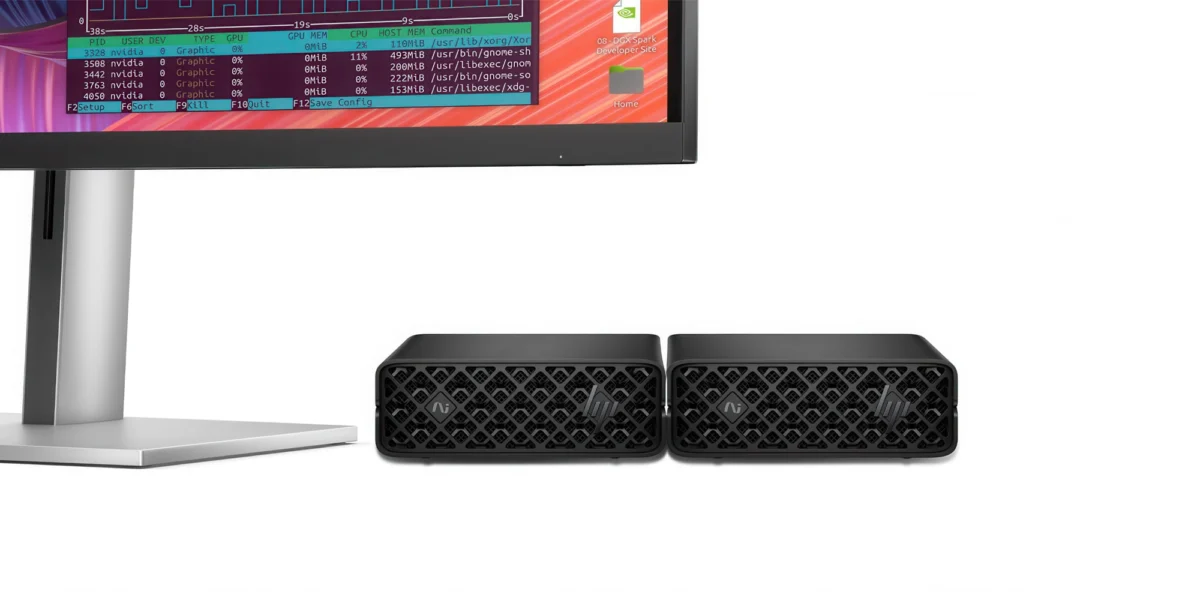
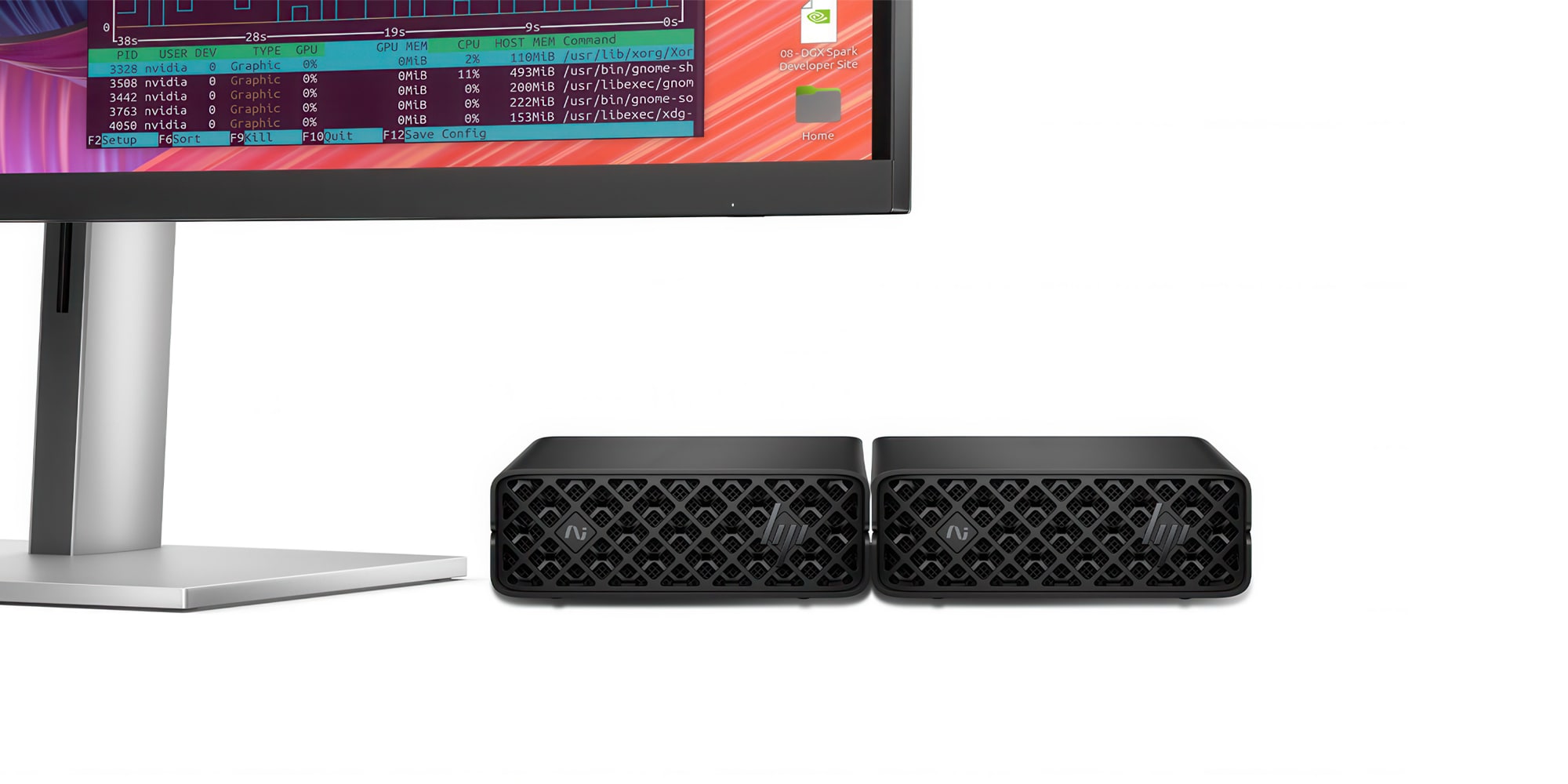
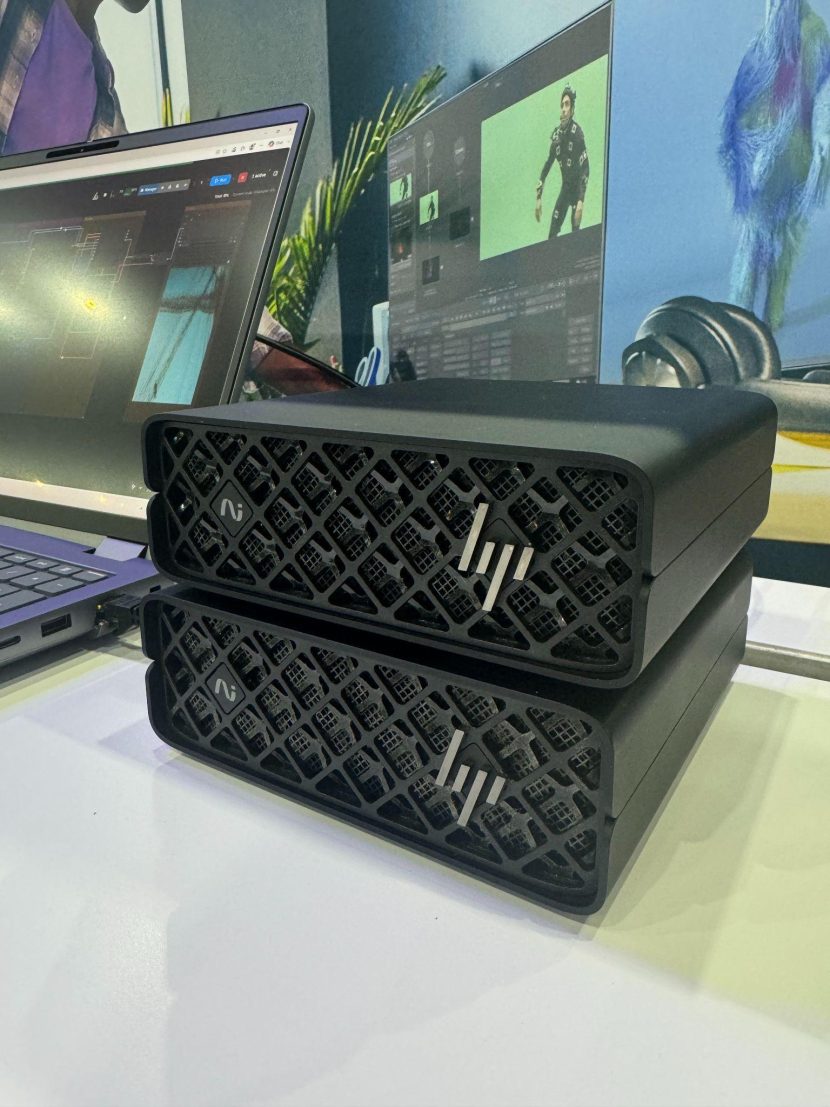
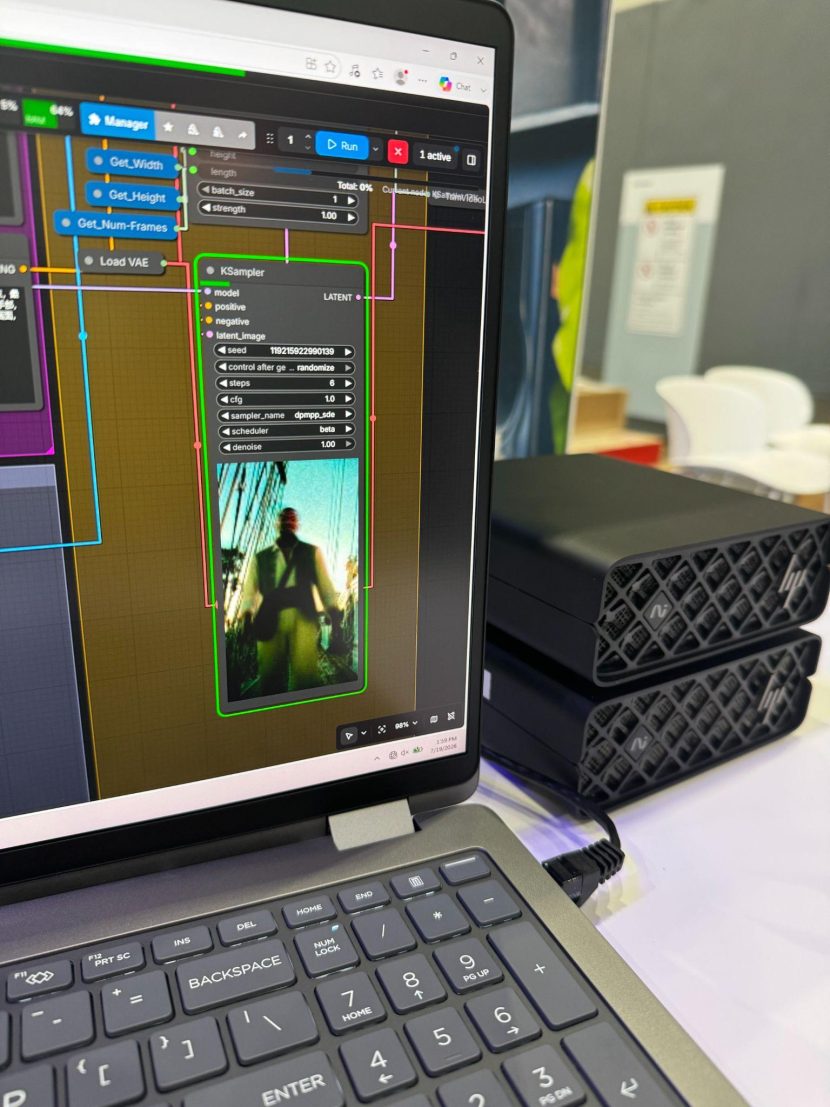
To scale their localized ComfyUI workflows without ballooning cloud costs or risking client IP leakage, IO deployed HP ZGX Nano AI stations. Utilizing the built-in ZGX Toolkit, the engineering team quickly connected and configured the systems directly into their server rooms. They subsequently chained two units together via 200 Gbps ConnectX-7 network ports to double their unified memory pool, allowing for seamless rendering and manipulation of high-resolution, longer-length 4K video clips.
Supporting Data: Infrastructure, Performance, and Capabilities
The technical framework underpinning Impossible Objects’ workflow relies on specialized hardware designed to bridge the gap between heavy enterprise compute and local studio flexibility.
Hardware Backbone: HP ZGX Nano G1n AI stations powered by the NVIDIA GB10 Grace Blackwell Superchip.
Networking & Scalability: 200 Gbps NVIDIA ConnectX-7 ports allowing multi-station clustering, effectively doubling memory capacity and throughput for high-resolution assets.
Software Ecosystem: Custom-configured ComfyUI pipelines integrated alongside traditional industry standards (Foundry Nuke, Adobe After Effects, SideFX Houdini).
Client Portfolio: Global brands spanning automotive (Porsche, Cadillac, Subaru), athletic apparel (Nike), and technology (Google).
Throughput Impact: Immediate doubling to tripling of rendering and generation throughput upon deploying local cluster infrastructure.
Official Responses and Industry Insights
The philosophy driving Impossible Objects is deeply rooted in empowering artists rather than replacing them. Studio leadership and engineering teams have been vocal about the importance of craft in the age of generative models.
Nhan Le, AI Lead at Impossible Objects, notes the stark contrast between public perception and production reality when dealing with high-end brands:
"The spots we do for car brands are highly scrutinized, and generally AI video models can’t deliver the level of photorealism demanded of this kind of work. However, we have found a sweet spot when we combine traditional 2D compositing and VFX with custom trained models and workflows to take advantage of the time- and resource-saving benefits of generative AI. The HP ZGX Nano boxes give us the speed, power, and scalability that we need to support that workflow on our network."
Addressing the critical nature of data security and intellectual property, Le emphasizes the non-negotiable requirement of on-premises operations:
"We don’t deliver fully generative shots to clients because currently there are limitations on resolution and color. But by combining it with traditional 2D compositing, we’re able to take the best parts of generative AI and make it production-friendly. With the ZGX Nanos, we’re also able to keep everything local and on-prem, which is a massive security consideration for our clients who don’t want the risk of working with vendors who upload footage and files to LLMs in the cloud."
Jerad Anderson, Co-Founder of Impossible Objects, praises the studio’s technical leadership for preserving the human element of filmmaking:
"People like Nhan and his counterpart Aiden Silver are really amazing creative engineers. They have paved a way with this new workflow that marries AI into production in a way that firmly plants a flag in craft and the human element, while embracing the time-saving elements of generative AI. The company has been doing R&D for two years straight to devise an approach that generates assets from original capture so that once we’ve solved a production problem, the solution is repeatable and we can solve it faster the next time."
Implications: The Future of Virtual Production and Boutique Studios
The methodology established by Impossible Objects points toward a profound transformation in how visual effects studios will operate in the near and distant future.
1. The Death of Manual Tracking and Set Extensions
In virtual production environments utilizing LED volumes, traditional post-production workflows require days—sometimes weeks—of tedious manual tracking data extraction to align live-action plates with digital set extensions. IO’s AI-backend workflow infers tracking data directly from the captured footage, automatically interpreting the 3D environment on the LED wall. This decoupling of post-production from rigid on-set data logging offers unprecedented creative freedom to filmmakers.
2. Solving the Provenance and Security Crisis
As major entertainment studios and global brands tighten security protocols surrounding proprietary intellectual property, cloud-based AI generation has faced severe pushback. By utilizing local HP ZGX Nano stations, IO demonstrates that high-performance generative AI does not require sacrificing data sovereignty. Keeping models and training data strictly on-prem guarantees end-to-end auditability and provenance.
Traditionally, competing for multi-region automotive and tech campaigns required massive capital expenditures on sprawling render farms and hundreds of digital artists. By deploying smart, clustered local AI stations managed by multi-agent LLMs, boutique facilities can now punch drastically above their weight class. As IO looks toward the expansion of its in-house render farm utilizing unified HP ZGX clustering, the barrier to entry for executing enterprise-grade VFX continues to lower.
Ultimately, Impossible Objects proves that the future of VFX does not belong to fully automated, prompt-driven replacements for human creativity. Instead, it belongs to creative engineers who harness local, high-performance AI infrastructure to automate the mundane, safeguard their IP, and grant artists the freedom to focus entirely on visual excellence.