New STAR TREK Film Won’t Use Legacy Characters or Kelvin Universe
Main Facts: A New Frontier for the Final Frontier
As the StarTrek television landscape prepares to wind down its current production era, Paramount Pictures is setting its sights firmly on the silver screen to keep the legendary six-decade-old franchise alive. While fans await the final episodes of both Star Strange New Worlds and Starfleet Academy on Paramount+ next year, the broader television wing of the franchise is facing an unprecedented production hiatus—marking the first time since 2015 that no active Trek television series will be actively filming.
However, hope remains high for cinematic exploration. Paramount has officially confirmed that a brand-new Star Trek feature film is in active development. The project has tapped the creative powerhouse duo John Francis Daley and Jonathan Goldstein—best known for balancing heart, humor, and high-stakes adventure in critically acclaimed hits like Dungeons & Dragons: Honor Among Thieves and Game Night—to helm the picture.
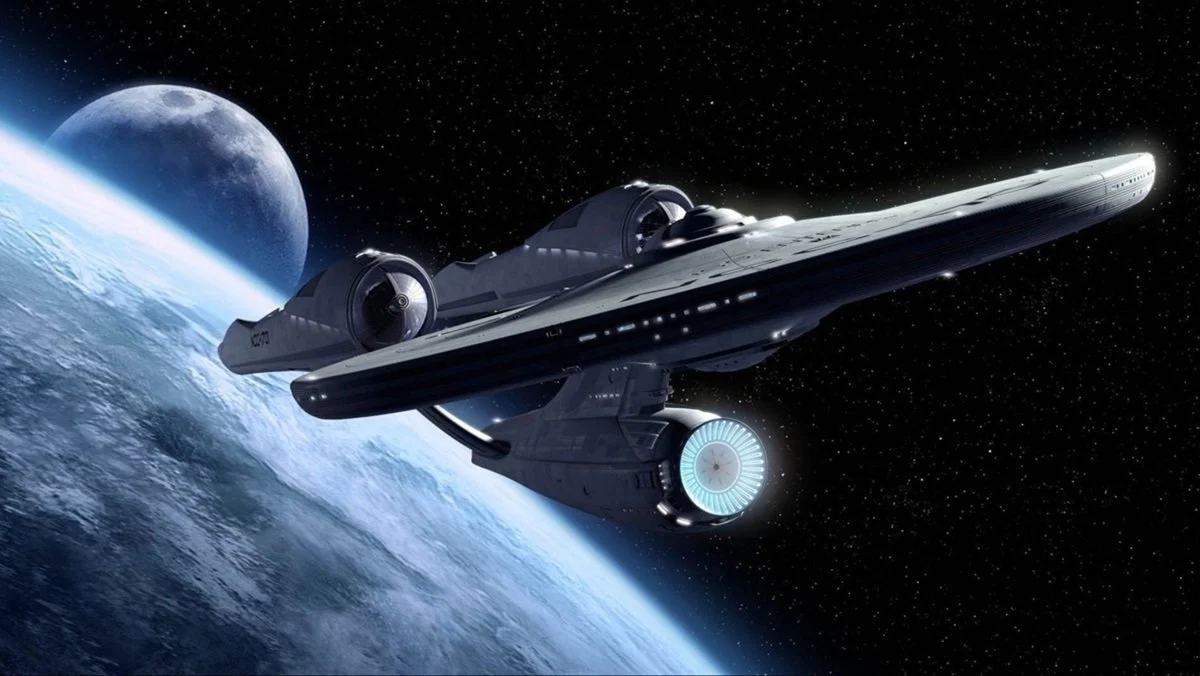
In a recent, highly revealing interview with Empire Magazine, Daley and Goldstein pulled back the curtain slightly on their top-secret project. They confirmed two monumental details that will shape the trajectory of the film: the movie will feature no legacycharacters, and it will be set significantly further down the line in the primary continuity, deliberately bypassing the alternate-reality "Kelvin Timeline" established by J.J. Abrams in 2009.
These revelations signal a seismic shift for the iconic sci-fi institution, promising a clean slate for audiences and creators alike as the franchise approaches its monumental generational milestones.
Chronology: The Evolution of Star Trek on Screen
To understand the weight of Daley and Goldstein’s announcements, it is essential to trace the historical timeline of how Star Trek has continually reinvented itself across television and film since its inception in 1966 by Gene Roddenberry.
The Classic Era and the Big Screen Legacy (1966–2005)
For decades, the Star Trekuniverse operated as a continuous, ever-expanding tapestry. Beginning with Star Trek: The Original Series (TOS) in the late 1960s, the franchise transitioned to feature films in 1979 with Star Trek: The Motion Picture, anchoring its cinematic identity entirely on legacy actors. William Shatner’s James T. Kirk, Leonard Nimoy’s Spock, and the rest of the USS Enterprise crew defined the early cinematic outings.
When that generation passed the torch in Star Trek Generations (1994), Patrick Stewart’s Captain Jean-Luc Picard and the crew of Star Trek: The Next Generation (TNG) seamlessly stepped into the feature film spotlight for four additional movies (First Contact, Insurrection, and Nemesis). Across all thirteen existing feature films produced prior to 2009, audience engagement was heavily predicated on emotional attachment to characters they already knew and loved.
The Kelvin Timeline Interruption (2009–2016)
Fearing that the franchise had become too insular and inaccessible to modern moviegoers, Paramount rebooted the cinematic branch in 2009 with director J.J. Abrams’ Star Trek. Rather than completely wiping the slate clean, the film cleverly used temporal mechanics to create an alternate reality—dubbed the "Kelvin Timeline."
Even within this alternate sandbox, the studio relied heavily on legacy anchors. Leonard Nimoy reprised his iconic role as an older Spock to bridge the gap between the original continuity and the new younger cast (led by Chris Pine as Kirk and Zachary Quinto as Spock). Two sequels, Star Trek Into Darkness (2013) and Star Trek Beyond (2016), continued exploring this alternate timeline, but subsequent efforts for a fourth Kelvin-era film stalled in development hell for nearly a decade.
The Television Renaissance and Current Twilight (2017–2026)
While the film side struggled to find its footing, television experienced a massive renaissance under the leadership of Alex Kurtzman. Beginning with Star Trek: Discovery in 2017, Paramount+ birthed a new golden age of streaming Trek, which expanded to include Picard, Lower Decks, Prodigy, Strange New Worlds, and the upcoming Starfleet Academy.
However, financial restructuring at Paramount and shifting streaming strategies have led to a contraction. With Strange New Worlds and Starfleet Academy wrapping up their upcoming runs, the television pipeline is drying up. For the first time in over a decade, the future of the franchise rests squarely on the shoulders of Daley, Goldstein, and their forthcoming cinematic reboot.
Supporting Data: Breaking Down the Franchise’s Cinematic History
A closer look at the 13 feature films that comprise the Star Trek cinematic canon highlights just how reliant the franchise has historically been on familiar faces:
Original Series Cast (6 Films):The Motion Picture (1979) through The Undiscovered Country (1991) directly starred the original bridge crew.
Crossover Era (1 Film):Generations (1994) deliberately brought James T. Kirk and Jean-Luc Picard together to pass the cinematic baton.
Next Generation Cast (3 Films):First Contact (1996) through Nemesis (2002) focused solely on the TNG television crew.
The Kelvin Reboot (3 Films):Star Trek (2009), Into Darkness (2013), and Beyond (2016) reimagined the original crew while still leaning on cameo appearances by legacy actors (most notably Nimoy).
Daley and Goldstein’s upcoming movie will break this unbroken 45-year streak of utilizing legacy personnel as narrative crutches. By committing to an entirely original cast, the directors are taking the biggest creative gamble in the history of the film franchise.
Official Responses: What the Directors Revealed
In their discussion with Empire Magazine, the directing duo was careful not to spoil specific plot points, given that the film is still in the early stages of pre-production. Nevertheless, their statements left no room for ambiguity regarding the foundational rules of their project.
When asked directly about the inclusion of classic characters, John Francis Daley was blunt and unequivocal:
"No legacy characters, nobody that you’ve met before."
This clarification immediately sets the film apart from almost every major intellectual property revival in Hollywood today, which typically relies heavily on nostalgia bait, de-aged actors, or legacy cameos to draw audiences into theaters.
Jonathan Goldstein then attempted to contextualize where the film sits within the broader cosmic timeline, explaining:
"A different time, not a different timeline per se, but it’s a little further in the future. Sort of a different timeline."
Recognizing potential fan confusion over the semantic use of the word "timeline"—which immediately triggers memories of the splintered Kelvin universe—Daley swiftly interrupted to clarify the setting once and for all:
"Well, not the Kelvin timeline. It’s not the J.J. timeline."
By explicitly stating it is not the Kelvin timeline, the filmmakers confirmed that their story remains anchored in the primary, sacred continuity of the Prime Universe—the very same universe that fans have meticulously tracked and studied across television and film since 1966.
Implications: A Bold Leap Into Unexplored Eras
The decision to move the narrative far into the future within the Prime Universe carries profound implications for the Star Trek mythos.
Leaving the Picard Era Behind
By pushing the timeline forward, the filmmakers will naturally bypass the era of the USS Enterprise-G, the ship commanded by Captain Seven of Nine (Jeri Ryan) as established in the climactic final season of Star Trek: Picard. Depending on how far into the future the story leaps, this could mean jumping decades—or even a full century—past the 25th century.
This temporal distance grants the creative team unprecedented narrative freedom. They will not be constrained by canon contradictions, localized geopolitical conflicts with the Romulans or Borg of the 24th century, or the need to reference past television events. They can build entirely new alien species, introduce novel technological paradigms, and explore philosophical questions unique to a fresh epoch of Starfleet.
The Creative Freedom of Daley and Goldstein
Daley and Goldstein have proven themselves adept at subverting audience expectations while maintaining immense respect for source material. Their work on Dungeons & Dragons was widely praised for capturing the chaotic, joyful spirit of tabletop roleplaying without relying on cynical inside jokes or forcing legacy characters into unnecessary cameos.
Applying this ethos to Star Trek could breathe much-needed life into a cinematic arm of the franchise that has often felt paralyzed by its own history. For years, critics of modern franchise filmmaking have argued that properties like Star Wars and Star Trek suffer from "small universe syndrome," where every new story must tie back to the same small handful of bloodlines or planets. By stripping away legacy characters entirely, Daley and Goldstein are returning to the foundational spirit of Gene Roddenberry’s original vision: endless exploration of the unknown.
The Fan Base Reaction
Naturally, the removal of legacy characters is bound to elicit mixed reactions from the sprawling, passionate Star Trek fandom (often referred to as Trekkies or Trekkers). Traditionalists who tuned into modern shows specifically for legacy appearances—such as Patrick Stewart in Picard or Anson Mount’s Captain Pike in Strange New Worlds—may initially view the lack of familiar faces as a missed opportunity to tie up loose ends.
However, a vocal segment of the fanbase has long clamored for stories that break away from the "Prequel Era" and the 24th-century nostalgia loop. Moving forward into a truly uncharted era allows Star Trek to return to its roots as a forward-thinking speculative fiction vehicle, rather than a museum piece celebrating past glories.
Conclusion: Looking Ahead to the Next Generation of Cinematic Trek
As Paramount transitions away from a heavy reliance on television output over the next year, all eyes will be on John Francis Daley and Jonathan Goldstein to deliver a cinematic experience worthy of Star Trek‘s diamond anniversary.
By bravely shuttering the door on familiar faces and avoiding the alternate-reality crutches of the past, the upcoming movie represents a rare and exciting opportunity: a chance for the final frontier to feel genuinely dangerous, mysterious, and new again. Whether the crew wears a brand-new iteration of Starfleet attire or steps onto the bridge of a brand-new starship bearing the legendary name Enterprise, one thing is certain—the voyage into the unknown is about to begin anew.