
The Red Menace Returns: John Astin Reprises His Iconic Role as Attack of the Killer Tomatoes Ripe for the AI Age
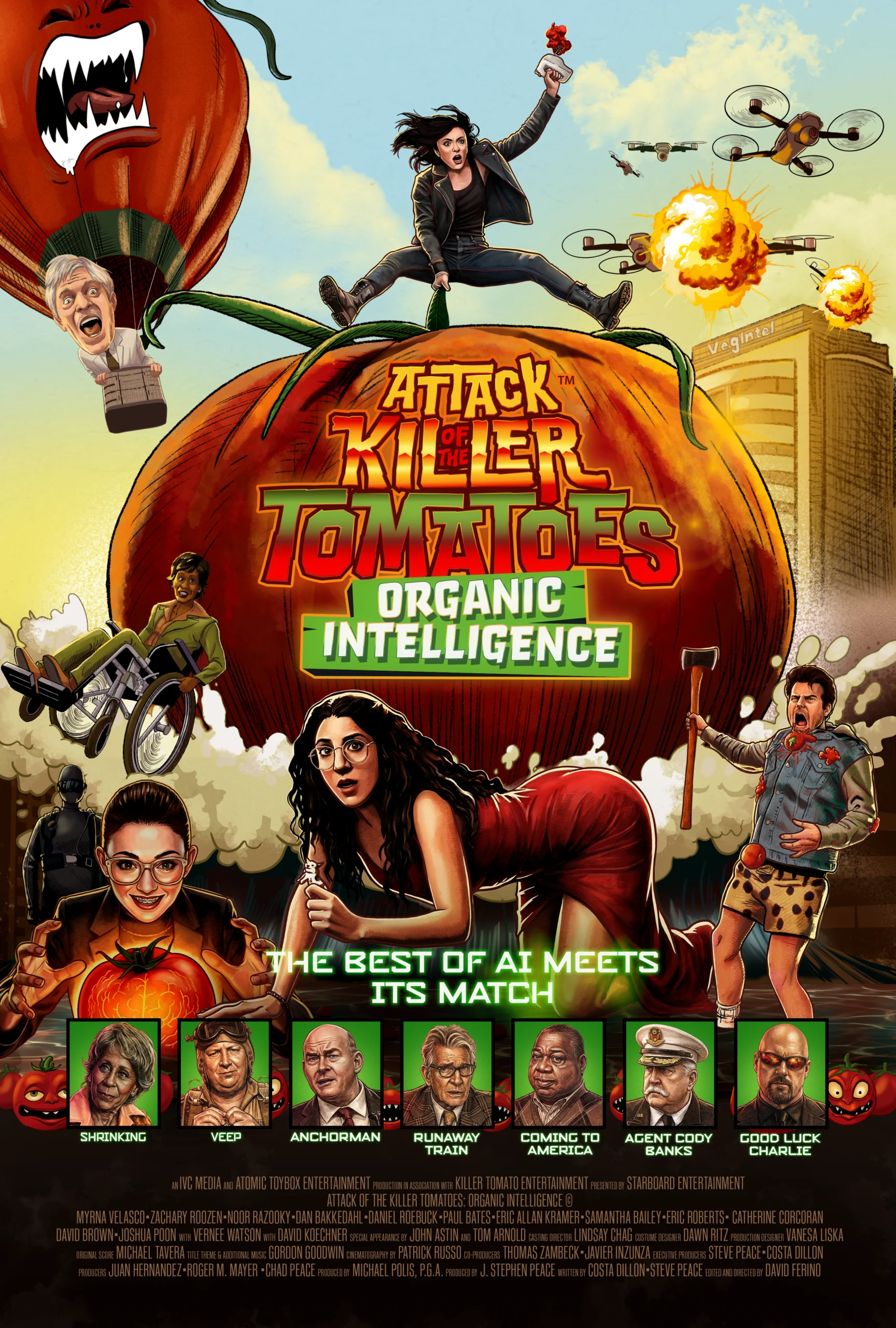
Main Facts: The Crimson Caper Makes a 34-Year Comeback
Thirty-four years after his last cinematic encounter with the pulp and the pit, legendary actor John Astin has officially returned to the universe of one of cinema’s most delightfully absurd cult franchises. Today marks the digital and cable Video-on-Demand (VOD) release of Attack of the Killer Tomatoes: Organic Intelligence, courtesy of distributor Anchor Bay. This milestone arrives precisely two months after the film completed a targeted, limited theatrical run in major markets across the United States.
The feature-length picture marks the fifth installment in a satirical sci-fi comedy property that first sprouted in 1978. For Astin—globally revered as the quintessential television Gomez Addams from the 1964 classic The Addams Family—stepping back into the lab coat of the eccentric, scenery-chewing mad scientist Professor Mortimer Gangreen serves as a triumphant homecoming. Astin originally inhabited the role across three successive sequels in the late 1980s and early ’90s.
Anchor Bay’s release strategy brings the new chapter directly to home screens following its August theatrical window. Currently, the 96-minute, PG-13-rated comedy is accessible across a broad spectrum of digital platforms—including Amazon Prime Video, Fandango at Home, Apple TV, and Google Play. Additionally, traditionalists utilizing cable and satellite providers can rent the film via Comcast/Xfinity, Charter/Spectrum, Cox, DirecTV, Dish, Sling TV, Altice/Optimum, RCN, and Verizon Fios, with distribution channels extending into Canadian cable networks as well.

At present, Anchor Bay has not announced a physical media release date (Blu-ray, DVD, or VHS), leaving the digital space as the sole domain for the crimson uprising. To support the rollout, the franchise has planted a major flag at New York Comic Con, setting up shop at the Atomic Toybox booth (No. 1771) from October 8 to 11. Fans attending the convention can secure exclusive merchandise, ranging from plush toys and art prints to promotional posters and a limited-edition "I love NY" tomato-themed t-shirt.
Chronology: Tracing the Evolution of a Cult Phenomenon
To fully appreciate the cultural significance of Attack of the Killer Tomatoes: Organic Intelligence, one must examine the peculiar timeline of a franchise that defies conventional Hollywood logic.
1978: The Genesis of a B-Movie Satire
The phenomenon began in 1978 with the original Attack of the Killer Tomatoes, directed by John De Bello and co-written by Costa Dillon and Steve Peace. Operating on a shoestring budget that famously utilized a budget-friendly helicopter crash stunt (which accidentally crashed for real during filming), the movie functioned as a brilliant, deadpan parody of 1950s creature features and self-serious disaster epics like Jaws. Though initially greeted with critical indifference, the film achieved legendary status through midnight movie screenings and the burgeoning home video market, turning an audacious premise into a pop-culture touchstone.
1988–1992: The Gangreen Era and Franchise Expansion
A decade later, De Bello and his creative team expanded the cinematic universe with three sequels, during which John Astin joined the fold as the nefarious Professor Mortimer Gangreen. Astin’s tenure defined the franchise’s cartoonish, campy identity across:
- Return of the Killer Tomatoes! (1988): Notable for introducing a young George Clooney in one of his earliest feature film roles and establishing Gangreen’s sinister plans for world domination using music.
- Killer Tomatoes Strike Back! (1991): Continuing the mad science antics as tomatoes infiltrate human society disguised as everyday objects and people.
- Killer Tomatoes Eat France! (1992): The final chapter before an extended, multi-decade hibernation, sending the battle across the Atlantic.
2026: The Modern Revival
Following a 34-year hiatus, the franchise has been resurrected under the direction of David Ferino. Working from a screenplay penned by original creators Costa Dillon and Steve Peace, Ferino has modernized the premise to target contemporary anxieties. Following a limited theatrical release spearheaded by Starboard Entertainment on August 7 across New York, Los Angeles, Chicago, and San Diego, the film has officially transitioned to its digital premiere platform.
Supporting Data: Cast, Crew, and Behind-the-Scenes Mechanics
The success of a legacy-quel resting on an inherently silly premise relies heavily on assembling a cast capable of balancing straight-faced commitment with broad comedic timing. Attack of the Killer Tomatoes: Organic Intelligence achieves this by blending returning character archetypes with a robust ensemble of veteran character actors and comedic talent.

Star-Studded Cast and Crew
- John Astin as Professor Mortimer Gangreen: Anchoring the film with his legendary theatricality, Astin’s return bridges the gap between the golden age of 1990s direct-to-video sequels and modern streaming.
- Dan Bakkedahl as Wilbur Finletter: Bakkedahl steps into the shoes of the iconic character name carried directly over from the 1978 original film, anchoring the human resistance against the botanical onslaught.
- David Koechner: The comedy veteran assumes the role of the President’s press secretary, adding a layer of sharp political satire to the proceedings.
- Supporting Ensemble: The sprawling cast also features prominent screen talents including Eric Roberts, Daniel Roebuck, Tom Arnold, Catherine Corcoran, Vernée Watson, Myrna Velasco, Samantha Bailey, Noor Razooky, and Zachary Roozen.
Behind the Lens
- Director: David Ferino
- Writers: Costa Dillon and Steve Peace (recognized by the official franchise channels as the original creators)
- Distributors: Starboard Entertainment (Theatrical) and Anchor Bay (Digital/VOD)
Official Responses and Creative Vision: Targeting the Modern Age
When shifting a satirical franchise from the Cold War and 1980s corporate greed eras into the modern day, the creative team needed a target worthy of mockery. According to official promotional materials and synopses provided by the studio, the narrative thrust of Organic Intelligence follows a biotech prodigy who unleashes a genetically engineered vegetable meant to solve humanity’s structural problems. Predictably, the experiment spirals wildly out of control, spawning a terrifying and relentless new generation of killer tomatoes.
Press materials describe the film as a deliberate synthesis of "signature absurdist humor with timely satire of biotechnology, artificial intelligence, and humanity’s drive to improve on nature."
By focusing their satirical crosshairs on artificial intelligence, machine learning, and unchecked bio-engineering, the filmmakers have tapped into a vein of cultural exhaustion. Just as the 1978 original weaponized the public’s fatigue with bloated disaster movies, Organic Intelligence arrives at a moment when society is inundated with breathless corporate promises regarding technological singularity and synthetic innovation.

Implications: Can Nostalgia and Satire Sustain a Franchise Revival?
The release of Attack of the Killer Tomatoes: Organic Intelligence raises broader questions regarding the economics of legacy-sequels in the digital age. In a landscape dominated by multi-million-dollar intellectual property reboots, the return of a hyper-niche, proudly low-budget B-movie property is a fascinating litmus test for fan loyalty and counter-programming.
The Streaming and VOD Shift
By bypassing a wide traditional theatrical release in favor of a brief four-city theatrical window followed by an immediate digital and VOD debut, Anchor Bay is acknowledging the modern consumption habits of genre fans. Cult films historically rely on word-of-mouth discovery, home video rentals, and midnight viewings. By placing the film instantly accessible on platforms ranging from Amazon and Apple TV to regional cable providers like Spectrum and Verizon Fios, the studio ensures maximum availability for a geographically dispersed fanbase that might otherwise have missed its brief theatrical footprint.
Longevity and Legacy in Comedy
The inclusion of John Astin—who remains active in his legacy and pop-culture presence—serves as an invaluable bridge connecting generations of physical comedy enthusiasts. Astin’s ability to imbue absolute sincerity into wildly surreal scenarios provides the new film with authentic genre credibility.

Ultimately, whether Organic Intelligence becomes a lasting cult classic or a footnote in the franchise’s history will depend on how effectively its 96-minute runtime translates its high-concept satire. Yet, in an era where headlines often read like self-parody, a movie about genetically modified, AI-driven killer tomatoes feels less like a ridiculous stretch and more like the precise reflection of the times we live in. As the tomatoes hit digital shelves today, audiences once again face the immortal cinematic warning: It could happen to you.
