
Revolutionizing the 3D Pipeline: Maxon Integrates Model Context Protocol into Cinema 4D
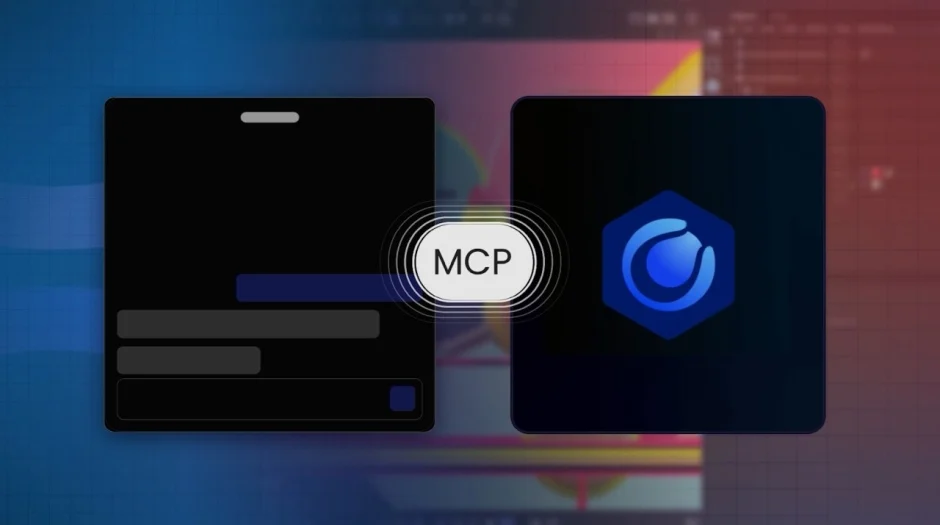
The landscape of 3D production is undergoing a seismic shift as Maxon, the industry-leading developer of professional software solutions for editors, filmmakers, and motion designers, has announced the integration of Model Context Protocol (MCP) into Cinema 4D. Starting with version 2026.4, artists working on Windows and macOS can now leverage the power of advanced AI assistants—including Claude, ChatGPT, and Codex—to automate complex, repetitive, and time-consuming tasks directly within their native 3D environment.
This integration represents a strategic evolution in creative workflows, moving beyond simple automation scripts toward a more conversational, intuitive, and highly context-aware partnership between human artists and machine intelligence. By adopting an open standard like MCP, Maxon is ensuring that its flagship software remains at the forefront of the AI-augmented production revolution.
The Core Innovation: What is the Cinema 4D MCP Server?
At its heart, the Model Context Protocol is an open standard designed to bridge the gap between AI assistants and local or remote software applications. Traditionally, AI models have been siloed within browser interfaces or dedicated chat applications, often lacking the "context" of a complex, live project file. Maxon’s implementation changes this by creating a secure, local server bridge.
The Cinema 4D MCP server, which arrives pre-installed but disabled by default, acts as a translator. When an artist communicates with an AI assistant using natural language, the assistant can now "see" the scene hierarchy, material properties, and object lists within Cinema 4D. Crucially, the AI is not just generating images or text; it is executing commands that manipulate the actual 3D scene data.
Whether it is organizing thousands of imported assets into a logical hierarchy, generating hundreds of material variations, or setting up complex multi-pass render settings, the AI assistant functions as a highly efficient, tireless junior technical artist. Because it utilizes Cinema 4D’s native toolset, the output is not a "black box" generated file that must be cleaned up or rebuilt; it is native, editable, and fully compliant with the artist’s existing pipeline.
Chronology of a Digital Transformation
The push toward AI-assisted 3D design has been building for several years, but the implementation of MCP signals a shift from experimental "generative" AI to "procedural and administrative" AI.
- Early 2024: Maxon begins exploring methods to reduce the "creative friction" caused by administrative tasks in 3D production, such as scene cleanup and asset management.
- Late 2024: The development team focuses on the Model Context Protocol, recognizing it as the most secure and scalable standard for external AI integration.
- Q1 2026: The beta testing phase for the MCP server begins, focusing on stability, security, and the ability to handle complex Python-based command execution within the Cinema 4D framework.
- April 2026 (Version 2026.4): Maxon officially rolls out the MCP server as a native feature, setting a new industry standard for how 3D software interacts with Large Language Models (LLMs).
This rapid timeline underscores Maxon’s commitment to responding to the demands of modern studios, which are increasingly under pressure to deliver high-fidelity content on shorter deadlines.
Deep Dive: Capabilities and Workflow Integration
The capabilities of the MCP-powered Cinema 4D environment are broad, covering both creative and logistical domains. According to technical documentation released by Maxon, the AI assistants can be tasked with:

1. Scene Management and Hierarchy
One of the most tedious aspects of 3D production is the "import mess"—the chaos that occurs when bringing in assets from various CAD or sculpting programs. Artists can now simply instruct their AI: "Organize this scene into a folder structure based on asset type, group all lights into a single object, and rename everything with the prefix ‘PROD_’."
2. Procedural Material Variations
The AI can build complex variations of materials, adjusting textures, bump maps, and shaders based on natural language requests. This allows artists to iterate through hundreds of looks in a fraction of the time it would take to manually clone and edit materials.
3. Technical Animation and Rigging
While it is not a replacement for a senior rigger, the MCP integration allows for basic rigging and animation tasks. Users can request the AI to set up simple constraints, apply basic motion paths, or handle camera tracking sequences, effectively automating the "legwork" of animation.
4. Render Pipeline Optimization
Setting up multipass renders is often a complex, error-prone task. With the new server, artists can describe the required outputs—such as ambient occlusion, depth passes, and reflection passes—and the AI will configure the render settings automatically, ensuring consistency across a large project.
Security, Privacy, and Professional Oversight
A primary concern for any studio implementing AI into their pipeline is security. Maxon has addressed this head-on by architecting the MCP server with a "security-first" philosophy.
Unlike cloud-based AI tools that might require uploading proprietary data to external servers, the connection between Cinema 4D and the AI is managed locally. The server is disabled by default, ensuring that no data is exchanged until the artist makes a conscious choice to enable the feature. Furthermore, the integration includes:
- Token-Based Access: An MCP adapter access token acts as a digital key, ensuring that only authorized AI assistants can communicate with the local server.
- Granular Permissions: Artists can define exactly which "groups" of tools the AI is allowed to touch. If an artist wants to prevent the AI from modifying complex Python scripts or altering camera settings, they can set explicit permissions to lock those functions.
- Audit Logging: Every command issued by the AI is recorded in a local audit log. For professional studios, this provides the necessary oversight to ensure that every change made to a project file is traceable and accountable.
- Native Undo History: Because the AI operates within the standard Cinema 4D environment, every action is logged in the undo history. If the AI makes a mistake, the artist can simply hit "Undo" (Ctrl/Cmd + Z) to revert the scene to its previous state instantly.
Official Response: Empowering the Artist
Maxon CEO David McGavran emphasizes that the goal of this technology is not to replace the artist, but to elevate them. In a recent statement, McGavran noted: "The idea is simple: artists retain control while handing off any tasks they consider a chore. MCP support enables us to make Cinema 4D more powerful without taking the creative process away from the artist."
This sentiment is echoed by many in the industry who view AI as a tool for "augmentation" rather than "replacement." By offloading the administrative "chores"—the tasks that occupy 30% to 50% of an artist’s day but contribute little to the final creative vision—Maxon is effectively giving artists more time to focus on lighting, composition, and storytelling.

The Implications for the Industry
The integration of MCP into Cinema 4D has profound implications for the future of 3D production.
Standardization of AI Workflows
By adopting an open protocol like MCP, Maxon is signaling that the industry is moving toward a standardized way of talking to software. If other major DCC (Digital Content Creation) tools follow suit, we could see a future where an artist uses a single AI assistant to orchestrate a workflow across multiple applications—directing Cinema 4D to render, After Effects to composite, and Houdini to simulate, all from a single conversational interface.
The Evolution of the "Technical Artist"
The role of the technical artist is likely to shift toward "AI orchestration." Rather than manually writing complex Python scripts, technical artists may soon be responsible for curating the prompts and logic structures that guide the AI in automating a studio’s pipeline. This could lead to a democratization of advanced production techniques, where smaller teams can achieve the output of much larger studios by leveraging AI-assisted automation.
Enhanced Security for Large-Scale Productions
For major visual effects houses and gaming studios, the security of their data is paramount. Maxon’s emphasis on local-first processing, audit logs, and granular permission sets provides a template for how enterprise-grade AI can be deployed safely. This could accelerate the adoption of AI in environments that have previously been skeptical due to data privacy concerns.
Conclusion: A New Chapter for Cinema 4D
The introduction of the MCP server in Cinema 4D 2026.4 is a pivotal moment for the software. By providing a bridge between the vast, analytical power of Large Language Models and the creative precision of 3D modeling, Maxon has created a tool that feels like a natural evolution of the user experience.
For the artist, the benefit is immediate: less time spent navigating menus and organizing hierarchies, and more time spent making art. By keeping the AI in the role of an assistant rather than a creator, Maxon has ensured that the "soul" of the project—the artistic intent—remains firmly in the hands of the human. As this technology matures, it will be fascinating to see how the creative community pushes the boundaries of what this "conversation" with software can achieve.
For those looking to get started, Maxon has provided a comprehensive suite of resources, including FAQ documents, security guides, and video tutorials, all available on their official portal. As the industry watches, Cinema 4D has clearly set the pace for the next generation of AI-integrated digital creation.
