
Timshel on Screen: Zoe Kazan’s Magnificent Adaptation of John Steinbeck’s ‘East of Eden’ Arrives on Netflix
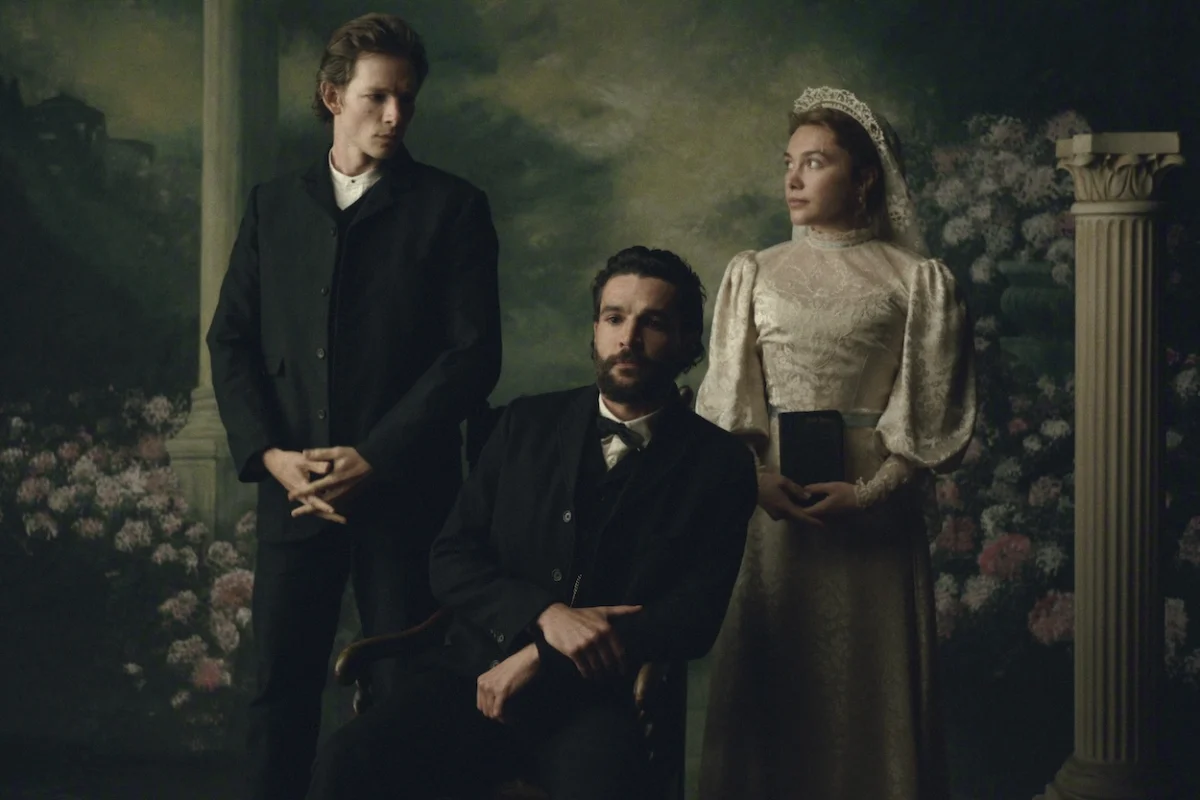
LOS ANGELES — John Steinbeck’s monumental 1952 American epic, East of Eden, has long stood as a towering monument in twentieth-century literature—a sweeping exploration of generational trauma, free will, and the eternal war between good and evil. Translating such a dense, philosophical masterpiece to the screen has historically proven to be a Herculean task. While Elia Kazan’s iconic 1955 film adaptation brilliantly captured the youthful angst of a young James Dean, it focused almost exclusively on the final section of the novel.
Now, writer and co-showrunner Zoe Kazan—granddaughter of the legendary director—has approached the source material with a sweeping, aching, and radiant vision. Her seven-episode limited series adaptation, premiering globally on Netflix, offers a multi-generational, five-decade examination of the Trask and Ames lineages. Bolstered by a powerhouse ensemble cast led by Florence Pugh, Christopher Abbott, and Mike Faist, this new East of Eden balances breathtaking period spectacle with unflinching psychological depth, earning it widespread critical acclaim and a coveted A- grade.
Main Facts: A Star-Studded Return to Salinas Valley
At its core, the Netflix limited series is a tragic family saga spanning the late nineteenth and early twentieth centuries. The narrative follows Adam Trask (Christopher Abbott), a man shaped by the cruel upbringing of his oppressive, ex-military father (Tracy Letts). Adam’s early life is shared with his troubled brother, Charles (Mike Faist), a lonely boy in a world that routinely dismisses him.
As Adam grows into adulthood, he attempts to forge a domestic life, but his path collides indelibly with Cathy Ames (Florence Pugh). Introduced crawling through the Trask family fields, her blood-spattered figure introduces a visceral, unsettling tone that defines the series. What follows is a harrowing exploration of parenting, domestic fracture, and the psychological burdens passed down to Adam and Cathy’s twin sons, Aaron (Joe Anders) and Caleb (Joseph Zada).

Behind the camera, the production matches its powerhouse acting talent with visionary direction. Garth Davis helms the first four episodes, while Laure de Clermont-Tonnerre takes the director’s chair for the final three. Cinematographers Stuart Dryburgh and Sam Chiplin capture the American landscape with striking, sun-bleached beauty, contrasting the warm homesteads of California with the bleak shadows of human nature.
Chronology and Narrative Structure: Five Decades of Turmoil
The series is meticulously structured across seven episodes, all written by Zoe Kazan alongside co-showrunner Jeb Stuart, tracing a timeline that stretches over fifty years of American transformation:
- The Roots of Cruelty: The series opens with the oppressive military household of the elder Trask, tracking the fractured bond between young brothers Adam and Charles.
- The Arrival of Cathy: Adam crosses paths with the enigmatic and deeply traumatized Cathy Ames. Mistakenly viewed by Adam as a "fallen angel" in need of salvation, Cathy’s fierce independence and survival instincts transform her into a disruptive force within the household.
- The March of Time and Industry: As the narrative moves forward, the Trasks encounter a rapidly modernizing America. The characters traverse the country, witness industrial innovations, and participate in national conflicts, yet find that personal suffering remains static despite outward progress.
- The Next Generation: The focal shift lands squarely on the twin brothers, Aaron and Caleb, who must grapple with the sins, expectations, and psychological wreckage of their parents.
- The Climax of Choice: The final episodes culminate in a philosophical and emotional reckoning, anchored by the ancient Hebrew concept of Timshel—the idea that human beings possess the freedom to choose their own destiny.
Supporting Data and Character Dynamics: Beyond Steinbeck’s Binary
While Steinbeck’s novel often painted Cathy Ames as an embodiment of innate, unadulterated evil, Zoe Kazan’s adaptation recontextualizes her motivations. Rather than a supernatural monster, Pugh’s Cathy is a product of profound trauma, forged by a society that placed a misogynistic boot on her throat from her earliest days. Her refusal to submit, coupled with Pugh’s vigilant and commanding performance, reframes her ruthlessness as a brutal, honest form of self-preservation.
Surrounding this central conflict are two vital supporting figures who steer the moral compass of the series:

- Lee (Hoon Lee): Adam’s code-switching, deeply well-read Chinese-American housekeeper. Lee is a repository of wisdom, navigating systemic racism with quiet dignity while serving as an intellectual anchor for the household.
- Samuel Hamilton (Ciarán Hinds): A good-humored Irish immigrant, jack-of-all-trades, and family friend who acts as the nurturing father figure Adam never had. Hinds plays Samuel with a soothing warmth that contrasts sharply with Adam’s naive romanticism and Cathy’s cynical rebelliousness.
Christopher Abbott delivers some of his most nuanced work to date, capturing Adam’s gentle melancholy as he stumbles through the wreckage of his romantic ideals.
Official Responses and Creative Vision
The creative team behind Netflix’s East of Eden has spoken extensively about the challenge of honoring Steinbeck while bringing a modern psychological lens to the adaptation.
"There is a beauty in the truth, even if it is a dreadful beauty," notes the underlying thesis of the production. By diving headfirst into the uncomfortable intersections of family duty, generational curses, and societal expectations, the showrunners deliberately avoided sanitizing the source material.
Showrunner Zoe Kazan emphasized the importance of granting female characters interiority that historical texts often stripped away. Through Pugh’s portrayal of Cathy, the series challenges audiences to sit with discomfort, asking viewers to examine how institutional oppression breeds radical, sometimes terrifying, self-defense.

Netflix executives have positioned the limited series as a crown jewel of their autumn slate, banking on the combination of prestige literary adaptation, high-profile casting, and a unified binge-release model to capture awards-season momentum.
Implications: The Enduring Power of Timshel
The ultimate triumph of Netflix’s East of Eden lies in its fidelity to the Hebrew concept of Timshel—translated famously in the novel as "thou mayest." As articulated by Samuel and Lee, the phrase serves as the thematic backbone of the series: humanity is not permanently shackled to genetic lineage, historical trauma, or systemic failure. People possess the agency to choose who they are and what they become.
In an era of prestige television frequently dominated by cynical nihilism or neat, tidy resolutions, East of Eden chooses a harder, more rewarding path. It acknowledges the immense, crushing weight of circumstance—lineage, laws, customs, and identity—while insisting on the redemptive power of individual choice.
By marrying spectacle with intimacy, and holding up a mirror to both our darkest shame and our capacity for grace, Zoe Kazan has crafted a definitive modern adaptation. It is a series that looks unflinchingly into the abyss of human fallibility and resolutely keeps crawling toward the light.

“East of Eden” premieres Thursday, October 1, exclusively on Netflix. All seven episodes will be available to stream simultaneously.
