
A New Era of Entertainment Monopolies: Paramount and Warner Bros. Merge to Form "Skydance"
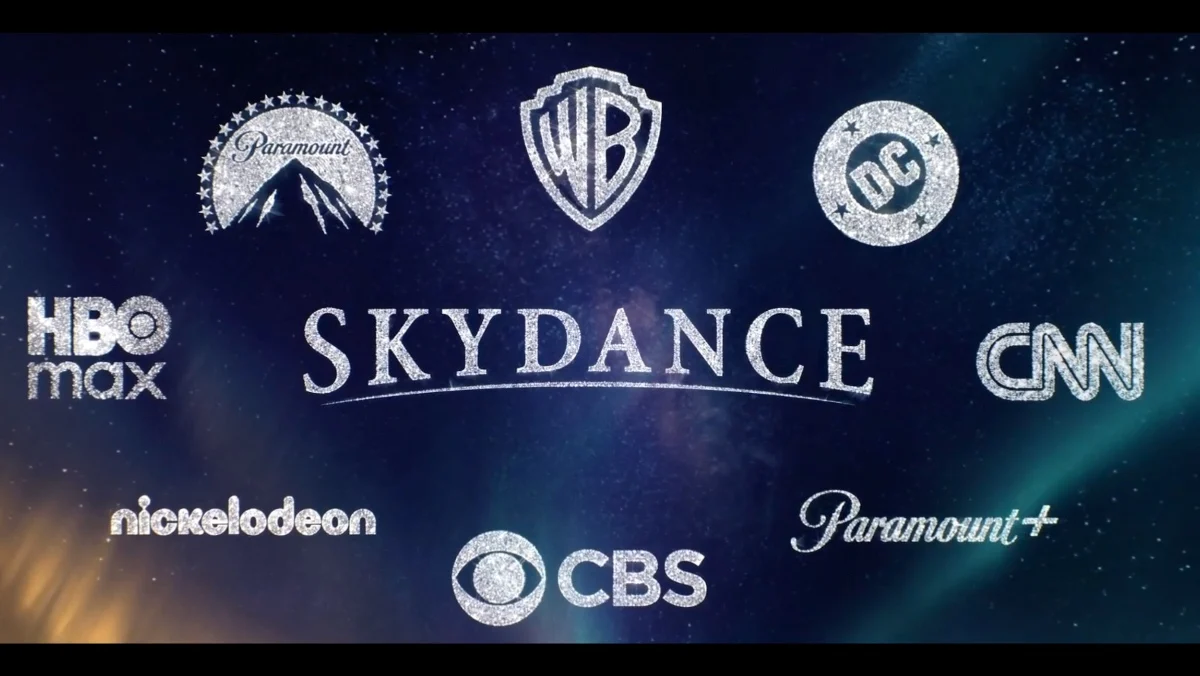
Main Facts: The Mega-Merger That Reshapes Hollywood
In a monumental corporate realignment that will permanently alter the landscape of global entertainment, media giants Paramount and Warner Bros. have officially finalized their merger. Despite early skepticism and anticipated roadblocks from antitrust regulators, the massive consolidation has pushed through, sweeping away initial legal and state-level objections.
The newly minted corporate entity will no longer bear the historic names of Paramount or Warner Bros. Instead, the combined leviathan will operate under the banner of Skydance, drawing its moniker from the film production company originally founded by its incoming leadership.
The transaction unites two of Hollywood’s oldest and most prestigious studios, creating an unprecedented media empire. At the helm of this multi-billion-dollar conglomerate will be David Ellison, transitioning from his role as founder of Skydance Media to Chairman and CEO of the newly unified company. He will be joined in executive leadership by co-CEO Ynon Kreiz, who steps into the position following a successful tenure at the helm of Mattel.
The integration brings together an exhaustive catalogue of intellectual property, television networks, streaming platforms, and film studios under a single corporate roof. Among the assets shifting into the Skydance portfolio are:
- Theatrical Studios: The historic film production and distribution divisions of both Paramount Pictures and Warner Bros.
- Streaming Services: Both Max (formerly HBO Max) and Paramount+.
- Television Networks & Cable Giants: CBS, CNN, MTV, TBS, Comedy Central, Food Network, and numerous others.
- Global Franchises: DC (including Batman, Superman, and the broader cinematic universe), The Lord of the Rings, Game of Thrones, Harry Potter, Star Trek, Top Gun, Mission: Impossible, Yellowstone, Grease, and Nickelodeon’s vast vault of children’s programming.
With the deal slated to officially close on October 6, industry watchers, creators, and consumers alike are left evaluating the long-term consequences of a media landscape increasingly dominated by monolithic corporations.
Chronology: The Road to Skydance
The path to the Paramount-Warner Bros. merger—and the birth of the modern Skydance corporation—unfolded across a surprisingly swift series of corporate negotiations, regulatory hurdles, and strategic rebranding initiatives.
- Early Speculation and Initial Resistance: Whispers of a potential pairing between Paramount and Warner Bros. initially sparked intense debate within the industry. Antitrust watchdogs and state attorneys general raised early concerns over the sheer scale of the proposed union, pointing out the potential anti-competitive effects of combining two major Hollywood studio systems and massive television broadcasting arms.
- The Dissolution of Regulatory Hurdles: Despite the early antitrust noise, obstacles that once threatened to derail the transaction mysteriously dissipated. Concessions or structural adjustments made by the merging parties—though largely opaque to the public—satisfied state and federal regulators, clearing the path for approval without forcing a dramatic downsizing of the combined entity’s footprint.
- October 2, 2026 – The Announcement: David Ellison took to social media to officially break the silence regarding the merger’s ultimate outcome. In a statement posted across digital platforms, Ellison revealed not only that the merger was happening, but that the unified corporate identity would be Skydance. The announcement was accompanied by a sprawling promotional sizzle reel highlighting the staggering array of franchises falling under the new umbrella.
- October 6, 2026 – Anticipated Closing Date: The final legal and financial mechanisms of the merger are set to conclude, officially dissolving the independent structures of the legacy companies and officially inaugurating the Skydance era with Ellison and Kreiz at the controls.
Supporting Data: The Anatomy of a Media Empire
To truly understand the weight of the Skydance merger, one must examine the staggering volume of cultural and informational assets now controlled by a single board of directors. The combined reach of Paramount and Warner Bros. touches nearly every facet of modern media consumption.
Box Office and Cinematic Legacy
Both studios boast histories spanning over a century. Warner Bros. brought audiences foundational cinematic milestones, from the dawn of "talkies" (The Jazz Singer) to the modern blockbuster era (The Dark Knight trilogy, the Wizarding World, and the MonsterVerse). Paramount contributed equally legendary pillars of cinema, including The Godfather, Titanic, and contemporary action powerhouses like the Mission: Impossible and Top Gun franchises.
Television and News Broadcasting
The inclusion of CBS and CNN introduces a massive news and broadcasting apparatus into the Skydance portfolio. Alongside cable staples like MTV, Comedy Central, TBS, and the Food Network, Skydance commands a dominant share of linear television viewership and advertising revenue. Furthermore, its children’s programming dominance is solidified by Nickelodeon.
The Streaming Wars
The direct-to-consumer streaming ecosystem faces a seismic shockwave. Max and Paramount+ have spent years competing independently in an increasingly crowded streaming marketplace. While leadership has not yet detailed immediate plans for combining or bundling the platforms, their theoretical integration creates a content library that rivals, if not surpasses, competitors like Netflix and Disney+.
Official Responses: Vision and Strategy from Leadership
In his official statement regarding the merger, David Ellison emphasized a strategy designed to respect the heritage of the individual studios while leveraging the financial and operational power of the newly formed Skydance.

"What once was the peak, is now just the beginning," Ellison wrote. "Paramount and Warner Bros. shaped over a century of culture. By combining them, we aren’t rewriting history — we’re equipping these iconic studios with a more powerful engine. Together, we are Skydance: a creative-first home for bold, quality storytelling."
Addressing the delicate task of renaming two legacy brands after a smaller production entity, Ellison explained that the choice of "Skydance" was intentional in its desire to avoid favoritism or cultural erasure:
"We chose this name for a few important reasons. First and foremost, as we bring Paramount and Warner Bros. together, we wanted to preserve what has made each of these studios iconic. Both have distinct identities, extraordinary legacies, and brands that have resonated with audiences for generations. We never wanted a new corporate identity to diminish, alter, or overshadow either one. Instead, we wanted a name that would give the combined company an identity of its own while allowing Paramount and Warner Bros. — and all our extraordinary brands — to remain in the spotlight."
Ellison concluded with a forward-looking promise of ambition:
"We have big goals for Skydance, and we intend to pursue them with passion, imagination, and a willingness to take smart risks. At the same time, we will honor what makes Paramount and Warner Bros. special — giving both studios the opportunity to grow, tell more great stories, and bring those stories to even broader audiences around the world, powered by the scale and capabilities of Skydance."
Implications: The Looming Shadow of Industry Consolidation
While corporate leadership paints the birth of Skydance as a triumph of synergy and creative empowerment, industry analysts and cultural observers are voicing profound concerns regarding the long-term implications of such unprecedented consolidation.
The Illusion of Choice and Brand Diversity
Skydance has promised to protect the distinct identities of Warner Bros., Paramount, CBS, CNN, and its myriad other properties, ensuring that creative freedom remains intact. However, critics point out that corporate promises during mergers often prioritize short-term public relations over long-term creative health.
When a single board of directors and a singular executive team hold ultimate financial and strategic control over dozens of historically distinct brands, homogenization becomes an inherent risk. Even if separate divisions are permitted to operate autonomously, they ultimately answer to the same financial bottom line, share the same risk tolerances, and draw from the same centralized resource pools.
The Threat to Diversity of Thought
Perhaps the most pressing concern raised by media watchdogs involves the reduction of independent corporate entities within Hollywood and the news media. A healthy, dynamic media ecosystem relies on a multiplicity of independent voices, competing risk appetites, and diverse pipelines for storytelling.
When fewer companies control a larger percentage of the cultural narrative, the margin for experimental, unconventional, or politically sensitive art narrows. This consolidation is particularly alarming when applied to journalism and factual media. CNN—now falling under the overarching Skydance banner—represents a vital pillar of public information. Merging a major journalistic institution into a massive entertainment and IP-management conglomerate raises serious questions about editorial independence and corporate priorities.
Looking Ahead
As October 6 approaches and Skydance officially opens its doors, the entertainment industry stands at a crossroads. Consumers will soon see how this mega-corporation manages its vast treasure trove of intellectual property. Will Skydance prove to be the "powerful engine" of creative ambition promised by David Ellison, or will it stand as a cautionary tale of a media landscape squeezed into uniformity? Only time will tell, but the stakes for global culture have rarely been higher.
