
The Agony of the Global Freefall: Inside Julia Loktev’s Monumental Documentary “My Undesirable Friends: Part II — Exile”
Main Facts
The collapse of Russia’s final independent television network, TV Rain, unfolded on international screens in real time, capturing the harrowing disintegration of free press under Vladimir Putin’s increasingly authoritarian regime. Now, director Julia Loktev returns with the second installment of her riveting dissident journalism saga, titled "My Undesirable Friends: Part II — Exile."
While the first part focused on the desperate final days of the newsroom inside Moscow, "Exile" tracks the global diaspora of its largely female staff following Putin’s full-scale invasion of Ukraine in 2022. Jettisoned from their homeland and scattered across Eastern and Western Europe—from Tbilisi to Jaffa, Istanbul to Prague, Amsterdam to New York—these journalists attempt to reconstitute their operations online. As they wage an uphill battle through YouTube channels and "fuck-the-war" podcasts, they grapple with heavy layers of survivor’s guilt, the psychological weight of exile, and the lingering trauma of a state that has branded them "foreign agents" and potential spies.
Operating entirely as a one-woman crew armed with an iPhone, Loktev captures the absurd, tragic, and intensely human realities of displacement. Running across five distinct sections, the documentary functions less like a conventional, dry geopolitical thesis and more like an immersive, sprawling epic of the displaced human spirit. Earning widespread critical acclaim, including a stellar A- review, the film stands as a landmark documentary achievement of the 21st century.

Chronology: From Moscow Newsrooms to Global Displacement
To fully understand the gravity of "My Undesirable Friends: Part II — Exile," one must trace the timeline of persecution and flight that upended the lives of Russia’s last independent media workers:
- Pre-2022 (The Crackdown): In the lead-up to the war in Ukraine, independent Russian journalists face escalating state pressure. TV Rain and its staff are officially designated as "foreign agents" by the Kremlin for disseminating news critical of Vladimir Putin’s administration.
- February 2022 (The Invasion and the Breaking Point): Russia launches its full-scale invasion of Ukraine. For many staffers, this catastrophic escalation serves as a psychological turning point. As one protagonist remarks early in the film, "It took him starting a war for us to understand that this is fascism." Under immediate threat of criminal prosecution and lengthy prison sentences under draconian wartime censorship laws, the network dissolves, and its journalists flee Russia en masse.
- 2022–2023 (Scattered Dispersal): The network’s core members scatter across the globe. Former TV Rain anchor Anna Nemzer relocates with her family to a lonely pocket of Georgia. Out-queer star reporter Elena Kostyuchenko moves to Berlin, where she later falls mysteriously and dangerously ill, sparking fears of a Kremlin-orchestrated poisoning. Meanwhile, couples like Russian journalist Peter Ruzavin and Ukrainian reporter Nataliya Gumenyuk find their marriages split across international borders—Petya operating out of Vienna while Nataliya remains in Ukraine, their relationship largely reduced to late-night Zoom calls.
- The Latvia Rebuild and Crisis: TV Rain attempts to re-establish a legal and physical base in Latvia. However, the operation hits a massive self-inflicted roadblock when host Alexey Korostelev is swiftly fired over a linguistic slip during a broadcast that inadvertently suggested the network was assisting Russian soldiers on the front lines. The controversy triggers the temporary dissolution of the Latvian-based structure, forcing the network to pivot entirely to a decentralized, digital-first YouTube model.
- October 9 (Theatrical Release): Following its festival run and critical accolades, "My Undesirable Friends: Part II — Exile" officially opens in theaters, inviting global audiences to bear witness to the plight of modern exile.
Supporting Data and Production Details
The production of "My Undesirable Friends: Part II — Exile" is as remarkable for its technical execution as it is for its subject matter. Operating without a traditional film crew, director Julia Loktev—an American citizen born in the Soviet Union—navigated international borders independently, leveraging her unique geopolitical vantage point to protect her subjects while capturing raw, unvarnished moments of vulnerability.
- Structure: The documentary is divided into five distinct chapters. This structuring makes the immense runtime and dense geopolitical narrative digestible, particularly with an eye toward eventual streaming distribution.
- Editing: The film was meticulously cut by Loktev alongside co-editor Michael Taylor over an intense, extended pre-production and post-production period. Their work successfully synthesizes disparate geographic locations—including Tbilisi, Jaffa, Istanbul, Prague, Amsterdam, and New York—into a unified, cohesive narrative.
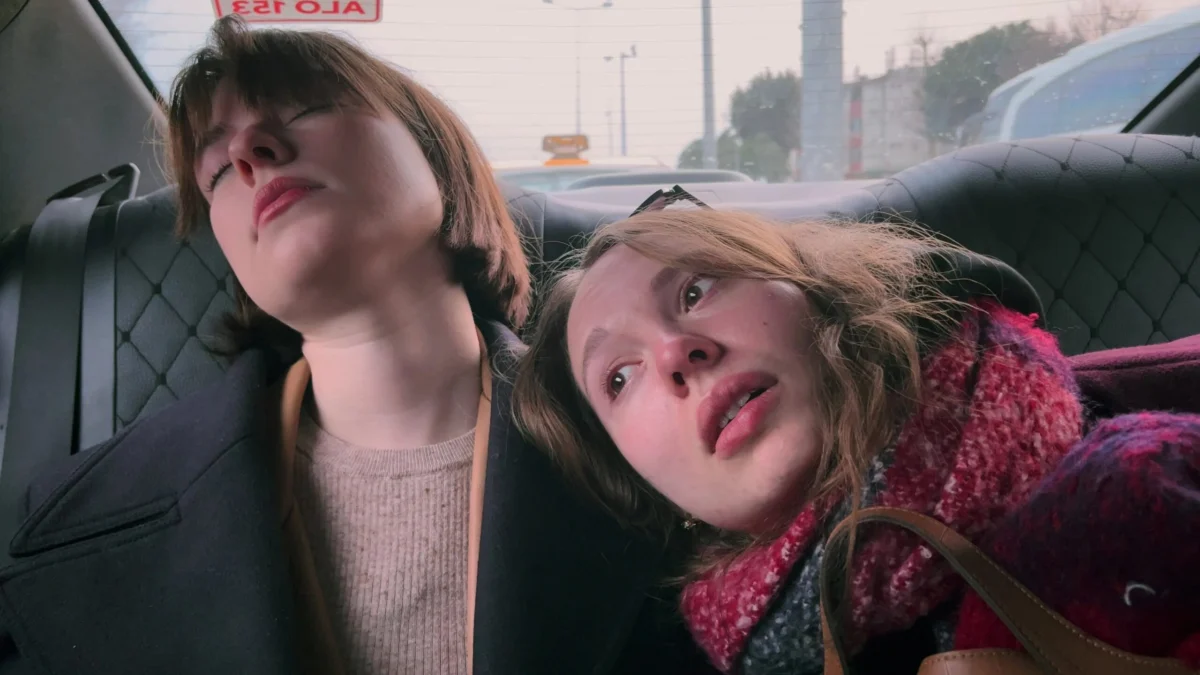
- Cinematography: Eschewing bulky cinema rigs, Loktev relied on intimate, on-the-fly, iPhone-shot footage. This low-profile approach allowed her to capture fragile, private moments: frantic backseat car monologues in the dead of night, vulnerable discussions on identity, and the quiet resilience of journalists setting up makeshift home studios in foreign countries.
- Key Figures Highlighted:
- Anna Nemzer: The perpetually vaping, fiercely pessimistic yet fundamentally hopeful former anchor who serves as both the film’s moral compass and Loktev’s primary entry point into the collective.
- Elena Kostyuchenko ("Lena"): A prominent Russian reporter working out of Berlin who survived a suspected Kremlin poisoning while trying to secure a Ukrainian visa, supported by her partner Yana Kuchina, a former Moscow publishing editor living with cerebral palsy.
- Peter Ruzavin and Nataliya Gumenyuk: A cross-border married couple representing the human cost of the geopolitical fracture between Russia and Ukraine.
Official Responses and Perspectives
The subjects of Loktev’s documentary represent a vanishing breed: journalists who chose exile over state-mandated propaganda, yet who continue to suffer from a profound sense of collective responsibility.

Throughout the film, the journalists grapple openly with the moral injury of leaving their homeland. While international observers often view them as heroic dissidents, the protagonists themselves express complex feelings of shame—questioning whether fleeing amounted to abandoning the internal fight against Putin’s regime, or whether their continued survival in exile is the only way to keep the truth alive.
The media organizations themselves have also been forced to publicly address internal friction and external pressures. The high-profile firing of TV Rain host Alexey Korostelev highlighted the tightrope walk independent Russian outlets must perform while operating in European Union nations. Caught between Western regulatory scrutiny, Ukrainian sensitivities regarding the war, and their mission to reach Russian audiences back home, the network’s leadership has repeatedly had to adapt its editorial standards and public messaging to survive.
Implications for Independent Journalism and Global Politics
"My Undesirable Friends: Part II — Exile" extends far beyond a chronicle of a single newsroom; it serves as a terrifying and profound diagnostic of the state of modern journalism, migration, and authoritarianism in the 21st century.

1. The Weaponization of Exile
The film illustrates how authoritarian regimes extend their reach far beyond physical borders. Through the threat of criminal indictments, continuous online harassment, and suspected targeted poisonings (as experienced by Elena Kostyuchenko), the Kremlin ensures that flight does not equate to safety. Exile becomes a psychological prison where journalists must constantly look over their shoulders.
2. The Decentralization of Truth
With traditional newsrooms dismantled, independent Russian journalism has been forced into a hyper-digitized, nomadic existence. Operating out of rented apartments, Airbnbs, and coffee shops across Europe, these reporters prove that the tools of modern journalism—smartphones, encrypted messaging, and YouTube—can keep a free press alive even when stripped of physical infrastructure. However, it also underscores the fragility of this model, where a single verbal misstep or visa denial can collapse an entire operation overnight.
3. A Mirror to a Fractured World
Ultimately, Loktev’s masterpiece transcends its specific Russian context. By focusing on the intimate details of love, marriage across enemy lines, and the exhaustion of perpetual transit, the film speaks to a broader human condition in an era of rising global authoritarianism. As audiences navigate a confusing and increasingly hostile geopolitical landscape, "Exile" offers a sobering reminder that preserving the truth requires immense personal sacrifice—and that the burden of conscience does not end when you cross a border.
