
The Echoes of Toca: Unraveling the Enigma of ‘The Pet Cemetery Murders’
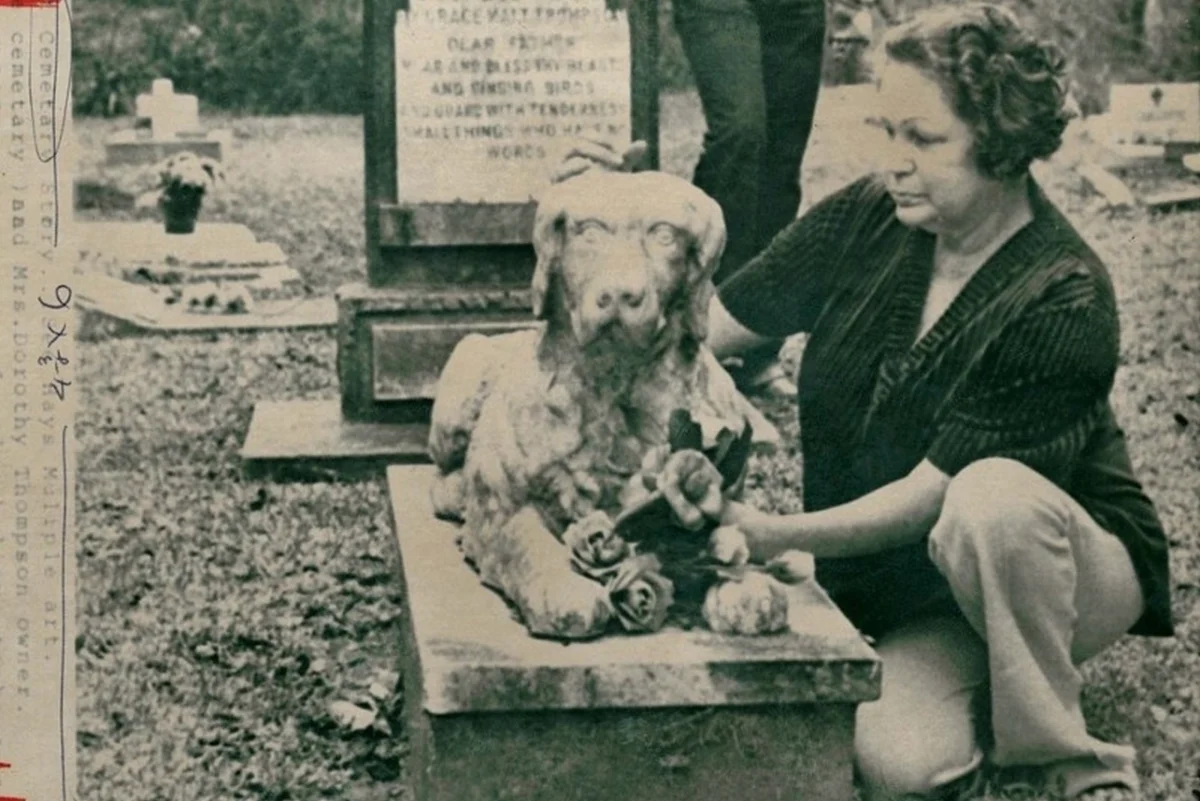
In the sweltering, humid landscape of St. Bernard Parish, Louisiana, the line between history, tragedy, and the supernatural has always been thin. Now, a gripping new three-part HBO docuseries, The Pet Cemetery Murders: A Ghost Story, directed by Philip Cairney, dares to walk that line. The series examines the 1985 disappearance and brutal murder of Dorothy Lou Thompson, a woman whose life was as turbulent as the history of the land she inhabited.
By weaving together cold-case police procedural elements with the chilling testimonies of locals who claim to have communed with the beyond, the series offers more than a simple whodunit. It is an exploration of a town’s collective trauma, the persistence of memory, and the dark secrets buried beneath the soil of Toca.
The Main Facts: A Life Cut Short
Dorothy Lou Thompson was a figure of local curiosity in Toca, Louisiana. A woman who had navigated a life defined by personal struggle—battling cycles of abuse and substance dependence—she eventually inherited a pet cemetery from her mother. The property, anchored by a decaying Victorian mansion, served as a lonely sanctuary for both the living and the dead.
In 1985, that sanctuary became a crime scene. Two weeks after vanishing from her home, Thompson’s body was recovered from the Mississippi River. She had been strangled, her remains weighted down with chains—a grim signature of a calculated, personal execution. For nearly two decades, the case remained a frustrating, stagnant void in the records of the St. Bernard Parish Sheriff’s Department. It wasn’t until 2004 that the case was reopened, thrusting investigators into a labyrinth of long-buried secrets and haunting claims that the victim had never truly left her estate.
Chronology of a Cold Case
To understand the complexity of the Thompson investigation, one must look at the timeline through the lens of a landscape defined by both human violence and environmental catastrophe.
- 1868: The St. Bernard Parish Massacre: The land where the pet cemetery was established was the site of a brutal massacre, in which mobs of white men systematically murdered dozens of formerly enslaved Black people. Historians and residents alike argue that this foundational violence cast a long, dark shadow over the site.
- 1985: The Disappearance: Dorothy Lou Thompson vanishes from her Victorian mansion. Her body is later discovered in the Mississippi River, bound in chains, marking the beginning of a cold case that would baffle local authorities for 19 years.
- 2004: The Reopening: Detective John Doran and the sheriff’s department breathe new life into the case. As they begin to re-interview witnesses and re-examine the evidence, a narrative begins to emerge that links the physical murder to the metaphysical claims of those who lived nearby.
- 2005–2006: The Hurricane Katrina Factor: The devastation wrought by Hurricane Katrina left St. Bernard Parish under 20 feet of flood water. The storm did more than destroy infrastructure; it effectively washed away crucial physical evidence, complicating the ongoing investigation and forcing investigators to rely heavily on oral histories and survivor testimony.
Supporting Data and Evidence
The strength of The Pet Cemetery Murders lies in its refusal to dismiss the "ghost story" aspect of the title as mere superstition. Director Philip Cairney presents the testimonies of neighbors and witnesses who claim to have seen a spectral manifestation of Thompson haunting the grounds of her former home.
The series utilizes a combination of archival footage, interviews with former law enforcement officials like Detective John Doran, and investigative journalism to reconstruct the environment of Toca. The documentary highlights the eerie intersection between the physical evidence—the chains used to bind Thompson, the forensic reports of her final hours—and the psychological impact the murder had on the community.
Furthermore, the series underscores the difficulty of the investigation by pointing to the "Katrina Gap." Because the hurricane obliterated the physical archives of the 1985 investigation, the legal pursuit of justice was forced to shift from traditional forensic science to a reliance on human memory and the emergence of new, late-coming witnesses. One such witness, coming forward years after the fact, provided the critical breakthrough that moved the investigation from a state of paralysis to a potential resolution.
Official Responses and Investigative Perspectives
Detective John Doran remains the focal point of the law enforcement narrative within the docuseries. His perspective provides the necessary grounding for the viewer, balancing the clinical requirements of a murder investigation with the baffling, unexplainable elements that began to permeate the case.
Doran’s approach, as depicted in the series, is one of weary pragmatism. He acknowledges the absurdity of integrating paranormal claims into a homicide investigation, yet he cannot ignore the consistency with which witnesses describe the "presence" of Dorothy Lou Thompson. By treating the claims of a "haunting" with the same level of scrutiny as a witness statement, the sheriff’s department inadvertently highlighted the depth of the trauma felt by the community.
The docuseries also features interviews with forensic experts and historians who provide context on the "cursed" nature of the land. By contrasting the 1868 massacre with the 1985 murder, the series suggests that the land in Toca may act as a catalyst for violence, or at the very least, a site where the past refuses to stay buried.
The Implications: A Mirror to Society
The Pet Cemetery Murders is not merely a chronicle of a single crime; it is an interrogation of how we treat the marginalized. Dorothy Lou Thompson was a woman struggling with addiction and abuse, and the initial lack of progress in her case speaks to how society often overlooks the suffering of those deemed "troubled."
The implications of the docuseries are three-fold:
- The Persistence of History: The documentary argues that the violence of the 19th century in St. Bernard Parish created a cultural resonance that informed the violence of the 20th century. It suggests that towns, like people, can carry generational trauma that manifests in the physical landscape.
- The Fragility of Justice: The series acts as a sobering reminder of how easily justice can be derailed by natural disasters and bureaucratic failure. The destruction of evidence by Hurricane Katrina serves as a metaphor for the way society loses its history—and its ability to seek truth—when it fails to preserve the records of its most vulnerable citizens.
- The Truth of the "Ghost": Perhaps most intriguingly, the series challenges the viewer to define "truth." If a community believes a ghost is seeking justice, does that belief hold a different kind of reality than a court-admissible fact? By the end of the series, the distinction becomes blurred, suggesting that the "haunting" is perhaps the most honest way for the community to process a crime that the legal system failed to solve for decades.
Critical Verdict: Stream or Skip?
For true-crime enthusiasts, The Pet Cemetery Murders: A Ghost Story is an essential watch. It occupies a unique space in the genre, sitting comfortably alongside investigative works like Welcome to the Family: The Murder of Dan Markel, but with a distinct, atmospheric edge that leans into the Gothic tradition of the American South.
Philip Cairney has succeeded in crafting a narrative that is as much about the environment as it is about the murderer. The pacing is deliberate, allowing the mystery to breathe, and the interviews are conducted with a level of empathy that is often missing from contemporary true-crime storytelling.
Ultimately, the series is a haunting reminder that in the shadow of the Mississippi, some secrets don’t just stay buried—they linger. Whether you are a believer in the paranormal or a staunch devotee of hard-nosed investigative journalism, the twists and turns of this 41-year-old case will keep you tethered to the screen.
Our Call: STREAM IT. It is a masterclass in tone, delivering a spooky, visceral experience that digs deep into the dark, tangled roots of a forgotten Louisiana tragedy. Through the lens of the pet cemetery, we are forced to confront not just the ghost of Dorothy Lou Thompson, but the ghosts of the history that allowed her murder to go unsolved for so long.
