
Unlocking the Subconscious: Inside the Craft, Nostalgia, and Vision of Netflix’s Animated Adventure ‘In Your Dreams’
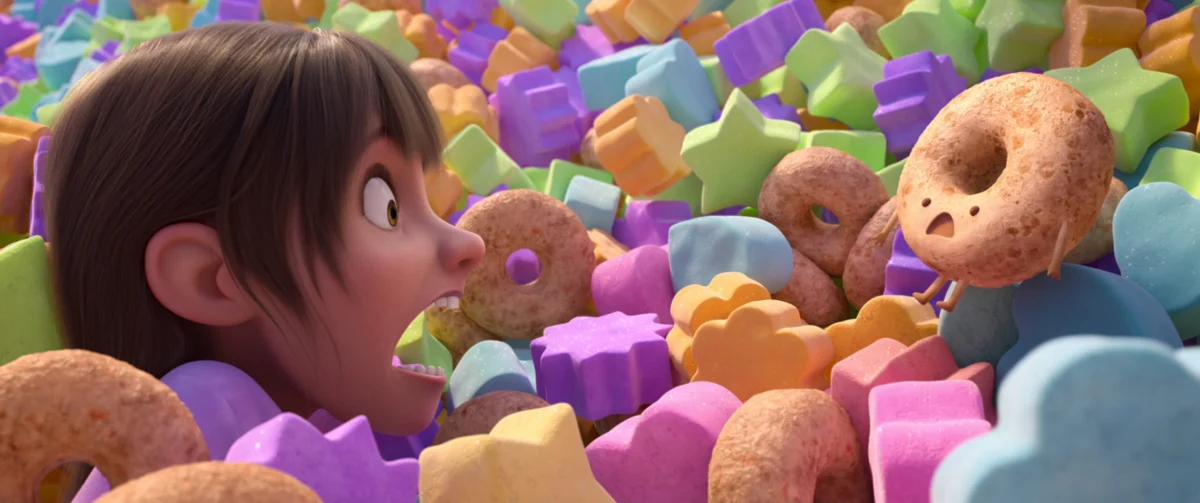
Just as there are bizarre, hyper-specific scenarios that only ever transpire in the realm of dreams—such as miraculously appearing on the final day of a semester-long exam without having attended a single class, or desperately evading an encroaching horde of suburban zombies—certain creative concepts are strictly native to the medium of animation.
Netflix’s vibrant new animated feature film, In Your Dreams, co-directed by Erik Benson and Alex Woo, leans wholeheartedly into this limitless potential. A delightfully surreal adventure that blends domestic family drama with high-concept fantasy, the movie treats the subconscious not merely as a nighttime backdrop, but as a vast, malleable canvas where the impossible becomes everyday reality.
Main Facts: A Journey Into the Subconscious
At its core, In Your Dreams follows young siblings Stevie (voiced by Jolie Hoang-Rappaport) and Elliot (voiced by Elias Janssen) as they stumble upon a mystical, ancient book detailing the legendary Sandman, voiced with roguish charm by Omid Djalili. Master of the dreamscape, the Sandman holds the world-changing powers the siblings believe can fix their most pressing waking-world dilemma: saving their parents’ fraying marriage, portrayed by Simu Liu and Cristin Milioti.
For Elliot, entering this realm requires little more than the comforting siren song of a turtle-shaped white noise machine. Stevie, however, must actively work to drift off, navigating a carefully orchestrated transition that showcases the film’s meticulous technical craftsmanship.

The picture has quickly generated critical buzz not only for its imaginative premise, but for its rich visual language, blending classic cinematic references with modern, frame-accurate animation techniques. Currently streaming on Netflix, In Your Dreams stands out as a unique entry in the platform’s family animation catalog, driven by a deeply personal creative vision from its directors.
Chronology: Building a World Frame by Frame
The production of In Your Dreams was a marathon of iteration, tone-tweaking, and visual world-building that spanned years.
The Conceptualization Phase
Directors Erik Benson and Alex Woo set out early to establish what Woo describes as the "grammar and language" of the film. Recognizing that audiences cannot take the rules of a fantasy universe for granted, the team spent months mapping out the precise mechanics of how characters fall asleep, how they transition between the waking world and the dreamscape, and what limitations governed the dream rules.
Animation and Visual Execution
Once the foundational rules were set, the production team focused heavily on the visual translation of sleep. One of the standout sequences involves Stevie’s transition into slumber. Utilizing a physics-defying, floating virtual camera, the animation team circles around Stevie as she drifts upward from her bed, past the stark realism of the "real world," and plunges downward into the hyper-saturated, fluid physics of the dream realm.

Late-Stage Creative Pivots
Even as the production neared its completion, the filmmakers continued to refine the narrative structure. Key pillars of the final cut—such as Stevie’s witty, fourth-wall-breaking voiceover guide that opens the movie—were surprisingly late additions. This tactical choice instantly signaled to viewers that In Your Dreams was operating on multiple narrative layers, subverting expectations for a standard children’s animated feature.
Supporting Data and Creative Influences: A Spielbergian and Miyazaki Blueprint
A major part of the film’s distinct texture comes from its deliberate homages to the cinematic touchstones of co-director Alex Woo’s childhood. Growing up between the West and Hong Kong, Woo soaked in a diverse diet of American blockbusters and Asian animation.
"I was definitely a Spielberg kid," Woo revealed in an interview. "I mean, Elliot is named after Elliot from E.T. I was a big fan of Hook, I was a big fan of The Goonies and Labyrinth. I was also a big Miyazaki kid, because I grew up half my life in Hong Kong, so Asian animation was a big part of my childhood."
These influences manifest clearly throughout In Your Dreams:

- Camera Work: The film features its own animated spin on Steven Spielberg’s signature "zolly" (zoom-in, dolly-out) shot.
- Action Sequences: A character power-up sequence channels the high-octane energy of Dragon Ball Z, while transformational sequences pay direct homage to the magical girl aesthetics of Sailor Moon.
- Creature Design: The initially adorable, fuzzball-like denizens of Stevie’s dream "Breakfast Town" bear a striking resemblance to the susuwatari (soot sprites) from Hayao Miyazaki’s My Neighbor Totoro. However, as the dreams sour into nightmares, these creatures transform into something more akin to the high-stakes peril found in The Goonies.
"Art’s all remix, right?" Woo remarked, reflecting on his eclectic inspirations. "I thought a movie about the dream world was the perfect venue to pull all of these references and movies that I loved and put them in there because you can do so many types of worlds in a dream movie. You have so much latitude, aesthetically and creatively."
Official Responses: Walking the Fine Line Between Thrill and Trauma
One of the primary challenges facing the creative team was calibrating the intensity of the nightmares Stevie and Elliot encounter on their quest. In crafting a family-friendly adventure that still packed an emotional and visual punch, the filmmakers deliberately tested the boundaries of how frightening animation could be.
"I didn’t want to soft pedal anything because, when I was a kid, I really liked kind of being scared at the movies," Woo explained. "There’s something thrilling about it, but of course, there’s a line beyond which it becomes traumatizing. But you just don’t know where that line is until you test it out."
To find that delicate balance, the team produced early iterations of the film that leaned heavily into dark, high-intensity nightmare sequences. Through continuous audience testing and pixel-precise frame adjustments—a level of control unique to animation over live-action filmmaking—they dialed the terror back just enough to maintain a thrilling, adventurous tone without alienating younger viewers.

Implications: The Unique Power of Animation
The release and reception of In Your Dreams highlight a broader shift in how streaming platforms like Netflix are positioning original animated features. No longer relegated strictly to background viewing for toddlers, modern animated films are increasingly utilizing sophisticated narrative framing, meta-commentary, and complex emotional undercurrents to appeal to multigenerational audiences.
By tackling heavy real-world themes—such as parental separation and familial healing—through the wildly imaginative, unbounded metaphor of dreams, In Your Dreams demonstrates the unique capability of animation to tackle sensitive subjects. Because animation can be manipulated down to the individual pixel, directors can externalize internal psychological states in ways that live-action cinema simply cannot replicate.
As In Your Dreams streams to global audiences on Netflix, it serves as both a nostalgic love letter to 1980s and 90s cinema and a bold statement on the future of visual storytelling—proving that when it comes to the boundaries of the imagination, the only true limit is the edge of the frame.
