
Dissecting the Impossible: Inside the Visual Effects and Filmmaking Mastery of David Robert Mitchell’s The End of Oak Street
Main Facts
When visionary writer and director David Robert Mitchell (It Follows, Under the Silver Lake) returns to the cinematic landscape, audiences and critics alike anticipate something entirely outside the conventional Hollywood box. His latest masterwork, The End of Oak Street, achieves precisely that, blending high-concept science fiction, psychological suspense, and suburban realism. Headlined by A-list powerhouses Anne Hathaway and Ewan McGregor, the film follows the Platt family as their seemingly idyllic, predictable suburban life is violently upended by a catastrophic, inexplicable anomaly.
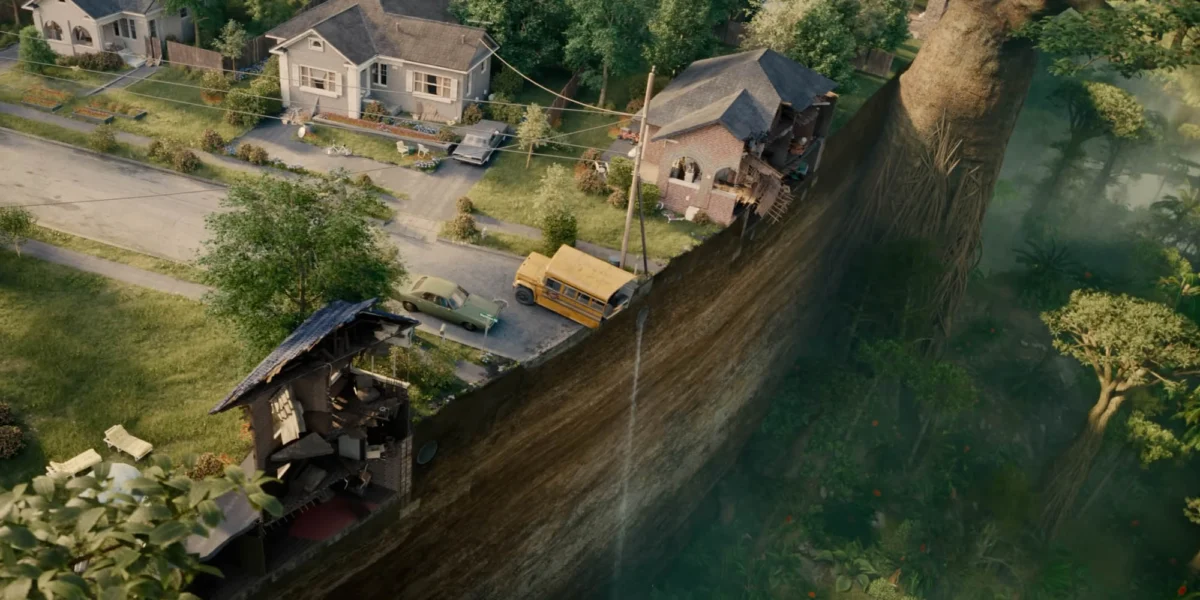
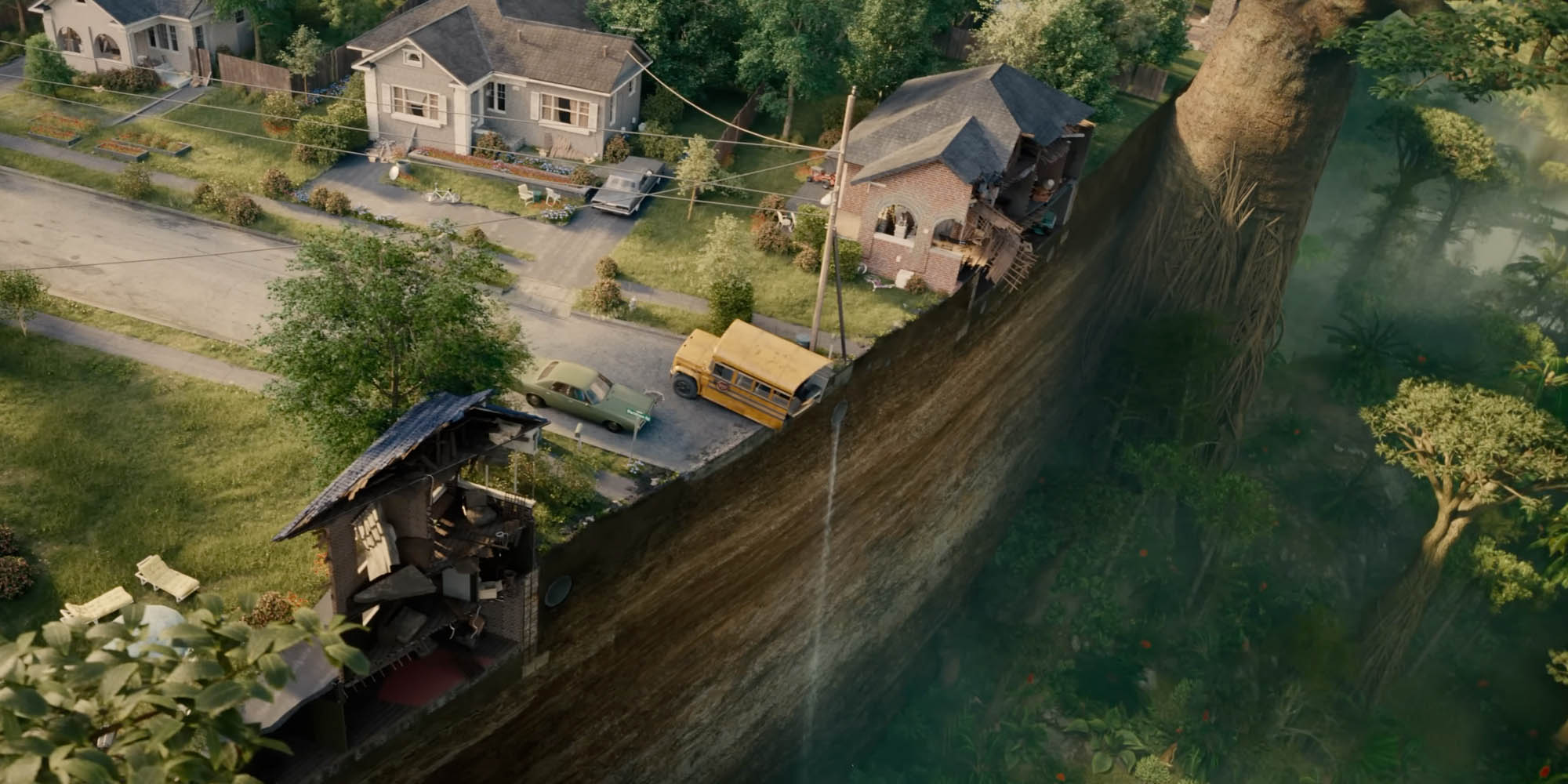
In The End of Oak Street, a mysterious, reality-bending event physically transports an entire suburban neighborhood into an unknown, temporally displaced dimension. Cut off from the rest of the world and thrust backward in time, the Platt family must navigate not only the surreal physics of their new environment but also the psychological fractures that emerge when their foundational reality is dissolved.
Beyond its gripping narrative, the film has become a major talking point in the global filmmaking community due to its breathtaking visual effects (VFX), complex production design, and ambitious world-building. To unpack how this cinematic puzzle was constructed, the latest installment of The VFX Show (Episode 309) gathered a panel of industry experts—including Matt Wallin, Jason Diamond, and Mike Seymour—to put the film’s technical and creative choices under a rigorous microscope. This comprehensive deep-dive explores how Mitchell and his crew pulled off one of the most mechanically and visually demanding productions of recent years.
Chronology: From Concept to Production and the Epoch of Oak Street
The genesis of The End of Oak Street dates back several years, evolving from Mitchell’s fascination with spatial dislocation and the fragile architecture of modern community life. Pre-production on the feature required an unprecedented level of synchronization between the director, director of photography, production design team, and the lead visual effects supervisors.
- Conception and Writing: David Robert Mitchell spent years refining a script that balanced intimate domestic drama with cosmic-scale dislocation. The central challenge lay in grounding a high-concept sci-fi premise within the authentic, lived-in textures of a recognizable suburban street.
- Casting and Rehearsals: Anne Hathaway and Ewan McGregor boarded the project early in the development cycle. Their involvement allowed the production to secure financing and establish a tone that prioritized grounded, emotional performances over cold, CGI-driven spectacle.
- Principal Photography: Filming utilized a hybrid approach, combining extensive practical set construction with cutting-edge on-set pre-visualization tools. The physical neighborhood set had to be meticulously engineered to accommodate both the "before" and "after" phases of the neighborhood’s temporal and spatial displacement.
- Post-Production and VFX Integration: The post-production timeline extended over many months, heavily dedicated to seamless invisible effects, environment extensions, and manipulating lighting to reflect a strange, alien atmosphere.
- Release and Critical Dissection: Upon its theatrical rollout, the film sparked intense discussions across film forums, video essays, and specialized technical podcasts like The VFX Show, cementing its status as both a narrative achievement and a technical milestone.
Supporting Data and Technical Breakdown: The VFX Show Episode 309
In Episode 309 of The VFX Show, the analytical panel—featuring Matt Wallin, Jason Diamond, and Mike Seymour, with expert editing and production by Jim Shen—dissected the anatomy of the film’s production. The discussion provided vital data and insights into what made the visual storytelling succeed, while also debating the elements that left critics divided.
Practical Sets vs. Digital Environments
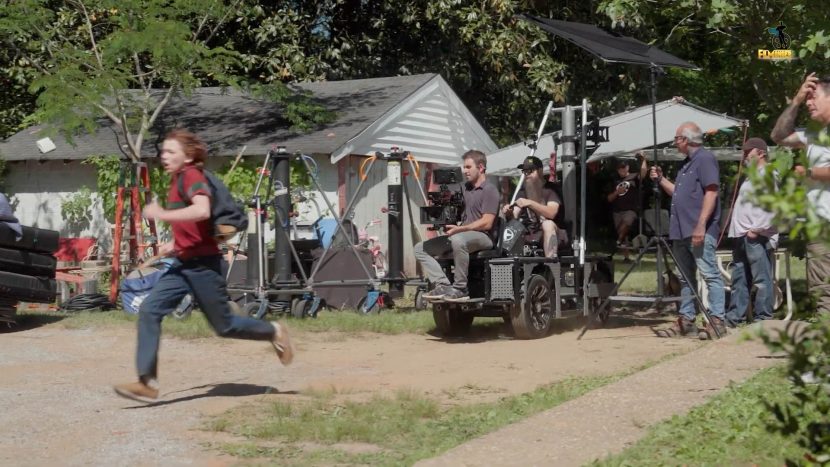
One of the core debates on the panel centered on how Mitchell balanced physical construction with digital augmentation. To make the displacement of Oak Street believable, the production team built a substantial physical street set. This allowed Hathaway, McGregor, and the rest of the cast to interact with genuine physical space, grounding their performances in reality.
However, the "unknown" environment into which the street is plunged required massive digital intervention. The panel highlighted how the VFX team managed the tricky transition from familiar suburbia to an uncanny, shifting horizon. Rather than relying entirely on green screens—which often sap actors of spatial awareness—the production utilized LED volume stages and selective set extensions, maintaining tactile realism in the foreground while opening up vast, terrifying expanses in the background.
The Science of Temporal Dislocation
Visually communicating "back in time" without leaning on cliché retro filters is a monumental challenge for any cinematography team. The panel praised the film’s approach to color grading and lighting dynamics. Instead of heavy-handed amber tints or grainy overlays, the filmmakers altered the quality of atmospheric light—simulating an era where the sun, sky, and atmospheric particles behave differently. This subtler approach forced audiences to feel the wrongness of the environment rather than having it spelled out through exposition.
Sound Design and Spatial Audio
While the visual effects take center stage, the podcast panel heavily emphasized the role of sound design in selling the dislocation of Oak Street. The absence of familiar ambient noises—such as distant highway hums, modern aircraft, or local wildlife—created an oppressive, eerie silence. The transition into the unknown was punctuated by low-frequency sub-bass rumbles and acoustic anomalies that enhanced the visual trickery executed by the VFX houses.
Official Responses and Industry Perspectives
The reception to The End of Oak Street has sparked vital conversations throughout the global filmmaking community. Industry veterans have weighed in on how the film redefines the boundary between indie-style character studies and large-scale visual effects extravaganzas.
Speaking on the collaborative process, the creative team behind The VFX Show noted that Mitchell’s insistence on narrative clarity prevented the special effects from overwhelming the human core of the story.
"When you deal with high-concept sci-fi where a whole neighborhood is ripped out of space and time, the risk is always that the audience gets lost in the lore or distracted by flashy CGI," noted panelist Mike Seymour during the episode. "What Mitchell and his crew managed to do was keep the camera stubbornly locked on the Platt family’s panic and resilience. The VFX serve the psychology of the characters, not the other way around."
Matt Wallin echoed these sentiments, pointing out the technical precision required to make impossible spatial geometries look mundane: "It’s one thing to render a spaceship or an exploding planet; it’s an entirely different beast to take a completely ordinary cul-de-sac and make every single blade of grass, fencepost, and roof tile feel deeply unsettling. The artists involved deserve massive praise for that level of restraint and execution."
Furthermore, production notes emphasize that Anne Hathaway and Ewan McGregor spent significant time consulting with the visual effects supervisors prior to shooting. This ensured that the actors understood precisely where digital extensions would meet physical props, allowing them to deliver emotionally resonant performances while reacting to empty space or tracking markers.
Implications for Modern Filmmaking and Visual Effects
The commercial and critical trajectory of The End of Oak Street carries profound implications for the future of mid-budget cinema, auteur-driven science fiction, and the VFX industry at large.
1. The Revival of "Mid-Budget" High-Concept Cinema
For years, the film industry has operated under a binary model: ultra-low-budget indie dramas on one side, and $200+ million superhero blockbusters on the other. The End of Oak Street proves that there is a thriving, highly lucrative middle ground. By combining elite marquee talent (Hathaway and McGregor) with a conceptually rich, visually inventive premise, the film demonstrates that original sci-fi can capture the public imagination without requiring franchise intellectual property (IP).
2. Evolving Workflows Between Directors and VFX Supervisors
The traditional pipeline often relegated visual effects supervisors to post-production fixers. Projects like The End of Oak Street highlight the necessity of early integration. By bringing VFX teams into pre-production and on-set rehearsals, modern filmmakers can bridge the gap between practical acting environments and digital world-building. This holistic approach reduces costly reshoots and results in a much more cohesive final product.
3. Audience Appetite for Ambiguity
In an era dominated by explicit exposition and cinematic universes that explain every narrative loose end, The End of Oak Street trusts its audience to sit with unanswered questions. The central mystery of where and when the neighborhood ends up is never neatly resolved via a chalkboard scientific breakdown. Instead, the film prioritizes emotional survival over logistical answers. The vibrant online debates, podcast deep-dives, and critical analyses surrounding the film prove that modern audiences actively crave ambiguity and intellectual engagement.
As cinematic technology continues to evolve, The End of Oak Street will likely be studied as a textbook example of how to merge high-concept genre storytelling with deeply human performances. Whether viewers walk away from the film mesmerized by its digital wizardry or haunted by its suburban claustrophobia, one thing is certain: David Robert Mitchell has once again expanded the boundaries of what modern cinema can achieve.
(For those looking to continue the debate, Episode 309 of The VFX Show is currently available across all major podcast platforms, including Apple Podcasts, Spotify, and via RSS, alongside dedicated video breakdowns on the official fxguide YouTube channel.)
