
The Sound of Dissonance: How Laura Karpman’s Jazz Score Redefines Cord Jefferson’s ‘American Fiction’
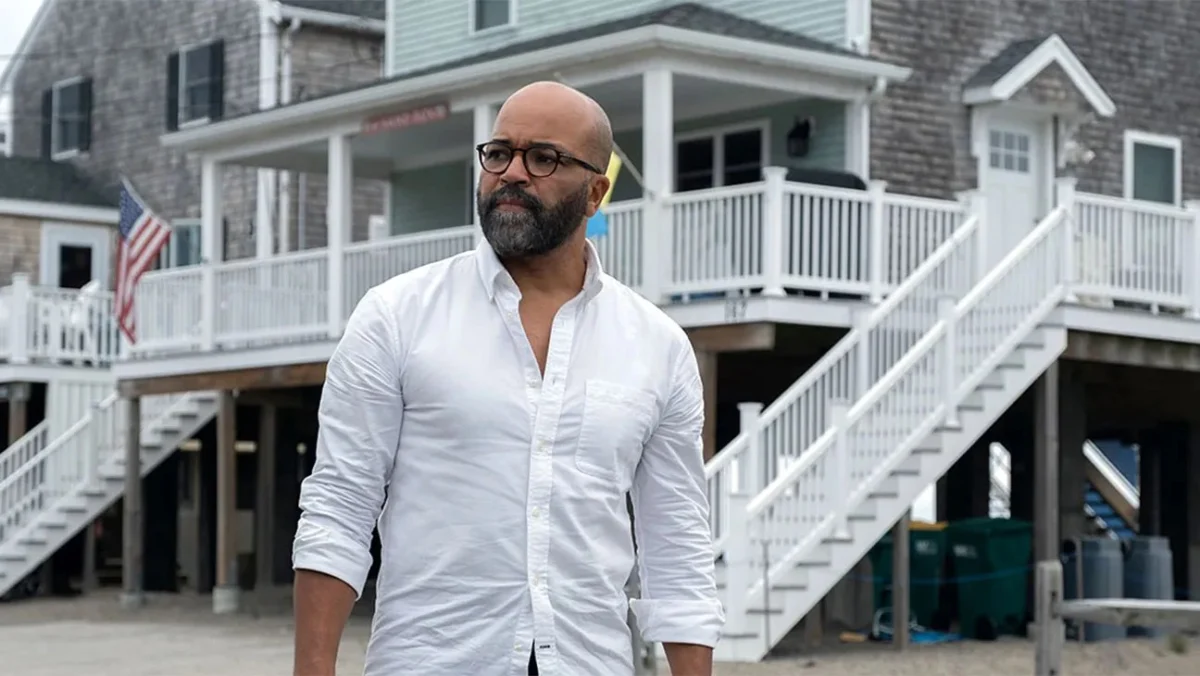
In the landscape of modern cinema, few films have managed to juggle the volatile trinity of biting satire, intimate family drama, and heartfelt romance with the grace of Cord Jefferson’s American Fiction. While the film is anchored by a razor-sharp script and a career-defining performance from Jeffrey Wright, the emotional architecture of the narrative is held together by an invisible, melodic force: the exquisitely conceived jazz score by composer Laura Karpman.
By treating the musical composition as a living, breathing character, Karpman has created a soundscape that does more than merely accompany the visuals; it acts as a psychological map for the audience, providing a roadmap through the film’s tonal shifts and the unspoken internal lives of its protagonists.
The Genesis of a Sound: Jazz as Narrative Voice
At its core, American Fiction is a film about the struggle to be understood in a world that prefers simplified narratives. The protagonist, Thelonious "Monk" Ellison (Jeffrey Wright), is a novelist and professor whose frustration with the publishing industry’s obsession with Black trauma leads him to write a cynical, satirical book under a pseudonym. However, as the film progresses, the thematic complexities often leave characters unable to articulate their deepest vulnerabilities.
This is where Karpman’s score becomes essential. Rather than using music to dictate how the audience should feel, Karpman designed her jazz-infused instrumentation to "riff" on the dialogue. "When Jeffrey says a line, the sax will play something in response that is really working and dancing with the dialogue," Karpman explained in an interview with IndieWire. She describes the characters’ voices as "swapping fours"—a jazz term for alternating solo segments—with the saxophones and flutes. This creates a seamless integration where the spoken word and the melody become inextricably linked, imbuing the film with an improvisational, spontaneous quality that belies the rigorous, meticulous planning behind every note.

Thelonious Monk and the Duality of Performance
The film’s title character is named in honor of the legendary jazz pianist Thelonious Monk, a reference that dictated much of the score’s creative direction. Karpman and Jefferson initially explored the possibility of using actual tracks from the jazz icon, but they quickly realized the material demanded a more tailored approach.
"The way Monk plays, his left hand and right hand almost feel like two different musicians," Karpman noted. "The left hand is pointed and sharp and blocky, and the right hand is fluid and moves quickly." This observation provided a structural blueprint for the film’s score. Because Jeffrey Wright’s Monk is essentially a man divided—torn between his academic, intellectual identity and his commercially successful, grit-obsessed alter ego, Stagg R. Leigh—Karpman utilized this duality to explore his psyche.
The "Monk" theme, therefore, oscillates between jagged, percussive motifs and fluid, romantic melodies. It is a composition that turns on a dime, allowing the score to guide the viewer through the film’s rapid shifts in tone. As Karpman puts it, the music "has to give the audience permission to laugh" even when the subject matter veers into the tragic or the deeply uncomfortable.
Structural Dissonance: The Family Theme
While the score serves to highlight the contradictions within Monk’s character, it also acts as a bridge for the film’s domestic conflicts. Karpman developed a specific "family theme" to underscore the strained relationships between Monk, his siblings, and his mother.

Mirroring the dysfunction and the missed connections that define their family dynamic, the theme is performed by two instruments that play the same musical material, but never in perfect synchronization. "They always feel a little out of sync," Karpman observed. The power of this choice becomes evident in the film’s more vulnerable moments, particularly a pivotal scene between Monk and his brother. When Karpman finally allows these disparate instruments to align in harmony, the emotional payoff is profound. It is a masterful use of musical theory to reflect the reconciliation of fractured familial bonds.
Chronology of a Creative Process: From "My Pafology" to the Climax
The evolution of the score is perhaps best exemplified in the sequence where Monk creates his literary hoax, "My Pafology." As he sits at his computer, the internal creative process—and the moral decay that accompanies it—is illustrated through a layering of pianos.
- The Mystery: The scene begins with a minimalist, mysterious motif, reflecting the uncertainty of the creative act.
- Process Music: A second piano is introduced with a moving, repetitive line—"flow without destination"—capturing the way Monk loses himself in the act of writing something he despises.
- Orchestral Expansion: As the scene escalates, Karpman adds more piano tracks, including a recording from a restored Steinway B, eventually swelling into a massive string orchestra arrangement.
The resulting "piano concerto" is described by Karpman as a "sophisticated blues," designed to bridge the gap between "high and low art." This dexterity reaches its apex in the film’s climax, where Jefferson’s script offers a narrative moment that plays out in three distinct versions. Karpman responded with three distinct musical treatments: a grounded, realistic revisit to the "My Pafology" theme; a lush, sweeping romantic comedy arrangement; and a high-stakes, 90s-style cop drama beat. This exercise in genre-bending proved that the score’s range was not just a stylistic choice, but a necessary utility for the film’s narrative structure.
Implications for Future Filmmaking
The collaboration between Cord Jefferson and Laura Karpman serves as a compelling case study in the power of the film score to act as a co-narrator. In an industry where scores are often relegated to background atmosphere or heavy-handed emotional cues, Karpman’s work on American Fiction stands out for its structural intelligence and psychological depth.

By engaging in a "conversation" with the actors, Karpman has elevated the material, ensuring that the film’s satire remains sharp without losing the humanity at its center. This approach challenges future composers to move beyond the traditional "leitmotif" approach and consider how the musical structure can mirror the characters’ internal contradictions.
Furthermore, the success of this score reinforces the importance of thematic unity in independent cinema. By leaning into the history of jazz—not as a museum piece, but as a living, breathing language—Karpman has provided a template for how to honor cultural legacies while creating something entirely new and specific to the film’s needs.
Conclusion: The Harmony of Dissonance
Ultimately, American Fiction succeeds because it refuses to settle for one definition of its characters. It is a film that demands to be read on multiple levels, and it requires a score that can handle such complexity. Laura Karpman’s composition is more than just a soundtrack; it is the heartbeat of the film.
Through the "swapping fours" of the dialogue and the score, the jagged dissonance of the "Monk" theme, and the deliberate out-of-sync nature of the family themes, Karpman has demonstrated that the most effective way to portray the human condition is not to resolve every conflict, but to highlight the beauty in the tension. In the end, the music of American Fiction serves as a reminder that like a great jazz improvisation, life is messy, unpredictable, and entirely, gloriously, human.
