Decoding the Maze: A Comprehensive Analysis of Netflix’s Canceled Sci-Fi Masterpiece 1899
Main Facts: The Rise and Abrupt Fall of a Cerebral Puzzle
When creators Jantje Friese and Baran bo Odar—the visionary minds behind Netflix’s critically acclaimed German dark-mystery series Dark—returned with 1899, expectations were astronomical. Debuting in November 2022, the eight-episode period science-fiction thriller immediately captivated audiences with its atmospheric dread, diverse ensemble cast, and layered narrative architecture.
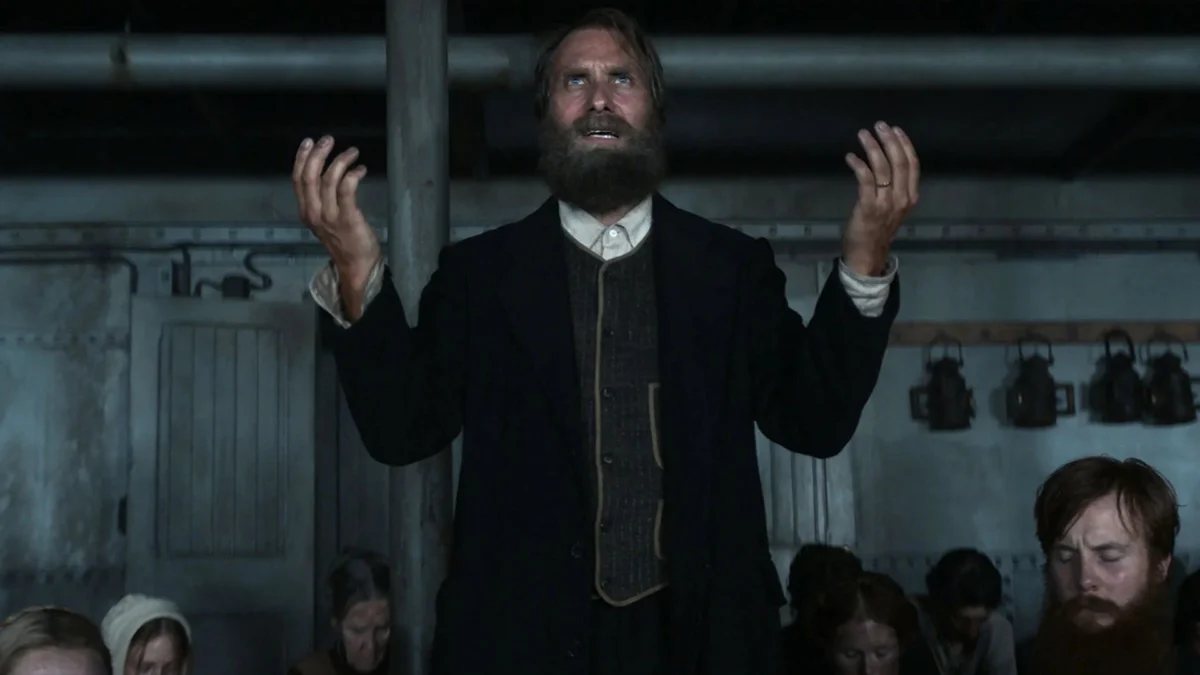
Set against the backdrop of late-19th-century maritime travel, the series initially masquerades as a historical period piece about European immigrants journeying from Southampton, England, toward a new life in New York City aboard the steamship Kerberos. However, the narrative quickly unravels into a labyrinthine sci-fi nightmare when the crew intercepts a distress call from its long-lost sister ship, the Prometheus.
Despite garnering substantial initial interest—logging over 257 million viewing hours in its first month—and boasting complex thematic explorations of grief, religious fanaticism, class divides, and human perception, Netflix made the controversial decision to cancel 1899 after just a single season. The abrupt termination left a monumental cultural footprint, a passionate fan petition movement, and a series finale loaded with unresolved cliffhangers that fundamentally reframed the entire viewing experience.
Chronology: Unraveling the Mystery of the Kerberos and Prometheus
The Voyage and the First Anomalies
From the outset, 1899 establishes that the Kerberos is no ordinary ocean liner. It features inexplicable technological anomalies that clash violently with its 1899 setting. The atmosphere deteriorates rapidly upon the discovery of the Prometheus, a vessel reported missing months prior. Boarding the ghost ship yields only a single surviving young boy named Elliot (Fflyn Edwards), who carries a mysterious black pyramid.
As Elliot is brought aboard the Kerberos, chaos breaks out. Passengers begin dropping dead under mysterious circumstances, and a shadowy passenger named Daniel (Aneurin Barnard) emerges, attempting to force the protagonist, Maura Franklin (Emily Beecham), to question the validity of her own sensory perceptions.
The Simulation Revealed
As the narrative progresses toward its climax, the true nature of the setting is unmasked: neither the ocean nor the ships are real. Instead, the Kerberos and the Prometheus exist as multi-layered digital simulations. Every passenger, physical appearance, and deeply guarded memory is a synthetic construct designed to trap human consciousness within an endless, recurring loop.
Mythological motifs heavily anchor this structural layout. The name Kerberos (Cerberus) references the three-headed dog guarding the underworld, symbolizing the characters’ imprisonment within a false reality. Conversely, the Prometheus draws on the Greek myth of eternal torment, mirroring the endless cycles of trauma the passengers are forced to relive.
The Architect and the Red Herrings
Early episodes deliberately mislead the audience into believing that Maura’s wealthy and authoritarian father, Henry Singleton (Anton Lesser), is the malicious mastermind of the simulation, utilizing the vessel to conduct clandestine neurological experiments.
However, the season finale turns this premise on its head. It is revealed that Maura herself originally co-created the simulation alongside her husband, Daniel. When their son, Elliot, fell terminally ill and faced imminent death, Maura transferred his consciousness into a digital sanctuary so they could exist together outside the cruel parameters of mortality.
Over time, Henry hijacked and expanded upon his daughter’s technology, nesting simulations within simulations to study the human psyche—driven largely by his own grief over losing his wife to Alzheimer’s disease. Henry weaponized the system, but he ultimately remained trapped because only Maura possessed the cryptographic key required to unlock total systemic liberation.
Supporting Data: Symbols, Viruses, and Philosophical Frameworks
Key Artifacts as Systemic Code
The cryptic objects recurring throughout the series—specifically the pyramid, the beetle, and the key—are not magical talismans, but literal system codes:
The Pyramid and the Key: Function as dual-factor authentication codes required to reset or exit the simulation loops. Maura’s son Elliot bears the pyramid and key symbols tattooed behind his ear, while the physical objects are later remapped by Daniel into everyday items like a ring and a toy to bypass Henry’s controls.
The Beetle: Traces back to a real-world memory where Maura teaches Elliot to "set things free if you love them." Consequently, the beetle manifests inside the simulation as a localized code capable of unlocking physically sealed doors.
The Black Virus: Introduced via Daniel hacking the system, the spreading black crystalline substance serves as a digital quarantine virus. Daniel deploys it to disrupt Henry’s efforts to reset the simulation loop.
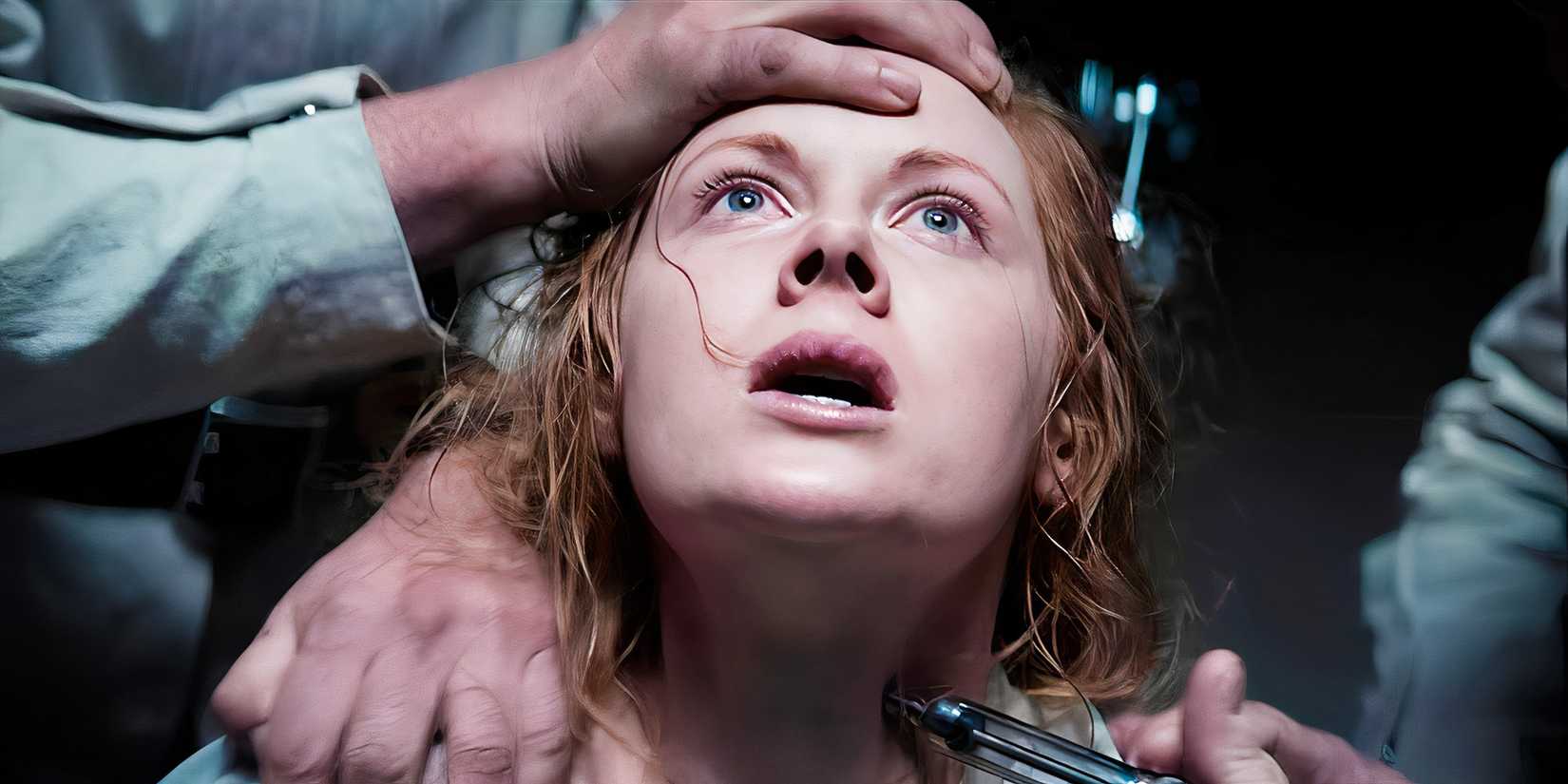
The Syringes: Henry utilizes black and white chemical injections—functioning similarly to the red and blue pills in The Matrix—to manipulate memories, reset psychological states, and alter sensory perceptions.
Plato’s Cave Allegory
1899 relies heavily on foundational philosophical texts, most notably Plato’s Allegory of the Cave. In the allegory, prisoners chained inside a cave perceive only shadows cast on a wall by a fire, mistaking those projections for reality. Henry notes that Maura was obsessed with this philosophical construct in her youth, inspiring her to build alternative digital realities. By the end of the first season, the allegory scales outward: Henry thinks he controls the shadow-play, only to realize he is merely a character cast against someone else’s wall.
Official Responses and Behind-the-Scenes Realities: Why 1899 Was Canceled
Despite holding a top spot on Netflix’s global charts following its late-2022 release, 1899 fell victim to modern streaming metrics. Showrunners Jantje Friese and Baran bo Odar had meticulously mapped out a comprehensive three-season narrative arc. However, the series suffered from a critical streaming vulnerability: a low completion rate.
While initial viewership numbers were high—logging over 257 million hours watched in its first month—data analytics revealed that a disproportionate number of viewers started the series but failed to watch it through to the final episode. For Netflix, a high drop-off rate signals weak audience retention and poor demand for costly follow-up seasons. Given that 1899 carried an estimated production budget of roughly $60 million—pioneering cutting-edge "Volume" LED stage technology similar to that used on The Mandalorian—the financial risk of greenlighting a second season outweighed the platform’s projected return on investment.
In January 2023, showrunners Friese and Odar released a joint statement confirming the cancellation:
"With a heavy heart we have to tell you that 1899 will not be renewed. We would have loved to finish this incredible journey with a 2nd and 3rd season as we did with Dark. But sometimes things don’t turn out the way you planned."
Implications: The Shocking Finale and the Question of Reality
The final moments of 1899 completely recontextualize the scope of the narrative. After breaking free from the ship simulation, Maura awakens not in the historical real world, but inside a futuristic space station named Project Prometheus, dated 2099.
Surrounded by her fellow passengers—all physically plugged into neural immersion pods—she is greeted by a holographic message from her brother, Cirian, who declares: "Welcome to reality."
This final twist leaves the audience with profound existential implications:
The Infinite Loop: Is the space station truly the baseline reality, or is it simply another nested simulation engineered by Cirian? The recurrence of the phrase "May your coffee kick in before reality does"—found previously written in a book aboard the Kerberos—strongly suggests that Cirian is playing a psychological game, treating the space station as yet another tier of cognitive control.
Thematic Exploration of Grief: The ultimate thematic core of 1899 examines human defense mechanisms. The characters did not board the Kerberos by accident; they willingly entered synthetic realities to anesthetize themselves against deep personal trauma, guilt, and grief.
While the cancellation of 1899 denies audiences the definitive answers planned for seasons 2 and 3, the first season stands as a monumental achievement in cerebral science fiction. It forces viewers to look past surface-level mysteries and question the fragile architecture of human perception, memory, and emotional escapism.