
Beyond the Surface: A Comprehensive Review of the 2026 Cannes Film Festival
Introduction and Main Facts
The 2026 Cannes Film Festival entered the global cinematic conversation under a familiar, if unfair, critical cloud. Early detractors dismissed the selection as a "ho-hum" vintage, prematurely mourning the absence of immediate, white-knuckle masterpieces akin to the previous year’s heavy-hitting competition. Yet, those willing to look past surface-level consensus found a far more interesting, cumulative revolution taking place across the Croisette.
Rather than relying on visceral, single-blow shocks, the defining films of Cannes 2026 deployed a gradualist aesthetic. They functioned with a bodily, emotional accretion—instilling a kind of dramatic muscle memory in the viewer.
While Cristian Mungiu’s multilingual drama Fjord walked away with the prestigious Palme d’Or, and Andrei Zvyagintsev claimed the Grand Prix for Minotaur, the true vitality of the festival lived in its quiet innovators. From Ryusuke Hamaguchi’s intimate human landscapes to Marine Atlan’s exquisite Critics’ Week breakthrough La Gradiva, the 2026 festival offered a profound meditation on care, displacement, memory, and the mounting pressures of our contemporary socio-political moment.
Chronology of the Festival: A Quiet Accumulation of Masterpieces
The Opening Days and the Rise of Gradualist Cinema
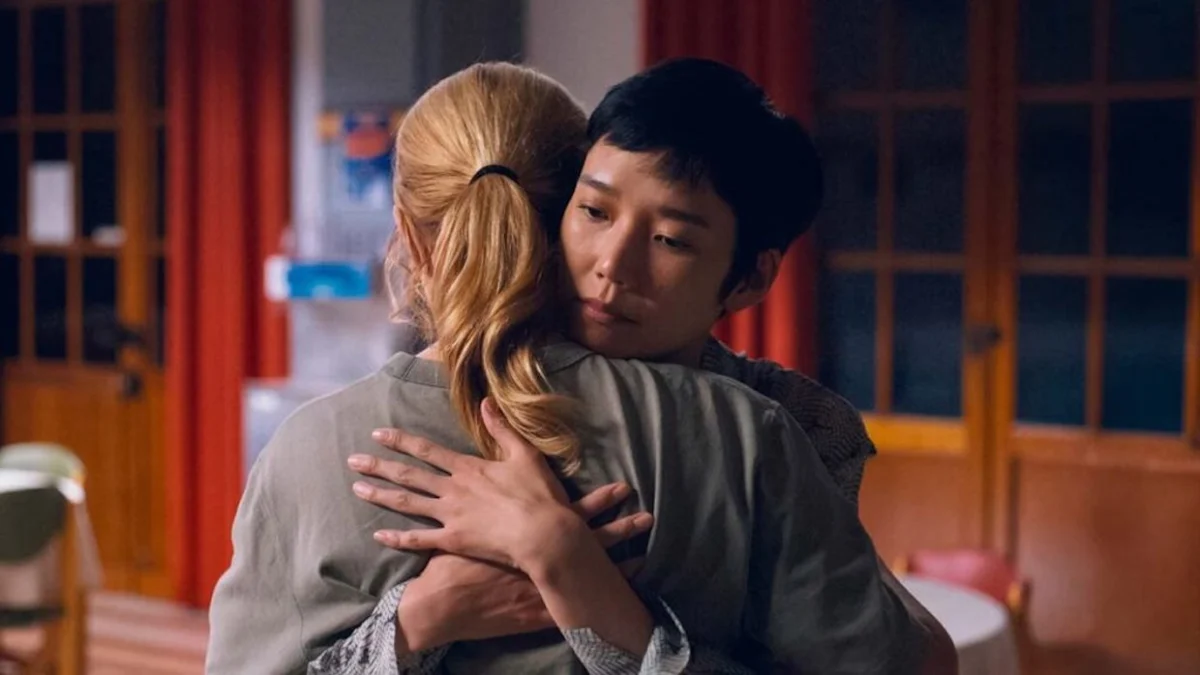
The festival’s early days quickly established a pattern: stories that build slowly over time. Ryusuke Hamaguchi’s All of a Sudden set the tone, charting an extended heart-to-heart between Mari, a Japanese playwright, and Marie-Lou, a French eldercare manager. Meeting as strangers, the two women forge an organic friendship that encompasses their personal anxieties alongside macro-concerns for a declining world. Though it missed out on the Palme d’Or, the film’s emotional core was recognized with a joint Best Actress win for Virginie Efira and Tao Okamoto.
Midway through the festival, Valeska Grisebach unveiled The Dreamed Adventure, a patient, three-hour-plus Eastern European borderland saga. Centered on a middle-aged archaeologist named Veska (played with rock-steady resolve by nonprofessional Yana Radeva), the film investigates the lingering, tiresome status quo of post-Soviet gangsterism and toxic masculinity. Grisebach’s meticulous, years-long anthropological research paid off, subverting the tropes of the Western genre to examine power dynamics, strength, and vulnerability.
Mid-Festival Period Dramas and Historical Mirrors
As the fortnight progressed, filmmakers turned their lenses toward the mid-20th century to reflect modern anxieties. Pawel Pawlikowski’s Fatherland emerged as an impeccably constructed road movie following writer Thomas Mann (Hanns Zischler) and his daughter Erika (Sandra Hüller) on a 1949 speaking tour across divided Germany.
Similarly, Emmanuel Marre’s A Man of His Time utilized the gritty texture of 16mm film to chronicle the moral decay of a municipal bureaucrat in Nazi-occupied Vichy France, starring a chilling Swann Arlaud in a role adapted from his director’s great-grandfather’s letters.
Closing Weeks and Genre-Bending Breakthroughs
As the festival raced toward its conclusion, genre lines blurred. Jane Schoenbrun’s Teenage Sex and Death at Camp Miasma opened the Un Certain Regard section with a febrile meta-horror exploration of desire, starring Hannah Einbinder and Gillian Armstrong. Meanwhile, Arthur Harari’s polarizing The Unknown featured Léa Seydoux in a deeply vulnerable performance as a man transferred into the body of a woman he met at a carnivalesque warehouse party.

The festival officially wrapped on a note of both artistic defiance and political urgency, capping off a two-week marathon that forced audiences to rethink what constitutes cinematic power.
Supporting Data & Festival Highlights: Awards and Acquisitions
While the main Competition jury decisions sparked lively debates along the Riviera, the market and sidebar sections thrived with vital discoveries and swift international distribution deals.
- Palme d’Or: Fjord directed by Cristian Mungiu (Norway/Romania child protection services critique).
- Grand Prix: Minotaur directed by Andrei Zvyagintsev (Latvia-filmed adaptation exploring Russian corruption).
- Best Actress (Joint): Virginie Efira and Tao Okamoto for All of a Sudden.
- Camera d’Or (Best Debut Feature): Clarissa by Arie Esiri and Chuko Esiri, a Nigerian re-imagining of Mrs. Dalloway infused with a colonialist critique inspired by Chinua Achebe.
- Critics’ Week Triumph: La Gradiva, directed by Marine Atlan, which quickly secured US distribution via 1-2 Special following glowing reviews, including a prominent rave in The New Yorker.
- Un Certain Regard Winner: Everytime directed by Sandra Wollner, featuring cinematography by Gregory Oke (Aftersun) and praised for its intimate sound design and nuanced exploration of grief.
- Major Studio Footprint: NEON maintained a heavy presence at the festival, bringing a dizzying slate of titles ranging from James Gray’s classic Queens family tragedy Paper Tiger to the South Korean monster epic Hope.
Official Responses and Key Industry Controversies
Cannes 2026 was not without its ideological clashes and high-profile industry commentary, particularly regarding the distribution of top prizes and outspoken political statements on the red carpet.
The Palme d’Or Debate: Hamaguchi vs. Mungiu
The decision to award Cristian Mungiu’s Fjord the Palme d’Or generated considerable friction among critics. Mungiu’s expansive case-study-gone-wrong expose of Norwegian child protective services was viewed by many as a heavy-handed, button-pushing narrative that leaned into an increasingly reactionary worldview.
Conversely, pundits argued that Ryusuke Hamaguchi’s All of a Sudden offered a far more sophisticated, humane, and balanced blueprint for modern empathy. The festival’s snub of Hamaguchi’s ever-burgeoning talents was softened only by the joint Best Actress victory for Efira and Okamoto.
Zvyagintsev’s Direct Challenge to the Kremlin
The festival’s final weekend brought geopolitical tension to the forefront when Russian exile Andrei Zvyagintsev accepted the Grand Prix for Minotaur. In an impassioned, unscripted speech directed squarely at Vladimir Putin, Zvyagintsev urged the Russian leadership to bring an immediate end to the war in Ukraine. The moment underscored Cannes’ enduring role as a global platform for exiled artists and political dissent.
Implications: What Cannes 2026 Means for the Future of Cinema
The underlying ethos of Cannes 2026 points toward several vital shifts in international filmmaking and distribution:
- The Rise of Incremental Storytelling: The fatigue surrounding hyper-fast, high-concept narrative triggers has given way to an appetite for gradualist canvases. Films like All of a Sudden, The Dreamed Adventure, and Everytime prove that audiences and critics are responding to emotional endurance and atmospheric accumulation rather than cheap narrative manipulation.
- Redefining the Body on Screen: A striking number of this year’s most talked-about films—most notably Arthur Harari’s The Unknown, Marie Kreutzer’s Gentle Monster, and Sandra Wollner’s Everytime—used physical displacement, illness, and bodily transformation as metaphors for psychological trauma and shifting identities.
- Sidebar Primacy over Main Competition: As demonstrated by the rapturous critical reception of Marine Atlan’s La Gradiva in Critics’ Week and Sandra Wollner’s triumph in Un Certain Regard, the traditional hierarchy placing Competition titles above all else is continually being challenged. Risk-taking, low-budget, and debut features are increasingly driving the cultural conversation out of the festival gates.
Ultimately, dismissals of Cannes 2026 as a "meh" year underestimate the staying power of its selections. Long after the lights in the Lumière Theater dimmed and the red carpet was rolled up, the quiet revolutions staged by Hamaguchi, Grisebach, Atlan, and their contemporaries remain stubbornly, beautifully lodged in our cinematic consciousness.
