
Beyond the Stage: Examining Mick Jagger’s Cinematic Footprint as the Rock Icon Turns 80
Main Facts
As Mick Jagger approaches his milestone 80th birthday on July 26, the enduring frontman of the Rolling Stones remains a seemingly ageless cultural force. While global acclaim has rightly centered on his monumental contributions to rock history—his soaring vocals, magnetic stage choreography, and prolific songwriting—a less heralded facet of his career deserves renewed attention: his work as a cinematic actor.
Unlike contemporaries who transitioned seamlessly between music and major motion pictures, Jagger’s filmography is a curated collection of bold, avant-garde, and frequently risky choices. Rather than pursuing safe leading-man roles that capitalized strictly on his superstardom, the British icon gravitated toward subverting his public persona. From playing notorious historical outlaws and decadent, burned-out rock stars to portraying sophisticated art dealers and shadowy business executives, Jagger’s cinematic endeavors offer a fascinating glimpse into a restless creative mind.
Though he never secured the definitive, culture-shifting crossover acting triumph enjoyed by peers like David Bowie in The Man Who Fell to Earth or Cher in Moonstruck, Jagger’s presence on celluloid has consistently intrigued critics and cinephiles alike. As he enters his ninth decade, his sporadic yet daring film career remains a testament to an artist unwilling to be neatly categorized.
Chronology: A History of Risk-Taking Roles
The Breakthrough Year: 1970
Jagger’s cinematic journey entered the public consciousness in 1970 with the simultaneous release of two vastly different, high-risk motion pictures: Tony Richardson’s Ned Kelly and the Donald Cammell and Nicolas Roeg directorial debut, Performance.
In Ned Kelly, Jagger stepped into the boots of the iconic 1870s Australian bushranger and outlaw. Filmed shortly before its release, the production paired the rock star with a major historical narrative. However, the resulting critical reception was mixed; while reviewers acknowledged his inherent physical magnetism, many felt his performance suffered from a static direction under Richardson.
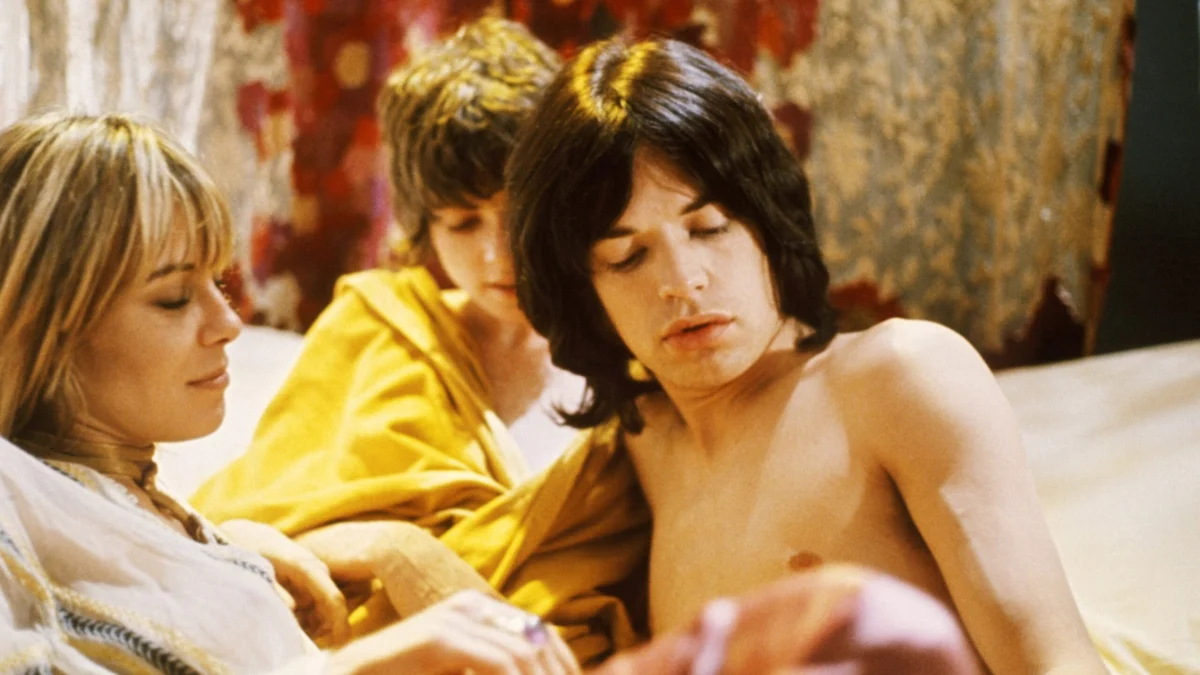
Conversely, Performance allowed Jagger to weaponize and deconstruct his own public persona. Playing Turner, a reclusive, decadent, and burned-out rock star living in a London townhouse, Jagger blurred the lines between reality and fiction. The film featured the striking visual song sequence "Memo From Turner," which essentially served as an early, proto-music video, highlighting his androgynous beauty and raw screen magnetism.
The Near-Misses and Lost Projects
Following his turbulent 1970 introduction to narrative cinema, Jagger was attached to several high-profile, boundary-pushing auteur projects that ultimately fell victim to Hollywood logistics and misfortune.
He was notably signed to appear in Alejandro Jodorowsky’s legendary, unmade adaptation of Frank Herbert’s sci-fi epic Dune—a project that has since achieved mythical status among film historians. Additionally, Jagger began physical preparations and preliminary work for Werner Herzog’s grueling Amazonian epic Fitzcarraldo. However, the notoriously arduous production suffered extensive delays, forcing Jagger to drop out of the project entirely, resulting in his character being written out of the script.
Later Career and Rare Apparitions
Rather than maintaining a steady acting schedule, Jagger maintained a highly selective approach over the subsequent decades, choosing to step in front of the camera only for projects that genuinely piqued his interest.
- 2001: He portrayed a jaded, sophisticated business executive running an elite escort agency in George Hickenlooper’s gritty neo-noir drama The Man From Elysian Fields.
- 2015: He took on a striking supporting role as a drag queen in Sean Mathias’s adaptation of Martin Sherman’s Holocaust drama Bent.
- 2019: He returned to the screen as a wealthy, manipulative art dealer in Giuseppe Capotondi’s satirical thriller The Burnt Orange Heresy.
Supporting Data: Archival Perspectives and Critical Reception
The Variety Archives on Performance
The path of Performance to the silver screen was fraught with institutional hesitation. In October 1969, Variety reported that the film had languished on studio shelves since 1968 because nervous Warner Bros. executives initially dismissed the project as "unintelligible."
However, a shift in studio leadership—brought on by a new regime that included the esteemed executive John Calley—reignited enthusiasm for the film. One studio source at the time noted that executives had grown to view it as "one of the hottest pictures they have."
When Variety finally reviewed the film in August 1970, critic A.D. Murphy offered a polarizing assessment that echoed the earlier studio anxieties. Murphy categorized the film as a "substandard crime meller (melodrama)" that was strictly "for the psychedelic set," writing that the dramatic performances felt "flat."
Despite the initial tepid commercial response, Performance steadily grew into an enduring cult classic. Cinephiles and critics came to celebrate Nicolas Roeg’s elliptical, visually revolutionary editing style—a visual grammar he would expand upon in subsequent directorial masterpieces—while recognizing Jagger’s performance as a fascinating time capsule of late-1960s counterculture decadence.
The 1970 British Talent Roundup
Long before the cultural dust had settled on his initial cinematic outings, Variety recognized the broader winds of change in British cinema. In May 1970, the publication published a comprehensive roundup highlighting emerging British acting talent poised to make international waves.
The roster featured a powerhouse collection of future legends, including Anthony Hopkins (described then as a "strong, good-looking actor in his 30s with big potential"), Ian McKellen, Dudley Moore, Helen Mirren, Charlotte Rampling—and Mick Jagger.
Assessing Jagger’s nascent cinematic potential, Variety astutely predicted: "His film work is not yet seen but may well surprise those who play him down as just a wacky warbler."
While few serious cultural observers would have ever genuinely defined Jagger as "wacky," his private life had long been a lightning rod for sensational media coverage. Unlike the clean-cut public image initially cultivated by contemporaries like the Beatles in the early 1960s, the Rolling Stones were marketed—and eagerly lived up to—their reputations as rock-and-roll bad boys. Jagger’s romantic entanglements, high-profile relationships, marriages, and expanding family (ultimately totaling eight children with five different women) kept tabloid readers in a state of affectionate shock.
Official Responses and Industry Context
The Paradigm of the Rock-Star Actor
Music history is filled with recording artists who attempted to conquer the silver screen, yielding vastly different trajectories. Performers like Frank Sinatra, Doris Day, and, in later decades, Will Smith successfully built dual identities as A-list box office draws and musical titans. Conversely, a multitude of legendary musicians have only occasionally dabbled in acting, treating the medium as an experimental playground rather than a primary career path—artists such as Björk, Joan Jett, and Eminem.
Industry analysts often compare Jagger’s cinematic footprint to that of fellow British glam-rock pioneer David Bowie. While Bowie famously commanded the screen in Nicolas Roeg’s The Man Who Fell to Earth (1976), anchoring a surreal narrative with a haunting, career-defining performance, Jagger’s approach has been far more diffuse. Rather than seeking out the singular, career-defining leading role that cements an alternate identity as a dramatic actor, Jagger has remained content as a cinematic character actor, dropping into unexpected cinematic landscapes on his own terms.
Implications: The Unfinished Act
The legacy of Mick Jagger’s acting career offers profound implications for how the entertainment industry evaluates multi-hyphenate talent. In an era where modern pop stars routinely pivot to major Hollywood productions—often backed by massive promotional machines and calculated franchise tie-ins—Jagger’s filmography stands as a relic of a more daring, idiosyncratic period in filmmaking.
His choices demonstrate an artist who was never interested in protecting an immaculate, bankable leading-man image. Whether playing a gritty Australian bushranger, a crumbling counterculture icon, or a predatory modern art dealer, Jagger approached acting not as a vanity project, but as an extension of his lifelong fascination with performance art, disguise, and public persona.
As he celebrates his 80th birthday, the question of whether he will secure that elusive, culture-shifting cinematic masterpiece remains open. Pop culture history is filled with late-career renaissances and unexpected late-act triumphs. As industry observers frequently note when evaluating his boundless energy and professional longevity: there is still plenty of time. After all, he is only 80.
