
From Digital Optimism to Silicon Valley Disillusionment: How "The Social Reckoning" Fumbled the Legacy of "The Social Network"
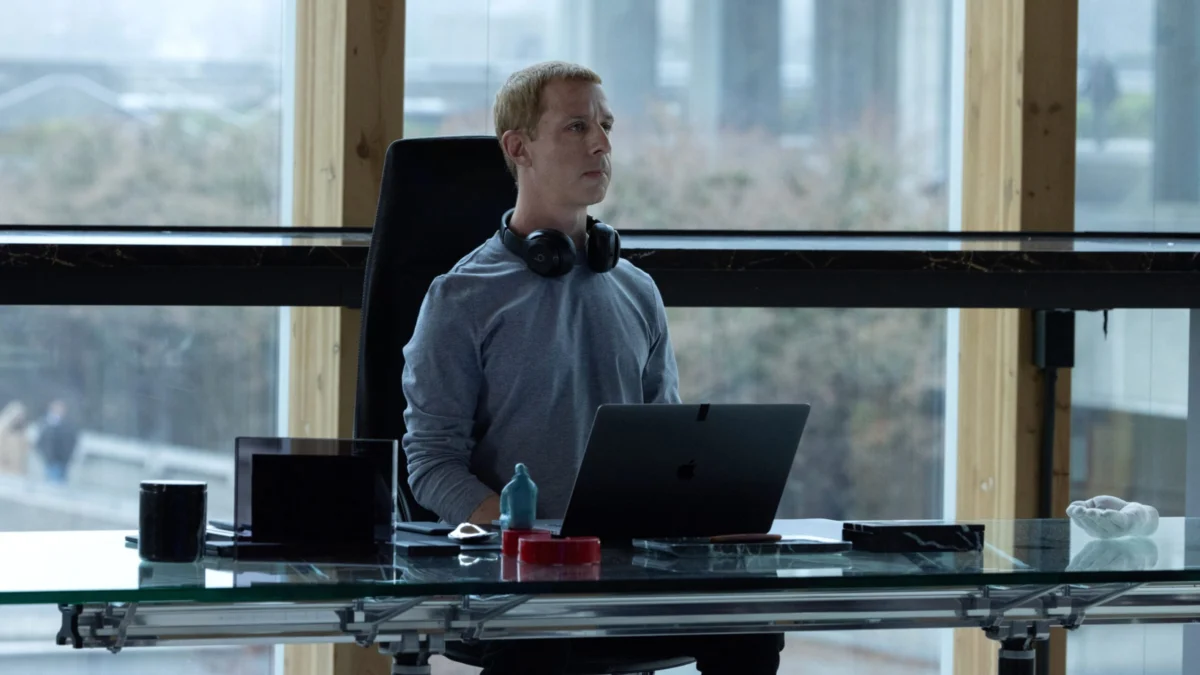
Main Facts: The Rise, Fall, and Cultural Disconnect of a Misguided Sequel
When David Fincher and Aaron Sorkin joined forces in 2010 to release The Social Network, they captured the cultural zeitgeist with surgical precision. Arriving at a time when the modern digital infrastructure was rapidly scaling, the film transformed the creation of Facebook into a modern-day Shakespearean tragedy of class, ambition, and betrayal. Anchored by Sorkin’s rat-a-tat dialogue and Fincher’s cool, detached visual aesthetic, it became a box-office success, a critical darling, and, eventually, widely regarded as one of the definitive films of the 21st century.
Sixteen years later, the landscape of Hollywood and Silicon Valley looks entirely different. Attempting to recapture that lightning in a bottle, Sony Pictures rolled out The Social Reckoning, a pseudo-sequel designed to unpack the modern consequences of the tech revolution. Instead of a cultural milestone, the film arrived as a catastrophic misfire.
The Social Reckoning bombed in its domestic opening weekend, grossing a meager $5.5 million against a tightly managed $30 million production budget. Critical reception was similarly blistering, with reviewers bemoaning the absence of Fincher—who passed on directing—and the tonal fatigue of Sorkin stepping behind the camera. Compounding these issues was the absence of Jesse Eisenberg, who declined to reprise his role as Mark Zuckerberg, fearing the normalization or glamorization of tech oligarchs. Replaced by Jeremy Strong, the project struggled to find its footing, stranded between the DNA of its celebrated predecessor and an era that has largely moved past the simple innocence of early social media anxiety.
Chronology: From Harvard Dorms to the Whistleblower Era
To understand the profound disconnect of The Social Reckoning, one must trace the timeline of both the digital world and its cinematic mirror:
- 2004: Mark Zuckerberg launches “The Facebook” from a Harvard dorm room, setting off a quiet revolution in global connectivity.
- 2010: The Social Network hits theaters, grossing $221 million globally and reshaping how audiences view the moral compromises underlying tech empires.
- 2021: Data engineer Frances Haugen steps forward as a whistleblower, leaking internal documents to reveal that Facebook’s algorithms knowingly amplified political radicalization, bullying, and teen mental health crises for profit.
- 2025–2026: Artificial intelligence completely eclipses social media as the primary existential threat and cultural obsession in Silicon Valley, dominated by the rise of generative AI and algorithmic automation.
- Fall 2026: The Social Reckoning opens to miserable box-office numbers and scathing reviews, criticized for fighting yesterday’s cultural battles while the world burns under newer technological fires.
Supporting Data: Box Office Realities and Marketing Miscalculations
A financial breakdown of the two projects illustrates a stark contrast in studio strategy and audience appetite:
| Metric | The Social Network (2010) | The Social Reckoning (2026) |
|---|---|---|
| Opening Weekend Box Office | $22.1 million | $5.5 million |
| Global Cumulative Gross | $225 million | TBD (Struggling) |
| Critical Standing | Widely acclaimed (Masterpiece of the 21st Century) | Universally panned (Blistering reviews) |
| Key Creative Returnees | Fincher (Director), Sorkin (Writer), Eisenberg (Lead) | Sorkin (Writer/Director only) |
| Primary Technological Subject | The birth of social media and networking | Whistleblowing and algorithmic radicalization |
Sony Pictures deserves credit for financial discipline; by keeping The Social Reckoning’s budget at a modest $30 million, the studio shielded itself from catastrophic losses of the magnitude seen in other recent Hollywood misfires. Yet, the studio’s marketing department was caught in an impossible balancing act. Trying to distance the film from its missing elements while desperately clinging to the legacy of the original, Sony utilized snippets of Trent Reznor and Atticus Ross’s iconic score, styled promotional posters with a blocky, familiar aesthetic, and deployed taglines like "We’re Way Past Making Friends."

Ultimately, these nostalgic callbacks only highlighted how far the new film fell short of its cinematic pedigree. As The New Yorker’s Richard Brody observed, “Sorkin doesn’t look beyond the words on the page, and the film itself appears made with heads down.”
Official Responses and Creative Explanations
The creative rationale behind The Social Network was always rooted in universal human flaws. In an interview with the Writers Guild of America, Aaron Sorkin reflected on his initial attraction to the material:
"What attracted me to it had nothing to do with Facebook. The invention itself is as modern as it gets, but the story is as old as storytelling; the themes of friendship, loyalty, jealousy, class, and power."
However, that foundational clarity eroded in the years leading up to The Social Reckoning. Jesse Eisenberg’s decision to sit the project out stems from a growing discomfort with how audiences interacted with his portrayal of Zuckerberg. Fans regularly approached the actor quoting lines or brandishing merchandise bearing the infamous phrase, "I’m the CEO, bitch," entirely missing the cautionary nature of the performance.
When Sorkin took over directorial duties, critics noted that his literal, dialogue-heavy approach lacked Fincher’s atmospheric dread and psychological depth. Without a visionary director to elevate the material, the film devolved into an expensive, protracted courtroom drama about bureaucratic oversights and algorithm tweaks, rather than an exploration of the soul of the digital age.
Implications: Why the Film Missed the Moment
The failure of The Social Reckoning is not merely an isolated box-office disappointment; it is a symptom of Hollywood’s growing inability to keep pace with real-world technological acceleration.

When Frances Haugen blew the whistle on Facebook in 2021, her courage exposed systemic corporate malfeasance. The public deserved to know how design choices were actively damaging teenage mental health and tearing at the fabric of democratic discourse. Yet, as IndieWire critic Ryan Lattanzio pointed out, The Social Reckoning operates under the assumption that the aftershocks of these revelations still dictate daily life. In reality, living in 2026, the public sentiment leans toward a grim fatigue: "No one cared, and nothing changed."
Furthermore, the federal government’s toothless, laissez-faire regulatory approach has left citizens drowning in unmitigated misinformation, rendering old battles over social media algorithms quaint. Today’s existential dread is no longer defined by whether your timeline is chronological; it is defined by artificial intelligence.
As anxieties mount over AI-driven job displacement and the theoretical risk of machines slipping beyond human control—fears voiced repeatedly by scientists and executives before global bodies like the United Nations—cultural focus has shifted dramatically. Proof of this shifting paradigm can be found in the emergence of two new cinematic projects tackling current tech titans:
- Musk, a searing four-hour documentary exploring the world’s richest man, which opened in limited release to modest figures but heavy awards buzz.
- Artificial, a dramatic look at Sam Altman and OpenAI that became an instant hot-button topic at the New York Film Festival after Amazon MGM Studios abruptly dropped it days after signing a $50-billion deal with OpenAI (subsequently rescued by Neon for a Christmas release).
These projects suggest that audiences and filmmakers are finally waking up to the modern frontier of technological danger. The Social Reckoning, by contrast, chose to fight yesterday’s war with yesterday’s weapons, reminding us that sometimes art arrives too late—or perhaps, people go to the movies simply to escape a digital reality that has long since broken beyond repair.
