
Box Office Analysis: Horror Dominates, High-Profile Dramas Stumble, and the Looming Shadow of the "Digger" Disaster
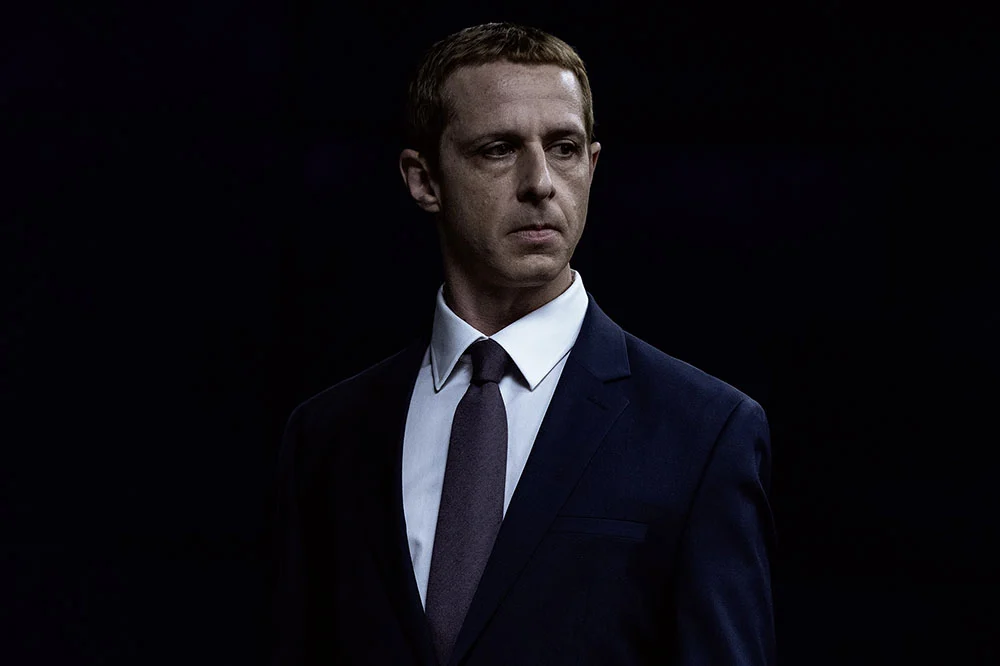
The North American box office landscape this weekend presented a stark dichotomy: the triumph of low-budget, high-concept horror over prestige-driven narratives. As audiences flocked to the theater for a cheap thrill, even if the critical reception suggested otherwise, the industry faced a sobering reminder that star power and auteur pedigree are no longer guaranteed safeguards against commercial failure.
The Horror Reign: "Other Mommy" Leads the Pack
Universal and Blumhouse’s latest supernatural thriller, Other Mommy, defied the conventional wisdom of film criticism to secure the top spot at the domestic box office. Starring Jessica Chastain as a haunting, double-jointed doppelgänger, the film scared up an impressive $27.5 million in its opening weekend.
The film’s success is a testament to the "horror immunity" phenomenon, where genre fans often prioritize the visceral experience of a theatrical scare over the consensus of critics. Despite being branded as one of the worst-reviewed films of the year, boasting a meager 19% on Rotten Tomatoes and a dismal "D+" grade on CinemaScore, the film resonated with its target demographic.
Financially, the picture is well-positioned. Produced on a modest $18 million budget, the film has already crossed the $45 million mark globally, aided by a $17.69 million international debut. However, the future remains uncertain. Box office analyst David A. Gross of FranchiseRe noted, "Horror movies are generally immune to a negative reception, but this is extreme. Business is going to drop sharply." The lack of audience goodwill suggests that Other Mommy may see a steep decline in its second and third weeks.
The Disappointing Debut of "The Social Reckoning"
In a sharp contrast to the horror market, The Social Reckoning—a project with significantly more prestige—faltered upon arrival. The film, an R-rated drama written and directed by Aaron Sorkin, crumbled into fifth place with a meager $5.5 million debut.
The film, which serves as a "companion piece" to the 2010 cultural phenomenon The Social Network, struggled to gain traction from the start. Projecting an opening between $7 million and $8 million, the film failed even those modest expectations. For context, the original Social Network debuted to $22 million sixteen years ago, a figure that highlights how far the appetite for Sorkin’s brand of hyper-intellectual, dialogue-heavy drama has shifted.
Critical and audience reception was lukewarm at best. Holding a 54% on Rotten Tomatoes and a tepid "B-" CinemaScore, the film suffered from poor word-of-mouth. The narrative follows a Facebook engineer, played by Mikey Madison, who leaks internal documents to a reporter, portrayed by Jeremy Allen White. While the performances were lauded, the film failed to engage the older, male demographic that remains the primary audience for such dramas—a cohort that has been notably absent from cinemas since the pandemic.
Chronology of the "Social" Franchise
To understand the struggle of The Social Reckoning, one must look at the shadow cast by its predecessor. David Fincher’s The Social Network is widely considered a defining cinematic work of the 2010s. With four Oscar wins and a global gross of $224 million, it set a high bar that the "companion piece" could never realistically clear.
Because of the pedigree of the original—and the notable absence of Fincher and lead actor Jesse Eisenberg—Sony attempted to distance the two films. By branding it a "companion piece" rather than a direct sequel, the studio hoped to manage expectations. This strategy extended to the budget: whereas the original cost $40 million, The Social Reckoning was produced for $30 million. Even with the tighter budget, Gross points out that the current box office performance makes recouping costs a difficult uphill battle.
The "Digger" Debacle and Industry Fallout
While The Social Reckoning struggled, the situation for the Tom Cruise-led satire Digger has moved from "disappointing" to "catastrophic." In its second weekend, the film saw a 64% decline, pulling in only $2.9 million from 3,321 theaters.
With a domestic total of $14 million and a global haul of $30 million, the film is on track to be one of the most significant box office bombs in recent memory. Warner Bros. invested over $160 million in production, and with marketing costs added, projected losses could exceed $200 million.
The scale of the failure has triggered an unusual response from the Hollywood elite. In an attempt to salvage the film’s reputation, major stars have come to the defense of Digger. Anne Hathaway, Jane Fonda, Guillermo del Toro, and Mandy Patinkin have all publicly praised the satire, urging audiences to return to theaters. Whether this industry-wide support can stem the tide of apathy remains to be seen, but as of now, the numbers tell a story of a film that simply failed to connect with the zeitgeist.
Supporting Data: The Current Box Office Landscape
The remainder of the top five shows a market in a state of transition, with holdovers dominating the conversation.
- Verity (Amazon MGM): Taking second place, the Colleen Hoover adaptation brought in $11.4 million. Despite a 64% drop from its opening, the film remains a financial success. With $53 million domestic and $80 million worldwide against a $40 million budget, it stands as a rare win for mid-budget drama.
- Resident Evil (Sony): The reboot continues to show surprising stamina, pulling in $8.3 million in its fourth weekend. It has generated $138.5 million domestically and over $260 million globally. With a budget of $75 million, this is arguably the most successful franchise entry in recent years.
- Heart of the Beast (Paramount): The survival thriller landed in fourth place with $7.1 million. While its global total has climbed to $131.3 million, its $82 million production budget means it needs a longer, more sustained theatrical run to reach profitability.
Implications for the Future of Cinema
The events of this weekend underscore a volatile period for the film industry. The "horror immunity" seen with Other Mommy suggests that as streaming platforms continue to dominate the home-viewing experience, the theatrical audience is increasingly looking for "event" experiences. Whether that event is a jump-scare horror film or a blockbuster spectacle, the audience is showing less patience for "middle-of-the-road" dramas.
The failure of The Social Reckoning and the disaster of Digger suggest that star power—even in the case of Tom Cruise—is not an absolute panacea for a film that fails to generate genuine excitement. Studios are now facing a difficult reality: the cost of producing, marketing, and distributing films is rising, while the predictability of audience turnout is at an all-time low.
As we move forward, we can expect studios to be even more risk-averse, focusing on established IPs and horror titles that have a lower floor for failure, while original prestige dramas may be increasingly relegated to streaming platforms. The industry is currently in a state of recalibration, and as this weekend proves, the only thing more unpredictable than the box office itself is the audience that drives it.
