
Beyond the Summit: Elizabeth Chai Vasarhelyi and Jimmy Chin Unmask the Human Heart in ‘Everest: The Other Side’
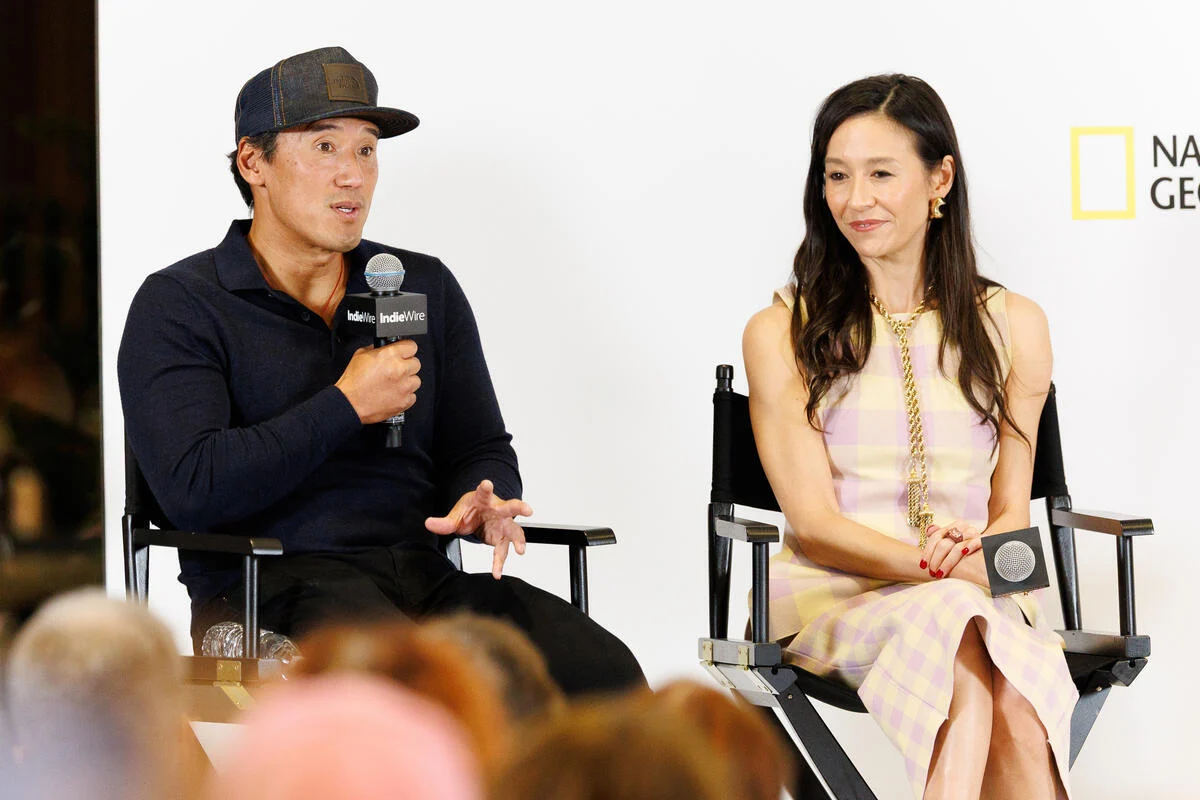
For more than a decade, the filmmaking duo of Elizabeth Chai Vasarhelyi and Jimmy Chin has established themselves as the preeminent chroniclers of the impossible. From the vertigo-inducing verticality of the Academy Award-winning Free Solo to the high-stakes rescue operations in The Rescue, their lens has consistently been trained on individuals who operate at the razor’s edge of human capability. Yet, their latest project, Everest: The Other Side, marks a subtle but profound pivot in their narrative philosophy.
Rather than focusing solely on the technical mastery required to conquer the world’s tallest peak, the documentary serves as a deeply personal meditation on grief, legacy, and the inescapable humanity that defines even the most "extreme" athletes. During an exclusive conversation at IndieWire’s "Art of the Doc" event in Los Angeles, Vasarhelyi and Chin sat down with features writer Alison Foreman to peel back the layers of a film that is as much about the descent as it is about the climb.
The Human Core of Extreme Pursuit
The central narrative of Everest: The Other Side follows Jim Morrison, a man tasked with the impossible weight of fulfilling a promise to his late wife, the legendary mountaineer and skier Hilaree Nelson. Nelson, who perished in the mountains, left behind a dream: to ski down the daunting slopes of Everest. For Morrison, the expedition is not merely a physical challenge; it is a pilgrimage of closure.
"In all our films, you think you’re seeing these exceptional, extraordinary, extreme athletes," Jimmy Chin remarked during the panel. "But at the end of the day, they’re still human beings like the rest of us."
Chin, himself an elite climber, has long been interested in dismantling the "superhuman" mythos often projected onto mountain athletes. By highlighting the raw, visceral emotions that fuel these endeavors, he hopes to bridge the psychological gap between the audience and the subject. "What I’m interested in is bridging that gap where people feel like they can’t relate to those out there doing these things," Chin explained. "The story is really human, and this film is about very human experiences. Even though they’re climbing and skiing the most extreme places in the world, the internal stakes are the same ones we all face: love, loss, and the drive to persevere."
A Chronology of Ambition and Loss
To understand the weight of Everest: The Other Side, one must understand the trajectory of Hilaree Nelson’s career and the tragic circumstances that precipitated this film. Nelson was not just a skier; she was a pioneer who redefined the limits of high-altitude ski mountaineering. Her partnership with Jim Morrison was defined by a shared obsession with the world’s most formidable terrain.
The documentary traces the timeline of this final, unfinished dream. The narrative structure moves away from the traditional "conquest" arc typical of climbing films. Instead, it follows a more somber, reflective path:

- The Vision: The film establishes the professional and personal synergy between Nelson and Morrison, framing their shared pursuit of the world’s highest summits as a form of communication—a language of peaks and valleys.
- The Catastrophe: The documentary addresses the reality of life on the edge. It documents the loss of Nelson, shifting the film’s focus from a dual expedition to a solitary journey of mourning.
- The Promise: The core of the film’s third act examines Morrison’s decision to return to the mountain. It explores the psychological toll of returning to the site of trauma to honor a legacy.
- The Descent: The culmination of the film is not just the physical act of skiing the mountain, but the emotional release that follows the fulfillment of a promise.
The Candor of the Craft: Vasarhelyi’s Perspective
Elizabeth Chai Vasarhelyi, who has frequently collaborated with Chin to balance the technical demands of high-altitude cinematography with the intimate requirements of character-driven storytelling, emphasized the unique nature of Nelson’s character.
"I had met a lot of extreme athletes, but Hilaree had a candor to her vocation that I hadn’t heard before," Vasarhelyi noted. "It’s not romantic. She says in the film, ‘I know it’s just a mountain, but it’s everything to me. And I’m like a dog with a bone.’ And I understand that."
Vasarhelyi’s direction highlights that Nelson was not driven by the glory of the sport, but by a pragmatic, almost clinical dedication to her craft. She was a mother and a professional who treated her athleticism with the seriousness of a scientist. By focusing on this grounded reality, the filmmakers avoid the trap of "adventure porn," instead offering a nuanced portrait of a woman who was both an icon and a person navigating the complexities of daily life.
Supporting Data: The Evolution of Adventure Documentary
The success of Everest: The Other Side is part of a broader shift in the genre of extreme documentary filmmaking. Historically, films about mountaineering focused on the "why" of the climb—the adrenaline, the danger, and the glory. Today, as evidenced by the success of films like Free Solo and Fire of Love, the audience’s appetite has shifted toward the "who."
National Geographic Documentary Films, the entity behind this project, has been at the forefront of this evolution. Their portfolio includes:
- Free Solo (2018): A look at Alex Honnold’s psychological preparation for climbing El Capitan.
- Fire of Love (2022): A deeply intimate look at the lives and deaths of volcanologists Katia and Maurice Krafft.
- The Rescue (2021): A dissection of the logistical and emotional complexity of the Tham Luang cave rescue.
These films suggest that the market for "extreme" documentaries is no longer niche. By framing these stories around universal human experiences—grief, partnership, and the search for purpose—producers are reaching audiences that would otherwise have no interest in the technical minutiae of climbing or scientific exploration.
Official Response and Industry Implications
The release of Everest: The Other Side on October 30 is being positioned by National Geographic as a marquee event. The film arrives at a time when the documentary industry is grappling with the ethics of filming in high-risk environments.

In a press statement, the studio highlighted their commitment to "premium, feature documentaries that cover timely, provocative and globally relevant stories." This commitment is not just a marketing slogan; it represents a significant investment in the infrastructure of documentary filmmaking. By leveraging the distribution power of Disney+ and Hulu, alongside traditional theatrical releases, the studio is ensuring that these high-altitude stories reach a massive, diverse demographic.
The implications for future filmmakers are clear: the era of the "lone hero" narrative is fading. Modern audiences are increasingly demanding narratives that acknowledge the cost of extreme pursuits—the impact on families, the toll on mental health, and the reality of loss.
The Broader Context of "Extreme" Humanity
The success of Vasarhelyi and Chin lies in their ability to strip away the mountain’s grandeur to reveal the small, fragile heartbeat beneath it. When Jim Morrison stands on the slopes of Everest, he is not a conqueror; he is a grieving spouse.
This transformation of the "extreme athlete" into a relatable human figure is perhaps the most significant contribution these filmmakers have made to the documentary form. By emphasizing that the internal struggle—the "dog with a bone" mentality—is something common to all people, they democratize the experience of the sublime.
As we look toward the release of Everest: The Other Side, the film stands as a testament to the fact that the most challenging mountains to climb are often the ones we carry within ourselves. Whether it is the physical ascent of an 8,000-meter peak or the metaphorical ascent of moving through grief, the human experience remains the ultimate, untamable frontier.
For those interested in the craft behind the camera, the full conversation between Vasarhelyi, Chin, and Alison Foreman provides a masterclass in how to handle sensitive subjects with both technical precision and profound empathy. It serves as a reminder that the best documentaries don’t just show us where we can go; they show us who we are when we get there.
National Geographic Documentary Films, a joint venture between The Walt Disney Company and the National Geographic Society, continues its legacy of storytelling with this latest release. The studio’s reach, spanning 180 countries and 33 languages, ensures that the story of Hilaree Nelson and Jim Morrison will resonate across global borders, proving that while mountains may be local, the human spirit is universal.
