
Beyond the Stage: Unpacking Mick Jagger’s Ageless Cinematic Legacy and Selective Acting Career
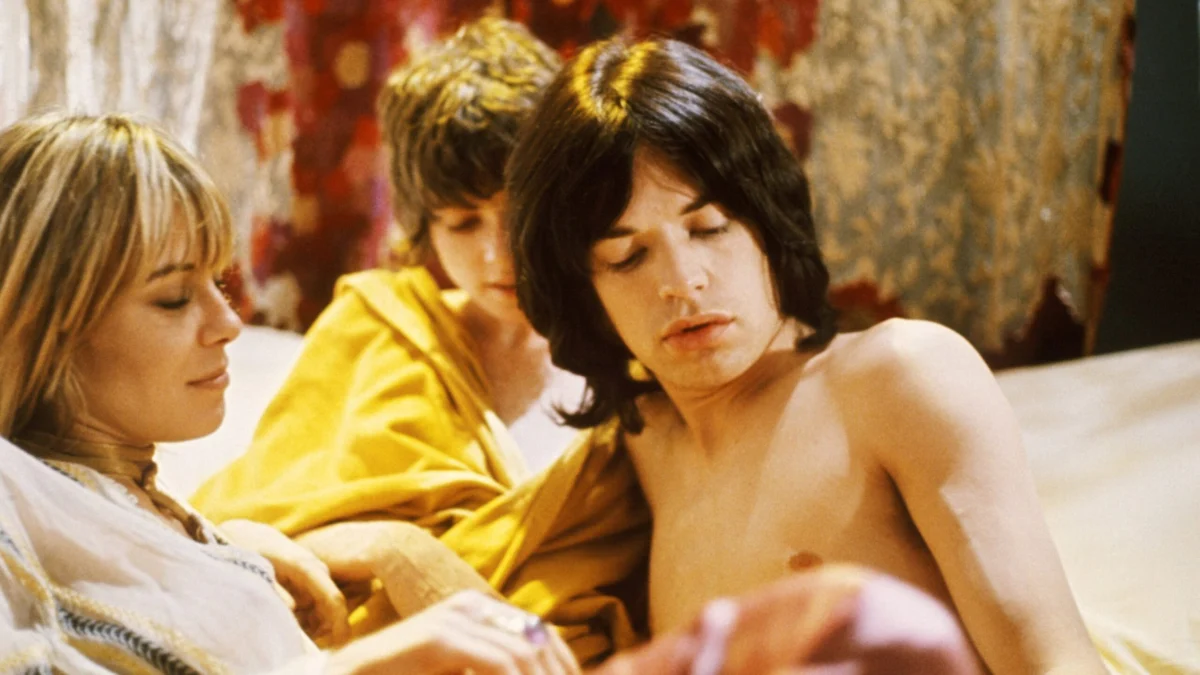
As Mick Jagger marks his milestone 80th birthday, the world continues to view the Rolling Stones frontman not merely as a septuagenarian survivor of the 1960s counterculture, but as an ageless monument to rock ‘n’ roll longevity. Universally celebrated for his visceral vocal delivery, mesmerizing serpentine stage choreography, and a peerless songwriting catalog, Jagger occupies a singular space in cultural history. Yet, nestled beneath the towering edifice of his musical achievements lies a less-celebrated, highly idiosyncratic parallel career: his work as a cinematic actor.
While contemporaries and subsequent generations of musicians frequently dipped their toes into the Hollywood waters—some, like Frank Sinatra, Doris Day, and Will Smith, successfully transitioning into bona fide movie stars, while others like Björk, Joan Jett, and Eminem dabbled intermittently—Jagger’s approach to acting has been defined by selective, risk-taking, and deeply unconventional choices.
Main Facts: The Reluctant Screen Icon
Mick Jagger’s filmography is not defined by box-office dominance or relentless commercial output. Instead, it is characterized by artistic daring, subversion of his own public persona, and a series of tantalizing "what-ifs."
From the outset, Jagger rejected the traditional movie-star pipeline. Rather than leveraging his status as the dangerous, anti-establishment counterweight to the Beatles’ "nice lads" image into safe, romantic-lead territory, he dove straight into the deep end of avant-garde cinema. His dual film debut in 1970—Ned Kelly and Performance—established a pattern of cinematic experimentation that would persist for over half a century.
Unlike peers who sought mainstream validation on the silver screen, Jagger treated acting as an extension of his performance art. Whether playing a decadent, identity-shifting rock star, an Australian bushranger, a high-society art dealer, or a drag queen, Jagger brought the same hypnotic, androgynous magnetism to the camera that he wielded over stadiums of 80,000 screaming fans. Yet, despite possessing undeniable screen presence, he has never secured that definitive, career-defining crossover acting role—such as David Bowie’s mesmerizing turn in The Man Who Fell to Earth, Cher’s Oscar-winning triumph in Moonstruck, or Lady Gaga’s powerhouse debut in A Star Is Born.
Chronology: A Timeline of Cinematic Risktaking
To understand Jagger’s cinematic trajectory, one must trace a chronology marked by studio hesitation, critical polarization, missed opportunities, and late-career cameos.
1968–1970: The Troubled Genesis of Performance
In October 1969, Variety reported that Donald Cammell and Nicolas Roeg’s directorial debut, Performance, had languished on the shelf since 1968. Warner Bros. executives had initially deemed the psychological thriller—in which Jagger played a burned-out, reclusive rock star named Turner who rents a room from a menacing gangster (James Fox)—to be completely "unintelligible."
However, a management shakeup led by industry luminary John Calley brought renewed optimism. Studio insiders whispered that the film was suddenly viewed as "one of the hottest pictures they have." When Variety finally reviewed the film in August 1970, critic A.D. Murphy echoed the skepticism of the previous studio regime, panning it as a "substandard crime meller (melodrama)" strictly intended for "the psychedelic set," while dismissing the performances as "flat."
Despite opening to tepid commercial returns, Performance steadily evolved into an influential cult classic. Audiences were captivated by Roeg’s elliptical, visually dazzling editing style and Jagger’s self-parodic, hyper-sexualized performance. Notably, the film featured Jagger performing "Memo From Turner," a sequence widely recognized as a foundational blueprint for the modern music video.
Early 1970: Ned Kelly and Critical Reception
Though Ned Kelly was filmed after Performance, it beat its counterpart to theaters by two months, opening in the spring of 1970. Directed by Tony Richardson, the biographical film cast the British rock god as the legendary 1870s Australian outlaw.
While Variety’s reviewer acknowledged that "no one who has ever seen Jagger in action playing to a live audience can question that he is a natural actor and performer with a wide range of expressions," the critic found Jagger "curiously static" on film, placing the blame squarely on Richardson’s sluggish direction.
May 1970: The British New Wave Assessment
As Jagger’s narrative film debuts hit theaters, Variety published a comprehensive roundup in May 1970 assessing a fresh crop of emerging British acting talent. Alongside fresh-faced unknowns who would go on to become theatrical royalty—such as Anthony Hopkins (described as a "strong, good-looking actor in his 30s with big potential"), Ian McKellen, Dudley Moore, Helen Mirren, and Charlotte Rampling—stood Mick Jagger.
Variety evaluated his cinematic prospects with cautious intrigue: "His film work is not yet seen but may well surprise those who play him down as just a wacky warbler."
1970: Gimme Shelter
Jagger’s third cinematic release of 1970 had the most immediate and profound cultural impact. The Maysles brothers’ documentary Gimme Shelter chronicled the Rolling Stones’ 1969 U.S. tour, culminating in the tragic, violence-marred Altamont Free Festival, where Hells Angels security guards killed concertgoer Meredith Hunter. Far more than a standard rock documentary, the film served as a harrowing, unvarnished look at the abrupt, brutal end of 1960s idealism, with Jagger helplessly watching the chaos unfold from the stage.
The Great What-Ifs: Dune and Fitzcarraldo
During the 1970s and 1980s, Jagger’s cinematic footprint expanded into monumental near-misses. He was famously tapped by visionary director Alejandro Jodorowsky to star in his legendary, ultimately aborted adaptation of Frank Herbert’s sci-fi epic Dune. Later, Jagger signed on for Werner Herzog’s grueling jungle epic Fitzcarraldo. He relocated to the Amazon basin and began shooting opposite Jason Robards, but grueling, protracted production delays forced Jagger to abandon the project due to scheduling conflicts with a Rolling Stones tour. His character was subsequently rewritten and eliminated, leaving film historians to wonder what might have been.
Later Career: Selective Cameos (2001–2019)
Rather than pursuing leading man status, Jagger adopted a policy of extreme selectivity over the ensuing decades, appearing in sporadic, often eccentric character roles:
- 2001: Played a jaded, worldly business executive running an underground escort agency in George Hickenlooper’s gritty drama The Man From Elysian Fields.
- 2015: Surprised audiences with a poignant, brief turn as a drag queen in Sean Mathias’s Holocaust drama Bent.
- 2019: Portrayed a wealthy, manipulative art dealer in Giuseppe Capotondi’s neo-noir thriller The Burnt Orange Heresy.
Supporting Data: Box Office, Critical Reception, and Filmography
To contextualize Mick Jagger’s standing in the cinematic ecosystem, it is valuable to examine the metrics of his primary film projects alongside those of his musical peers who crossed over into acting.
| Film / Project | Release Year | Director / Studio | Critical Response | Commercial Impact |
|---|---|---|---|---|
| Performance | 1970 | Donald Cammell & Nicolas Roeg (Warner Bros.) | Initially panned as "unintelligible" and "substandard"; later re-evaluated as a psychedelic masterwork. | Tepid initial run; massive long-term cult status. |
| Ned Kelly | 1970 | Tony Richardson (United Artists) | Praised for raw presence; criticized for static execution and direction. | Soft box-office performance. |
| Gimme Shelter | 1970 | Albert & David Maysles (Criterion/Maysles Films) | Universally acclaimed as one of the greatest rock documentaries ever made. | Critical and financial success; enduring cultural landmark. |
| The Man From Elysian Fields | 2001 | George Hickenlooper (Gold Circle Films) | Generally favorable reviews, praising Jagger’s world-weary charisma. | Limited theatrical release; niche audience. |
| Bent | 2015 | Sean Mathias (Samuel Goldwyn Films) | Mixed-to-positive; praised for daring subject matter and ensemble cast. | Limited art-house distribution. |
| The Burnt Orange Heresy | 2019 | Giuseppe Capotondi (Sony Pictures Classics) | Positive notices for Jagger’s sly, menacing performance. | Moderate specialty box office. |
Official Responses and Industry Perspectives
The film industry’s relationship with Mick Jagger has always been defined by a tension between his towering musical persona and his acting aspirations. When major studios first evaluated him in the late 1960s and 1970s, executives struggled to separate the scandalous rock icon from the dramatic actor.
Reflecting on his role in Performance, directors Donald Cammell and Nicolas Roeg noted that Jagger did not have to stretch far to capture the decadent, isolated artistic burnout of Turner; he was effectively holding up a funhouse mirror to the anxieties of late-60s counterculture royalty. Studios, however, were notoriously skittish. The internal Warner Bros. memo leaks surrounding Performance—shifting from "unintelligible garbage" to "one of our hottest assets" within a year—demonstrate the industry’s perpetual confusion regarding how to market a generational music icon who refused to play by traditional Hollywood rules.
Decades later, directors who cast Jagger in his later-career character roles praised his discipline and lack of vanity. Filmmakers like George Hickenlooper and Giuseppe Capotondi noted that Jagger arrived on set without the bloated ego typical of global superstars, willingly taking on supporting roles that satirized wealth, power, and artifice.
Implications: The Legacy of a Part-Time Actor
What does Mick Jagger’s cinematic footprint mean in the broader context of entertainment history?
First, it highlights the structural boundary that historically existed between the worlds of rock music and classical cinema. While actors could easily launch secondary pop music careers (with varying degrees of success), musicians attempting to transition into serious dramatic actors faced immense skepticism from critics and casting directors. Jagger was routinely boxed in by his own mythos; to the public, he was never just a man playing a character—he was Mick Jagger, the immortal, swaggering embodiment of rock rebellion.
Second, Jagger’s career illustrates the power of artistic curation. By keeping his filmography lean—refusing to chase commercial blockbusters or succumb to paycheck roles—he preserved the integrity of his cinematic choices. Even when films like Ned Kelly faltered or ambitious projects like Fitzcarraldo collapsed, his willingness to align himself with avant-garde auteurs like Roeg, Cammell, Richardson, and Jodorowsky underscored a sophisticated artistic curiosity.
As Jagger enters his ninth decade, the question of whether he will secure that elusive, universally acclaimed "breakthrough" acting role remains open. As entertainment history continually demonstrates, cultural icons of his magnitude operate on timelines entirely their own. After all, as critics and fans alike have noted for over fifty years: he may be turning 80, but Mick Jagger remains entirely ageless—and on the screen, as on the stage, there is simply no one else quite like him.
